

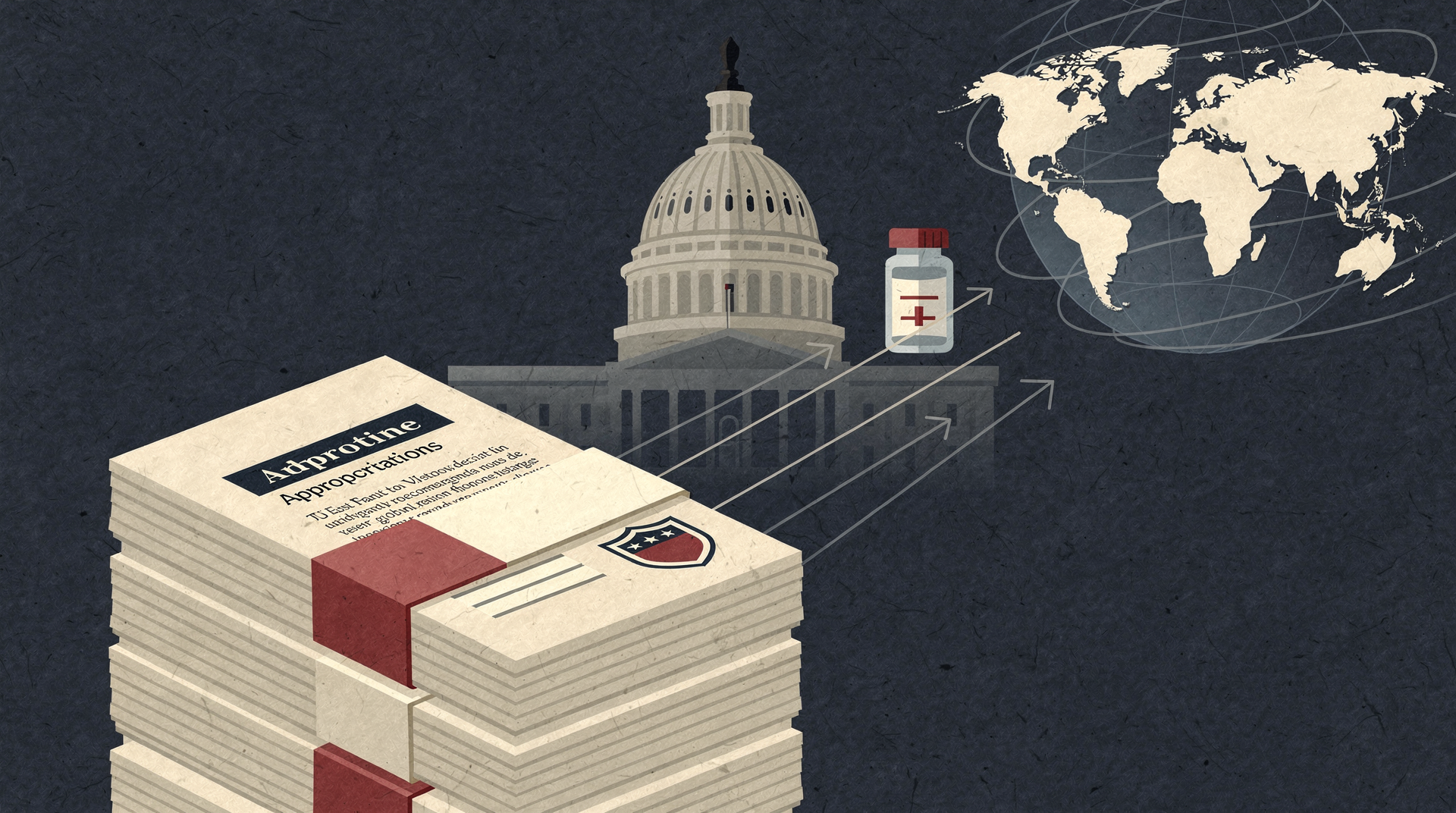
The State Department notified Congress on Tuesday that it intends to release $600 million in frozen funding for Gavi, the international vaccine alliance, ending a nearly two-year standoff driven by HHS Secretary Robert F. Kennedy Jr.’s skepticism toward vaccine programs.
The release covers congressionally appropriated funds for fiscal years 2025 and 2026 — money that was set to expire on September 30 — and represents the most significant concession by the administration on global health policy to date. The decision carries diplomatic, public health, and political dimensions that appropriations watchers and healthcare lobbyists must now weigh carefully.
Gavi has helped immunize over 1 billion children in the world’s poorest countries and estimates it has prevented more than 20 million deaths over the past 25 years. The alliance provides vaccines for 20 diseases, including measles, malaria, and polio, to more than 50 low-income countries. U.S. funding represents approximately 15% of Gavi’s total annual budget, and Gavi CEO Sania Nishtar warned last year that more than 1 million babies could die in the world’s poorest countries if Washington withdrew its support.
House Appropriations Ranking Member Rosa DeLauro (D-CT) credited sustained Democratic advocacy for forcing the reversal. “It is utterly shameful that these resources were ever blocked in the first place, and children around the world were deprived of desperately needed vaccines for nearly two years,” DeLauro said in a statement Monday. She called Kennedy’s opposition “a senseless, selfish, and absurd crusade against vaccines” that has put children at risk in the United States and abroad. DeLauro first raised the issue during an Appropriations Committee meeting in late April.
The administration framed the decision differently. A joint statement from HHS and the State Department said the funds were released after Gavi committed to “work towards transitioning mercury-containing vaccines and expanding access to newer, mercury-free alternatives.” The statement characterized the policy as “pro-vaccine, pro-innovation,” noting that the U.S. and European Union removed mercury from most childhood vaccines 25 years ago. Mainstream vaccine safety experts have consistently said the shots Gavi uses are safe.
Kennedy, a longtime vaccine skeptic, froze the funding in June 2025, claiming without evidence that Gavi had “ignored vaccine safety.” Anti-vaccine groups, including one Kennedy founded, have for decades alleged that thimerosal, a mercury-based preservative, is linked to autism — a claim contradicted by extensive scientific research.
The release followed pressure from both parties. Senate Appropriations Chair Susan Collins (R-ME) announced Tuesday that the State Department had committed to contributing the full $600 million, according to Reuters. Collins and a bipartisan group of senators — including former Republican leader Mitch McConnell, Lisa Murkowski, and Democrats Jeanne Shaheen and Brian Schatz — had written to Secretary of State Marco Rubio in May demanding action. Rubio told the Senate Foreign Relations Committee last month he would reengage on the issue, saying the administration wanted a resolution “acceptable both to Congress and also to our goals on global health.”
Whether this release signals a broader thaw in frozen global health funding or is a one-off concession remains unclear. The administration said it expects to resume its seat on the Gavi board and will evaluate future support based on “demonstrated performance, accountability, and implementation” of reforms — language that leaves the door open to further disputes over vaccine policy.