President Donald Trump said on Thursday that the United States and Iran were nearing an agreement to end a three-and-a-half-month conflict that has shuttered the Strait of Hormuz, roiled global energy markets, and killed thousands — though neither side has confirmed the terms of a prospective deal.
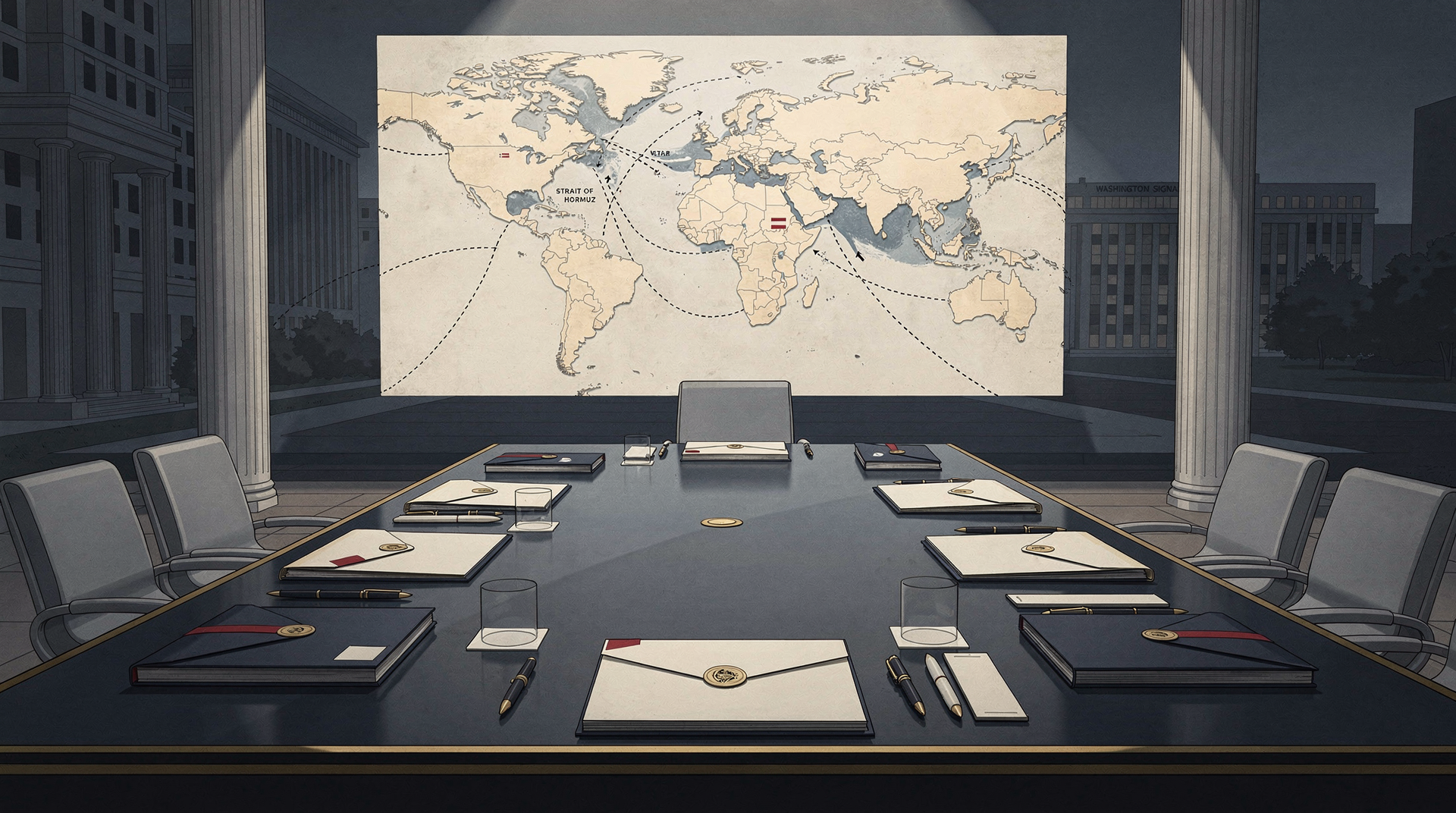
The Strait of Hormuz is a chokepoint for nearly one-fifth of the world’s oil and natural gas supply, and its closure since late February has sent energy prices spiraling and weighed on global growth projections. A memorandum of understanding now under discussion would extend the ceasefire for at least 60 days, reopen the strait, and begin negotiations on Iran’s nuclear future — six issues that a Council on Foreign Relations analysis identified as potential deal-breakers.
Iranian Foreign Minister Abbas Araghchi said Friday that the two sides have “never been closer” on terms. Pakistani Prime Minister Shehbaz Sharif, who has mediated between Tehran and Washington, claimed in a social media post that “a final, agreed upon text of the peace deal has been reached.” Neither the United States nor Iran officially confirmed that claim, though Trump accused Iran of leaking aspects of the deal.
“We have been here before only to discover the parties cannot bridge the remaining gaps,” said Steven Cook, a CFR senior fellow for Middle East studies. “Even if they do and an MOU is announced, negotiations on the outstanding issues, especially on Iran’s nuclear program, will be long and difficult.”
The six unresolved issues span the reopening and future management of the Strait of Hormuz, the suspension of Iran’s uranium enrichment program, the role of Tehran-backed proxy groups including Hezbollah and the Houthis, limits on Iran’s ballistic missile program, compensation demands and sanctions relief, and the status of prisoners of war.
Iran’s state outlet IRNA said the draft does not require Tehran to cede management of the strait — a direct contradiction of U.S. expectations for pre-conflict shipping conditions. On the nuclear question, the draft MOU reportedly includes pledges to negotiate a 15- or 20-year enrichment halt, but Iran insists it will negotiate “solely within the framework of the Islamic Republic’s fundamental principles.”
Bloomberg reported Thursday that the two sides may sign an agreement on the sidelines of the G7 summit in Evian, France, as early as this Sunday, with Vice President JD Vance and special envoy Steve Witkoff representing the United States. Oil prices fell sharply on the news, with Brent crude dropping below $88 a barrel — still up roughly 45 percent since the war began, but well off its late-April peak of $125. Reuters reported that Iran’s foreign ministry said it “had not reached a final conclusion,” adding that the matter was “being reviewed by the relevant decision-making bodies.”
Whether the deal holds will depend on whether Iran’s Supreme Leader Mojtaba Khamenei — who has been in hiding since the conflict erupted — approves the text, and whether the 60-day follow-on negotiations can resolve the structural disputes that have eluded U.S.-Iran diplomacy for decades.