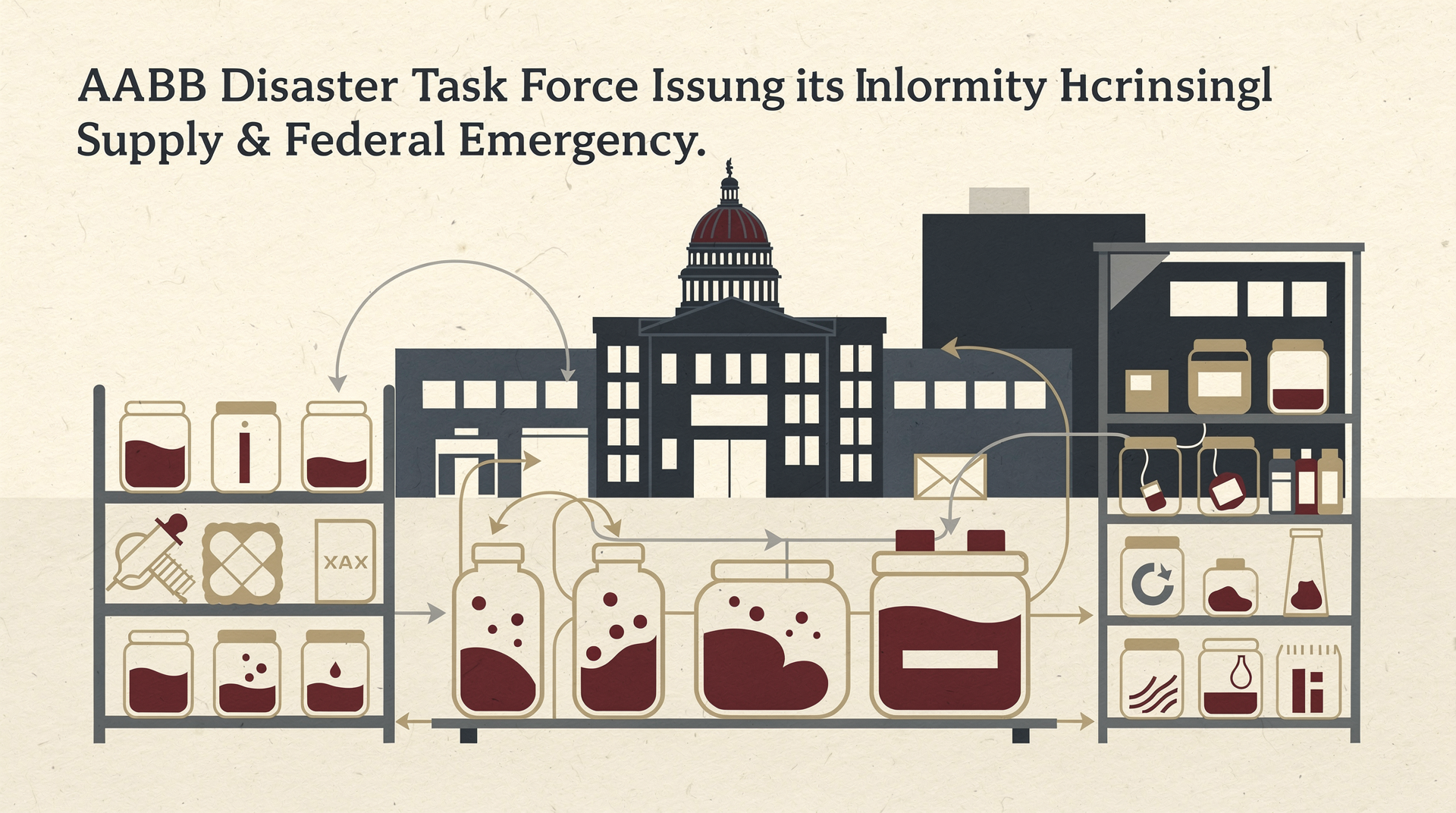
The Association for the Advancement of Blood and Biotherapies Interorganizational Task Force on Domestic Disasters announced on Thursday that the U.S. blood supply is at significant risk for shortages following weeks of declining donations, with some regions already unable to meet patient demand, according to a bulletin issued Sunday by the American Hospital Association.
The AHA dispatched a Special Bulletin to its member hospitals calling for blood conservation measures and urging eligible individuals to donate immediately. The formal task force activation — only the body’s most serious institutional escalation short of a federal emergency declaration — underscores the severity of the decline.
“We are asking all potential donors — both regular and first-time donors — to make a commitment to donate blood in the coming days and weeks,” said John Hagins, chair of the task force, in a separate statement released by AABB on July 24. “Donating now, or making an appointment to donate soon, will help ensure that all patients throughout the country have access to the care they need.”
The task force noted that “the reduced supply is more pronounced in certain areas of the country,” though it did not specify which regions. The AABB statement said some blood collectors are “already reporting an impact on the availability of blood for some patients,” raising the possibility that hospitals may have to postpone surgeries or make difficult triage decisions.
The warning comes amid a broader crisis across the blood supply chain. The American Red Cross declared an emergency blood shortage on July 13 after its supply fell nearly 25% in June, with blood distributions to hospitals running approximately 3,500 units per week above expected levels. The Red Cross has begun limiting distributions of Type O blood to some hospitals, and a spokesperson described donations as being at a four-year summer low.
The AABB task force — formed in January 2002 to coordinate blood collection during domestic emergencies — includes representatives from the American Red Cross, America’s Blood Centers, the American Hospital Association, and government liaison agencies including the FDA, the CDC, and the Armed Services Blood Program. Its activation signals a coordinated institutional response that typically precedes requests for federal intervention.
Each year, more than 4.5 million lives in the United States are saved by blood transfusions, and approximately one in five hospital patients requires blood. With summer traditionally the most difficult season for blood collection, federal policymakers — particularly congressional appropriators on the Labor-HHS subcommittee — face growing pressure to examine whether regulatory bottlenecks or military medical demands from the Iran conflict are contributing to the civilian supply strain.