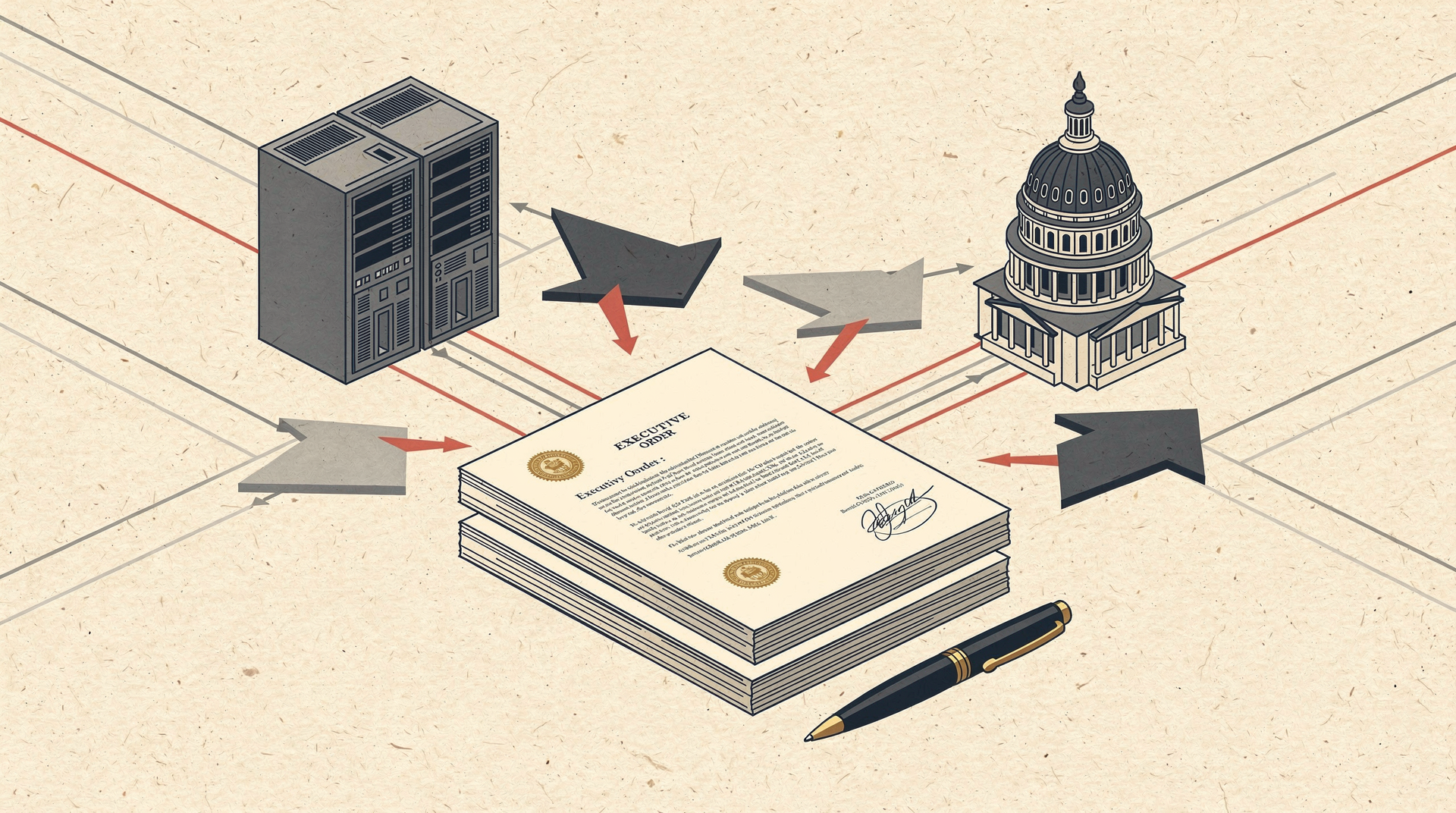
Truth Social on Saturday launched a paid data service that gives Wall Street trading firms milliseconds-faster access to President Trump’s social media posts — including major policy announcements on tariffs, the Iran war, and interest rates that have repeatedly jolted global markets.
The service, dubbed Truth API, charges approximately $100,000 per month and delivers a direct, licensed, real-time feed of posts from the president and other high-profile Truth Social accounts, according to an Associated Press investigation. Trump Media & Technology Group, the publicly traded parent company in which the president’s family holds a controlling stake, said customers have already begun signing up.
The offering sits at the intersection of several regulatory gaps that make it a live concern for the committees with jurisdiction over securities law and executive branch ethics. While other social media companies sell similar data feeds, Truth Social is unique in that it does not merely distribute news — it generates it. Trump has used the platform to announce tariff threats against Canada, signal nuclear deal reversals with Saudi Arabia, and preview Iran military action, each time triggering immediate moves in currencies, commodity futures, and equities.
“If this was the CEO of a public company, this would be jail time,” said Irene Aldridge, head of Able Alpha Trading, which said it does not plan to purchase the service.
Sens. Elizabeth Warren (D-MA) and Adam Schiff (D-CA) sent a letter to SEC Chair Paul Atkins calling Truth API “an outrageous abuse of the President’s office for his personal benefit” and requesting a legal analysis of the service under laws that “prohibit insider trading and market manipulation,” according to CNBC.
Former SEC official Renée Jones, now a professor at Boston College, said the paid offering appears to run afoul of federal securities laws, pointing to the 2012 STOCK Act’s prohibition on executive-branch officials trading on privileged information. “If some people get special access to them, that’s misappropriated information,” Jones told NPR.
Trump Media defended the service, accusing Democratic critics of acting “out of ideological opposition to free markets or a failure to grasp the distinction between public and nonpublic information.” The company maintains that posts are released to paying subscribers and the general public simultaneously, making fairness concerns moot.
Critics dispute that characterization. Joe Saluzzi, co-founder of Themis Trading, said the timing distinction is “a red herring” because high-frequency trading systems can process and act on data within milliseconds of receipt — long before any retail investor can react. “The loser is always the retail investor,” Saluzzi said.
The financial incentives are significant. Trump Media reported just $3.7 million in revenue last year while posting hundreds of millions in losses. Its stock has fallen roughly 75% since Trump took office. If even a handful of the roughly 100 high-frequency firms estimated to be in the market for such data subscribe, the service could double the company’s annual revenue.
Warren has vowed that if Democrats retake the House, Congress will “haul in those responsible for this open corruption to answer to the American people.” Whether the current SEC pursues an investigation remains unclear.