The action addresses a narrow but critical input cost for producers of corn, soybeans, wheat, and other crops at a moment when the farm economy is squeezed from multiple directions. For the agricultural sector, food-industry supply chains, and the congressional committees that oversee trade and farm policy, the tariff suspension offers immediate relief — but leaves the structural forces driving the cost crisis untouched.
The American Farm Bureau Federation applauded the executive order, with President Zippy Duvall citing the organization’s spring survey finding that 7 out of 10 farmers “would not be able to afford enough fertilizer for this year.” Duvall framed the action against “years of inflation, depressed commodity markets, and high interest rates” that have battered farm operations, and noted the Federation had separately submitted an emergency request for economic aid.
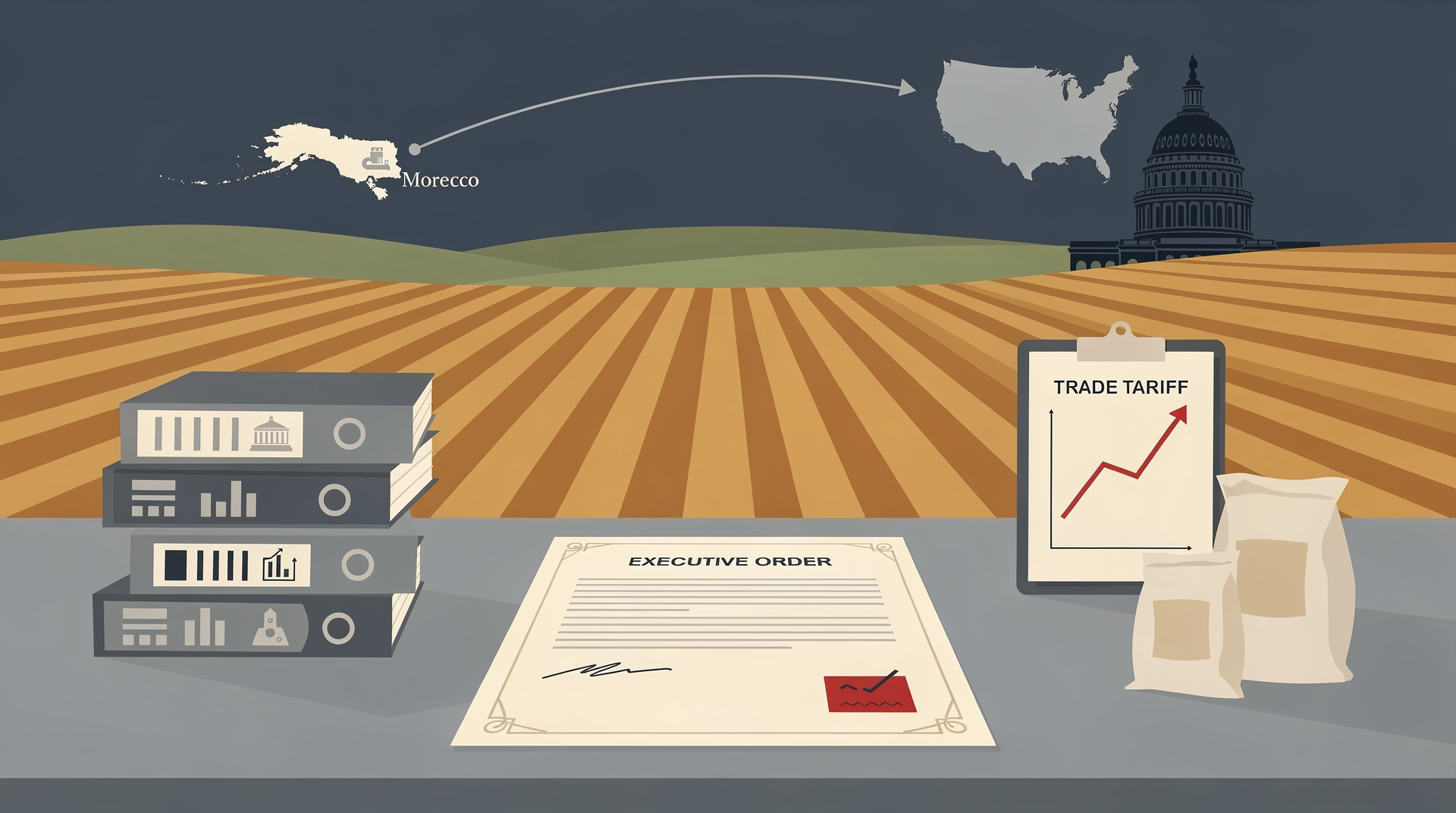
The White House proclamation declared that current domestic phosphate-fertilizer production “is insufficient to support domestic agricultural food production after accounting for exports” and that global supply chains have been disrupted by conflicts in fertilizer-producing regions — a reference, in part, to the Iran war’s near-closure of the Strait of Hormuz, through which roughly one-third of the global fertilizer supply transits.
Morocco is the world’s largest phosphate exporter, holding approximately 70 percent of global phosphate reserves. But countervailing duties imposed in 2021, after U.S. producer Mosaic alleged unfair subsidization by Morocco and Russia, have limited Moroccan imports and raised costs for American farmers. Farm Progress reported that a 2025 Texas A&M study estimated those duties cost U.S. farmers $6.9 billion across the 2021–2025 growing seasons. Agriculture Secretary Brooke Rollins said the suspension would deliver “an estimated 22% reduction in phosphate fertilizer prices, and $1.82 billion in annual savings for producers.”
The tariff suspension is temporary — it expires in eight months or when the emergency is terminated, whichever comes first. The underlying countervailing duties are separately under a five-year sunset review by the Commerce Department, with a preliminary decision expected in July.
For the broader farm economy, the executive order functions as a pressure valve rather than a structural fix. Commodity prices remain depressed, interest rates elevated, and the Farm Bureau’s request for emergency economic aid signals that fertilizer costs are just one front in a wider affordability crisis. The Federation said it would “continue to work with the administration to find more ways to improve market conditions and lower expenses for the men and women who work to ensure pantries are stocked for America’s families.”
Whether the suspension signals a broader shift in trade posture — selective tariff relief while the administration maintains duties elsewhere — or a one-off wartime concession will become clearer as the eight-month window advances toward its expiration early next year.