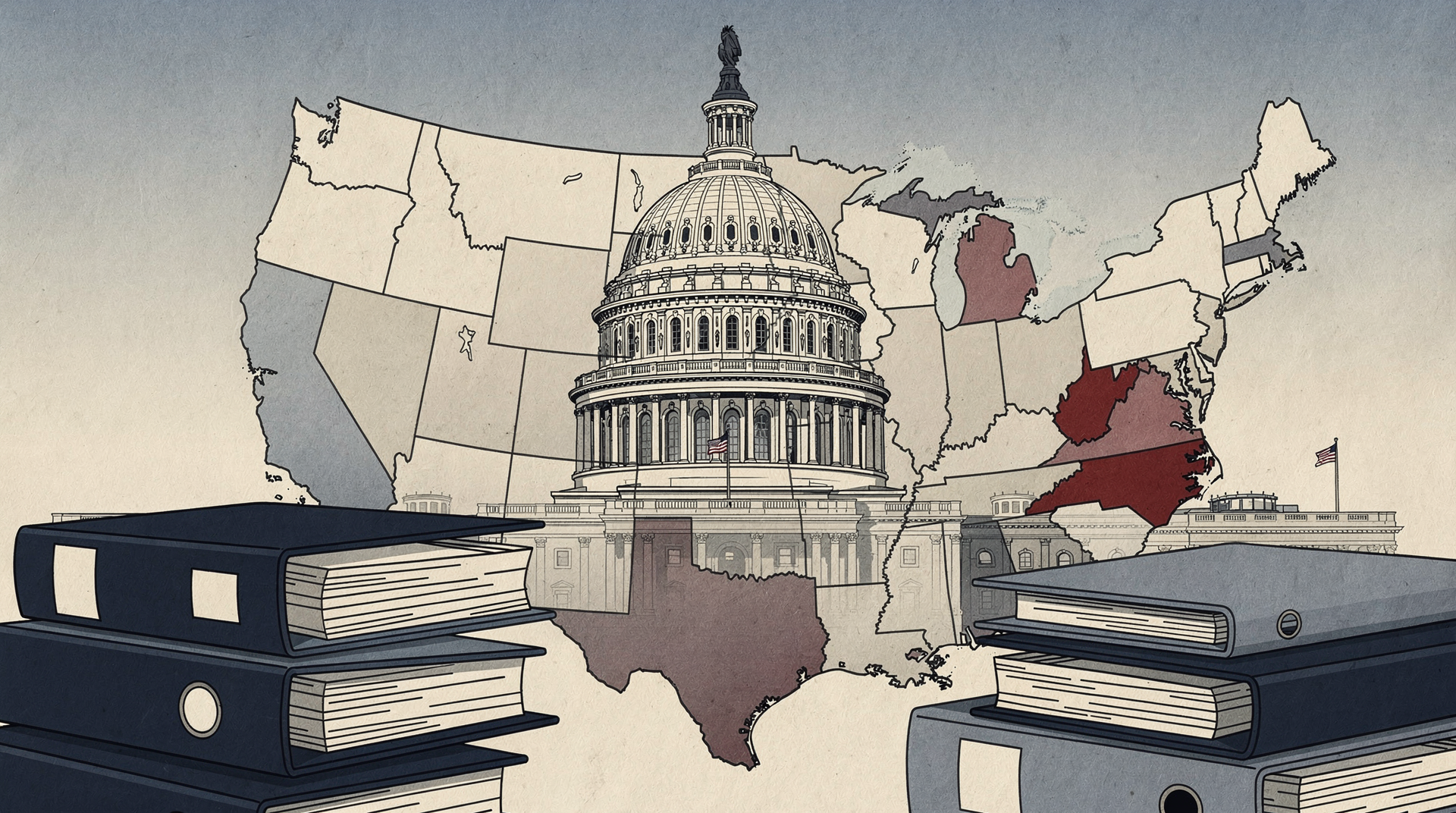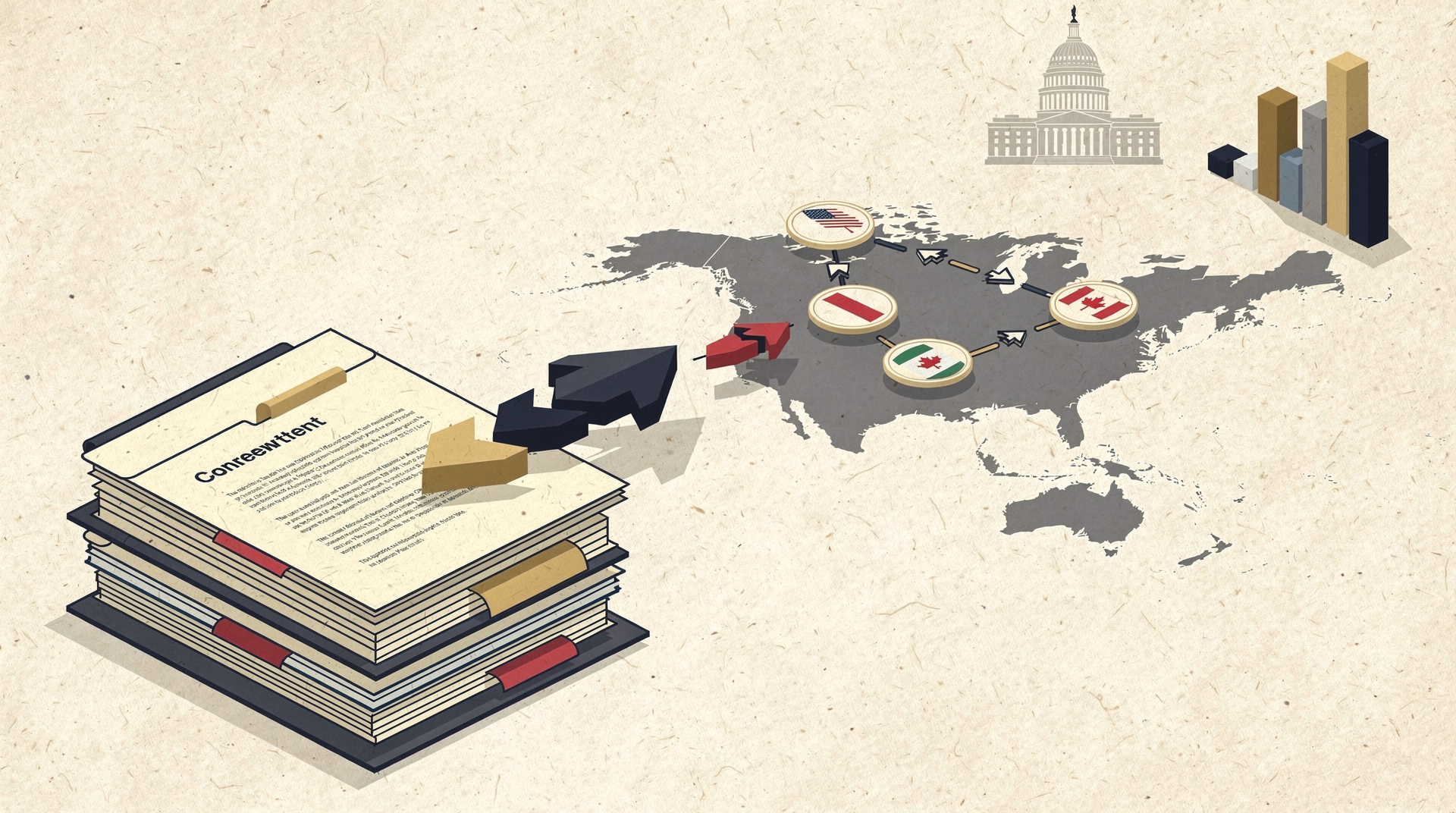
The Trump administration on Wednesday declined to renew the United States-Mexico-Canada Agreement at a mandatory six-year review, rejecting the 16-year extension that Canada had sought and instead subjecting the landmark trade pact to annual reviews through 2036.
The decision — in which a president effectively walked away from his own signature trade achievement — introduces structural uncertainty into roughly $2 trillion in annual North American trade and sets the stage for protracted renegotiations across agriculture, manufacturing, and the automotive sector.
U.S. Trade Representative Jamieson Greer said in a statement that Washington “chose not to rubber stamp a USMCA renewal without addressing existing issues,” citing persistent U.S. trade deficits with Canada and Mexico. “The United States did not agree to renew the USMCA in its current form,” Greer said. “The Agreement remains in force pending resolution of these issues or until the Agreement’s termination.”
The New Democrat Coalition’s Trade and Tariffs Task Force issued two rapid-fire condemnations of the decision, slamming the administration’s failure to renew the agreement and urging strengthening of the trilateral framework through the joint review process. House Agriculture Committee Ranking Member Angie Craig called the non-renewal a betrayal of American farmers, warning that agricultural producers depend on the predictability the agreement provides.
The USMCA entered into force on July 1, 2020, replacing the North American Free Trade Agreement. Trump negotiated and heavily promoted it during his first term, calling it at its signing “the largest, fairest, most balanced, and modern trade agreement ever achieved.” Six years later, Trump said in June he was “not looking to renew” the deal and has even threatened to withdraw from it entirely.
Under the agreement’s terms, the non-renewal does not kill the pact immediately. Instead, it triggers annual reviews for the next 10 years, with the deal expiring in 2036 if no extension is agreed upon. A senior administration official said the White House seeks to “come to a conclusion quickly” and emphasized that the president retains the ability to exit the agreement earlier, should he see fit.
Canada’s trade minister, Dominic LeBlanc, and Mexican Economy Secretary Marcelo Ebrard had both advocated for a full extension, as the BBC reported. The U.S. Chamber of Commerce had warned that sectors such as manufacturing and agriculture rely heavily on cross-border certainty. However, some domestic trade groups, including the American Iron and Steel Institute and the Steel Manufacturers Association, welcomed the shift, arguing annual reviews give American negotiators leverage to address long-standing complaints about the deal.
Axios reported that businesses had viewed the USMCA as one of the few stable pillars of U.S. trade policy amid a year of shifting tariffs and legal fights over the administration’s authority to impose them. The annual review process could make it harder for companies — especially automakers that have invested billions in North American supply chains — to commit to long-term factory and hiring plans when the rules governing cross-border trade could be back on the negotiating table every year.
The administration has signaled that it wants stronger provisions on China de-risking, automotive rules of origin, and dairy market access. Whether farm-state Republicans break with the White House over the agricultural impact remains a key variable heading into midterm season.