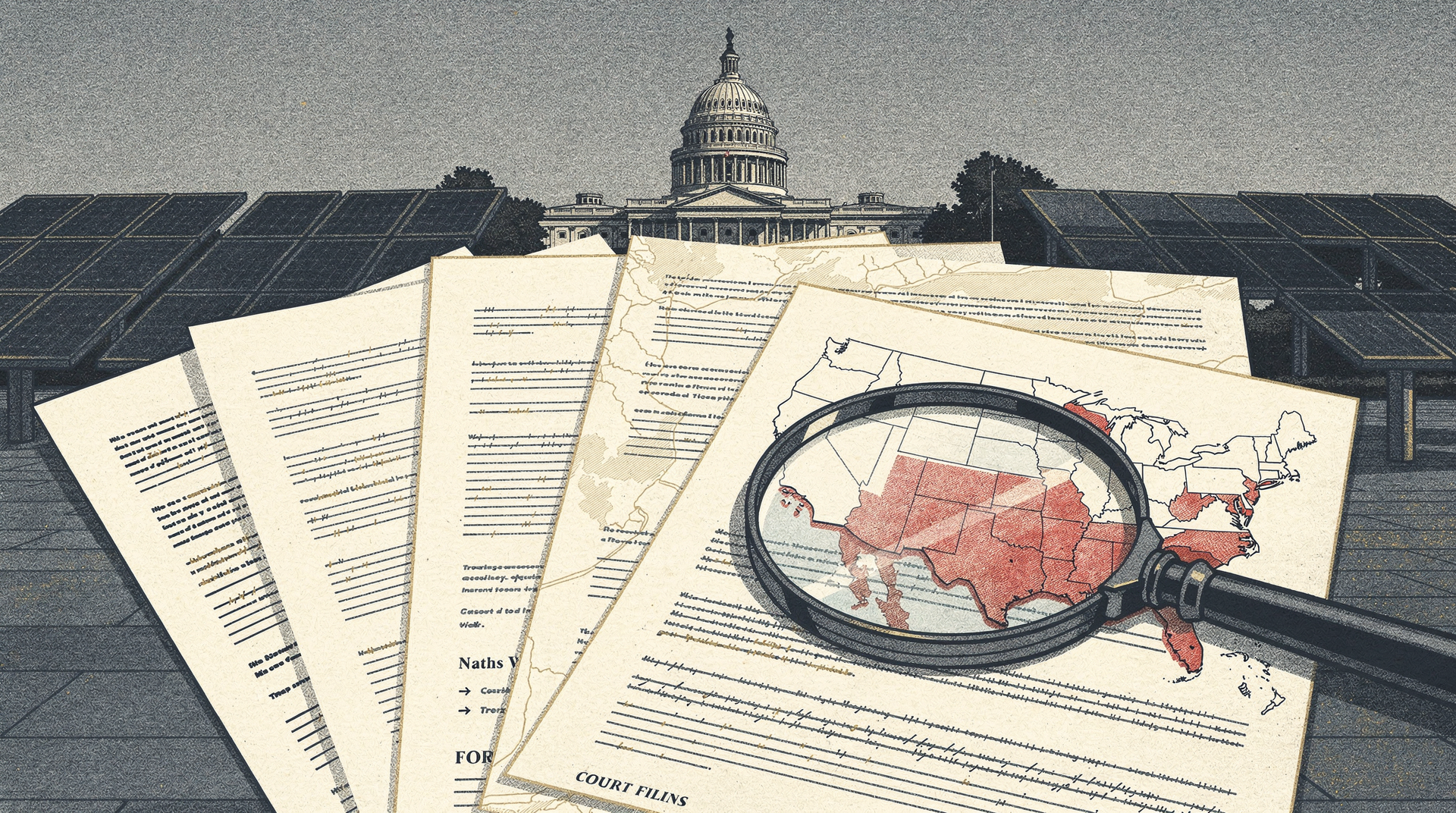
The Trump administration acknowledged in court documents filed Friday that it canceled $7.6 billion in clean energy grants targeting 16 states that voted for Kamala Harris in 2024 — a move officials admitted was “based solely on the political identity of the grant recipient’s state.”
The extraordinary admission, reported by WTOP and the Associated Press, directly contradicts previous public statements by Energy Secretary Chris Wright, who had maintained that canceled projects were evaluated on merit. The filing came as part of an ongoing legal challenge brought by states and environmental organizations seeking restoration of the congressionally appropriated funds.
The canceled grants affected hundreds of clean energy projects across the 16 states, encompassing solar installations, energy efficiency retrofits, grid modernization, and workforce training programs. Democrats and environmental advocacy groups characterized the cancellations as “weaponizing” federal spending power against working families based on how their states voted.
The admission raises significant constitutional questions about executive authority to override congressional spending mandates on partisan grounds. Legal scholars have noted that Congress appropriated the funds through legislation, and the executive branch’s conditioning of disbursements on political loyalty could set a troubling precedent for future administrations of either party.
For the Washington region, the cancellations carry practical consequences. Clean energy projects in Maryland and Virginia — both Harris-voting states — were among those affected, with potential impacts on local jobs, contractor pipelines, and state-level climate targets. The District of Columbia, which receives federal energy grants for building efficiency and sustainability programs, could also see downstream effects.
The case is expected to move through the federal courts in the coming months, with plaintiffs seeking an injunction to restore the funding. Congressional oversight committees have signaled interest in the filing, and the admission could become a focal point in upcoming appropriations battles over energy spending.