Landmark legislation targets Russia’s war-financing network with secondary-sanctions exposure for China and Iran; House path uncertain
By Washington Signal | WASHINGTON
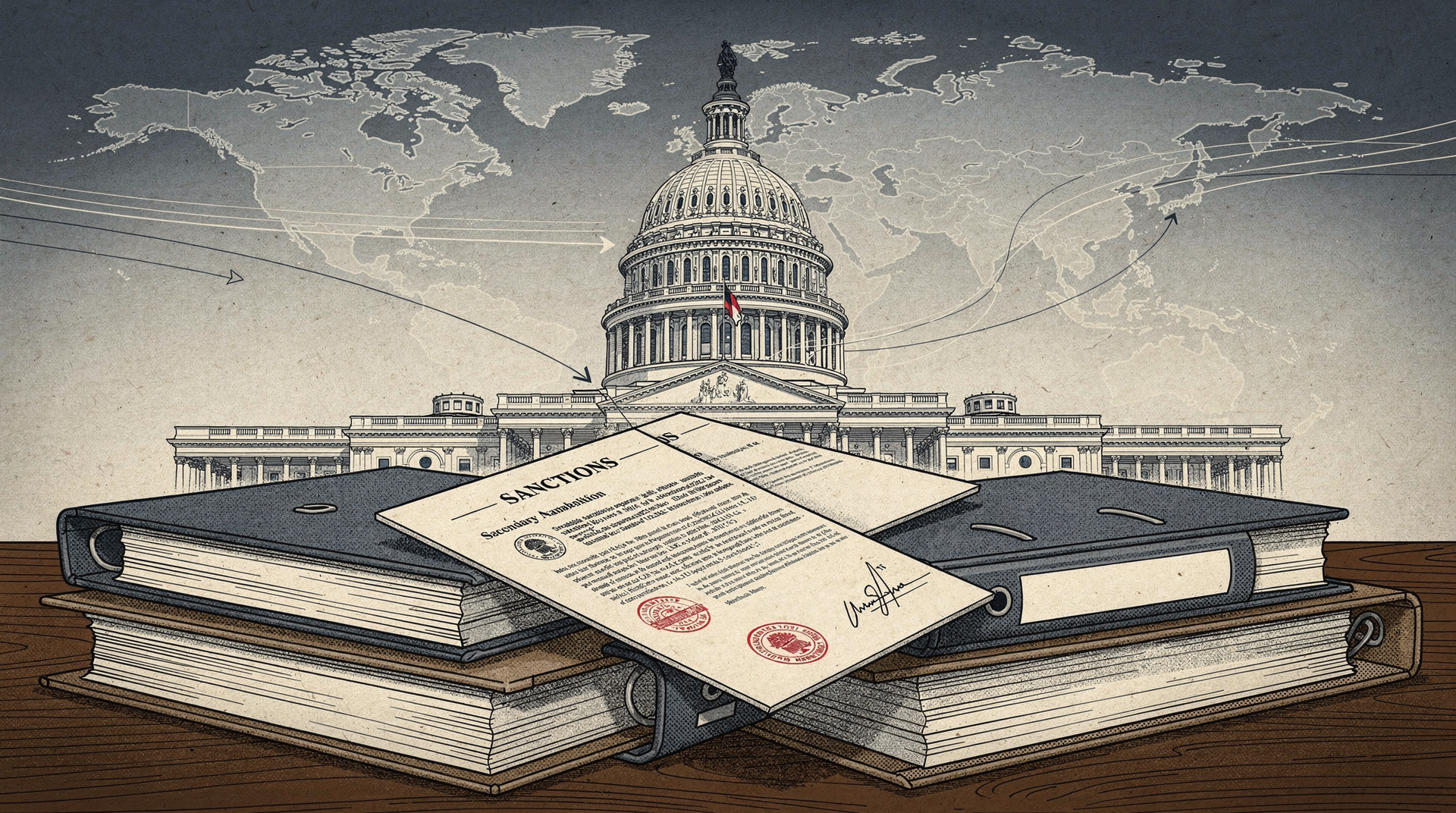
The U.S. Senate on Thursday passed the Lindsey O. Graham Sanctioning Russia and Iran Act of 2026, a sweeping bipartisan sanctions package targeting Russia’s war-financing apparatus, in an 86–12 procedural vote that signaled overwhelming support for escalating economic pressure on Moscow and its allies. The legislation, which also imposes secondary-sanctions exposure on entities in China and Iran that support Russia’s defense supply chains, now moves to the House, where its path forward remains unclear.
Senate Foreign Relations Committee Chairman Jim Risch and Ranking Member Jeanne Shaheen both issued statements Thursday supporting the bill, framing it as the most significant sanctions legislation targeting Russia since the invasion of Ukraine. The measure targets Russia’s shadow fleet of oil tankers, its defense procurement networks, and energy infrastructure projects that fund the war effort, according to statements released by the Senate Foreign Relations Committee.
The breadth of the legislation extends well beyond Russia. The bill establishes secondary-sanctions mechanisms that would penalize Chinese firms supplying dual-use technology to Russia’s military-industrial base and Iranian entities facilitating sanctioned oil transactions. That multi-front approach is what secured its bipartisan supermajority in the Senate but may also complicate its reception in the House.
Risch, in his statement, described the legislation as a necessary escalation in the economic campaign against Russia, emphasizing that existing sanctions had failed to sufficiently constrain Moscow’s ability to finance its military operations in Ukraine. Shaheen echoed that assessment, calling the bill a demonstration that Congress can act decisively on national security even in a divided political environment.
However, House Democrats have signaled reservations. Representatives Gregory Meeks and Don Beyer released a joint statement Thursday raising concerns about tariff provisions embedded in the legislation, arguing that certain trade-related measures could harm American importers and consumers without meaningfully advancing the sanctions objectives. Their objections suggest the bill could face significant procedural hurdles in the House, particularly if Speaker Mike Johnson opts to bring it to the floor without modifications.
The legislation affects U.S. diplomatic and commercial relationships with at least four countries whose embassies and missions are closely tracking the measure. U.S. missions in Moscow, Kyiv, Beijing, and the Virtual Embassy Tehran all have direct operational stakes in the bill’s implementation, which would require new compliance frameworks for businesses engaged in trade with those countries.
For the global energy sector, the bill’s targeting of Russia’s shadow fleet and energy projects introduces fresh uncertainty into crude oil and natural gas markets already strained by sanctions enforcement gaps. Defense contractors and export-control compliance professionals will also need to assess new restrictions on dual-use technology transfers.
The Senate vote represents a clear legislative milestone, but the bill’s trajectory through the House — and the question of whether tariff provisions can be reconciled with Democratic concerns — will determine whether the measure reaches the president’s desk before the end of the current session.