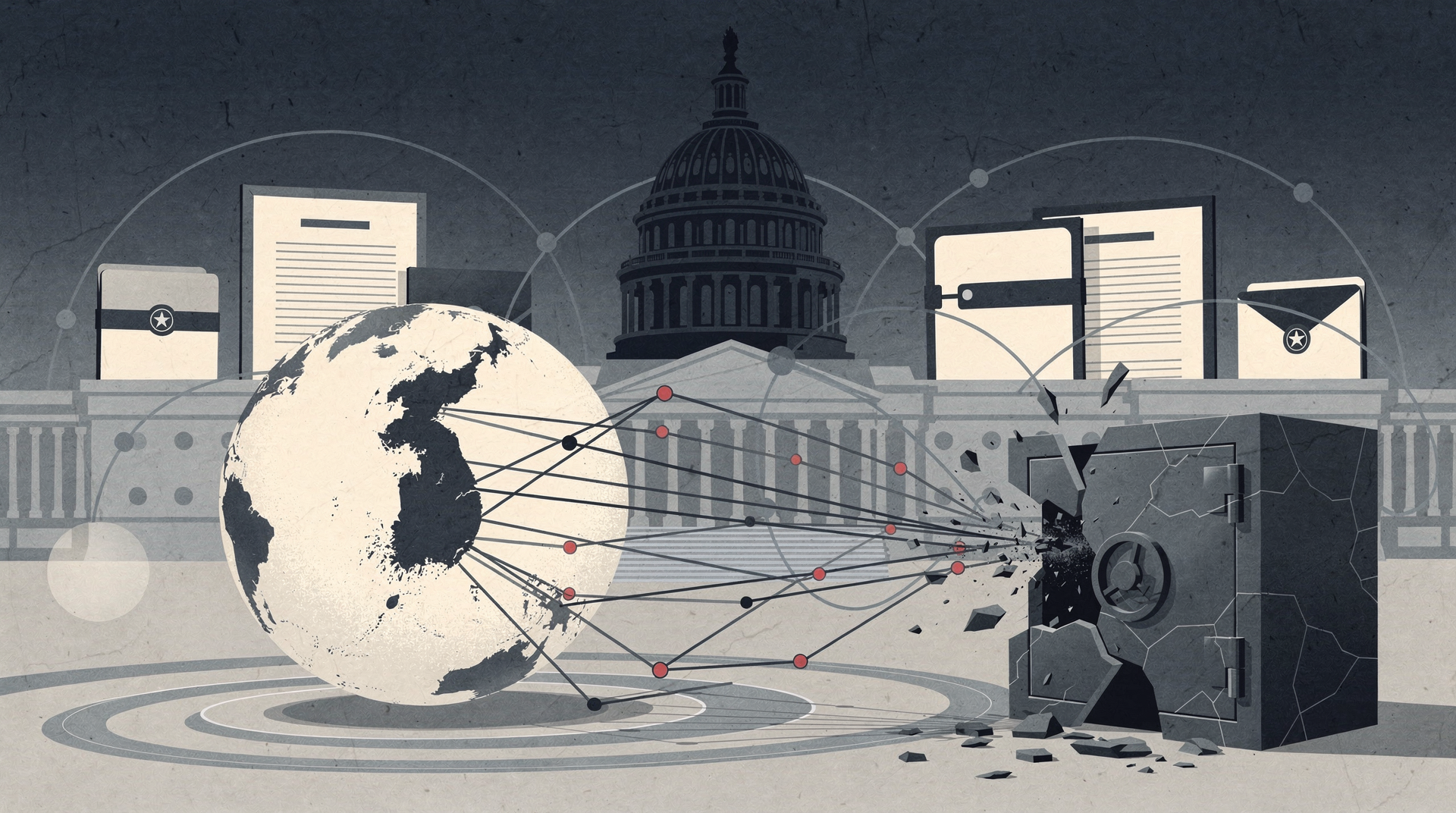



Every Senate Democrat signed a letter on Thursday demanding that Office of Management and Budget Director Russell Vought immediately rescind a proposed regulation that would dramatically expand executive authority to terminate or suspend federal grants at any time without notice. The rare full-caucus action signals Democrats view the rule as their highest-priority regulatory fight heading into the fall.
The letter, led by Sens. Mark Kelly (D-AZ) and Tammy Duckworth (D-IL), argues the proposed rule exceeds OMB’s statutory authority, undermines Congress’s constitutional power of the purse, and would allow the president to weaponize federal grants for political purposes. The rule would affect every category of federal grant recipient — universities, hospitals, state and local governments, nonprofits, and law enforcement agencies — by giving agencies sweeping discretion to cut funding mid-award.
“Your proposal exceeds OMB’s authority, will make it impossible for grant recipients to faithfully carry out the funding priorities that Congress establishes in statute, and would turn federal grants into a new cudgel for the President to unilaterally advance his partisan agenda and punish political rivals,” the senators wrote, according to a statement from Kelly’s office.
At the core of the dispute is a proposed rewrite of the Uniform Guidance — the governmentwide framework for managing federal financial assistance, codified at 2 C.F.R. Part 200 — which OMB published May 29 along with 41 other federal agencies. The rule would convert the framework from guidance into a binding regulation, concentrating grantmaking policy at OMB rather than at individual agencies.
Among its most consequential provisions, according to an analysis by the law firm Arnold & Porter, the rule would require senior political appointees to approve all discretionary grant awards before they are issued, reduce expert peer review to an advisory-only role, and add a “termination for convenience” clause allowing agencies to end any award that no longer aligns with the administration’s priorities. The firm described the changes as “the most sweeping” since the framework was created in 2013.
A Congressional Research Service summary confirmed the proposed rule’s broad scope, noting it would amend “numerous aspects” of the existing framework governing how grants are designed, awarded, administered, and audited across the federal government. CRS noted the existing guidance has been periodically updated — most recently in 2024 — but the current proposal goes far beyond prior revisions in scope and effect.
The senators warned the rule would force grant recipients to comply with vague, politically defined conditions while weakening transparency requirements designed to safeguard taxpayer dollars. “Applicants and recipients will be forced to play an endless guessing game, trying to determine which of their activities may or may not run afoul of OMB’s ambiguous regulations or the president’s whims,” the letter states. The senators also argued the changes “will make it harder for every community and organization in the United States to fairly access federal funding.”
The full-caucus sign-on is an unusually broad show of institutional force. Such letters typically draw a subset of interested members; a unanimous Democratic caucus response signals coordinated leadership strategy. The senators invoked Article I of the Constitution, arguing OMB’s proposal “unlawfully seeks to substitute Congress’s role in directing federal spending with the President’s preferred priorities.”
Comments on the proposed rule are due July 13. Over 300 multi-sector stakeholders have separately asked OMB for an extension, but the agency appears unlikely to grant one. OMB has targeted an October 1 effective date — setting up a potential collision with congressional appropriations decisions for fiscal year 2027.