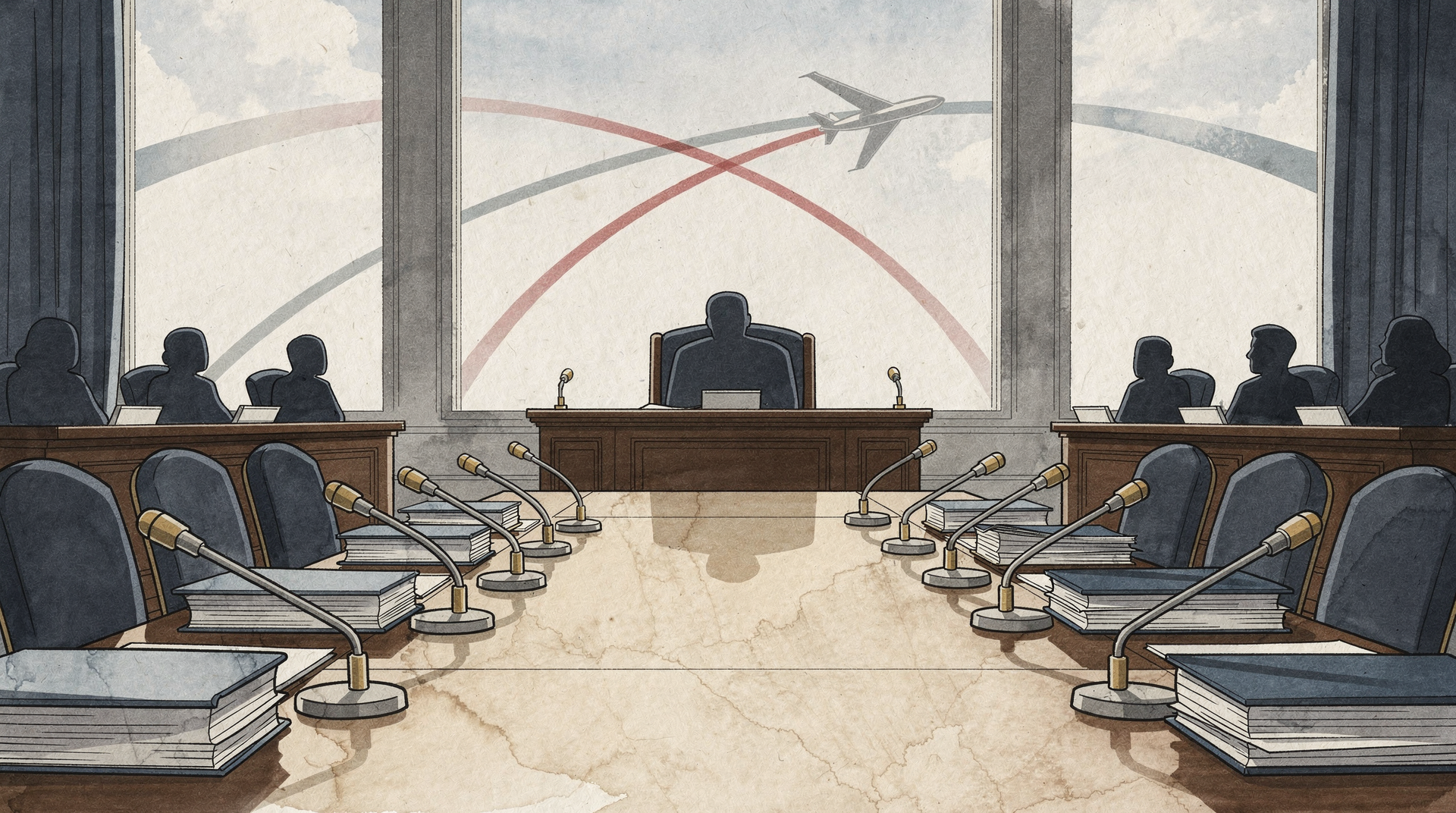
The Senate Commerce Subcommittee on Aviation convened top airline industry leaders on Monday to examine a persistent surge of near-miss incidents in the nation’s airspace, a hearing that could directly shape the next round of FAA safety legislation and reauthorization priorities.
The hearing, titled “Close Calls: Improving Safety Across the National Airspace System,” was chaired by Sen. Jerry Moran (R-Kan.) and featured testimony from four industry heavyweights: Gov. Chris Sununu, now serving as President and CEO of Airlines for America; Todd Hauptli of the American Association of Airport Executives; James Viola of the General Aviation Manufacturers Association; and Capt. Jason Ambrosi, President of the Air Line Pilots Association. For those tracking the revolving door between government and industry, Sununu’s appearance as the airline lobby’s top executive — after years as New Hampshire’s governor — was a notable debut before the committee that regulates his new industry.
The hearing follows a sustained pattern of airspace safety failures that have sharpened congressional attention. Moran cited a striking statistic in announcing the session: over a three-year period, 15,000 close calls occurred in the airspace near Reagan Washington National Airport alone. “Unfortunately, near collisions are occurring frequently in congested airspace around the country,” Moran said. “Congress has made significant investments in aviation safety, and we must continue to implement changes and build on those investments.” Senate Commerce Committee Chairman Ted Cruz (R-Texas) added that with approximately three million people flying daily in U.S. airspace, “aviation safety requires both a competent and vigilant FAA, as well as reforms that help pilots avoid collisions.”
The subcommittee’s decision to hear from industry witnesses — rather than FAA officials — signals a shift toward examining what airlines, airports, and manufacturers can contribute to closing safety gaps. A previous hearing in May featured FAA Administrator Bryan Bedford, who detailed the agency’s response to 50 safety recommendations issued by the National Transportation Safety Board following the January 2025 midair collision near DCA that killed 67 people. According to The Air Current, the FAA has fully addressed just seven of those recommendations, with most on timelines extending into 2027. The agency has said it is still evaluating whether to adjust the number of hourly arrivals permitted at DCA — a metric the NTSB identified as a contributing factor to the crash.
The aviation industry itself is not unified on reform priorities. Airlines, pilot unions, airport operators, and general aviation manufacturers each face different regulatory pressures and hold distinct views on how to modernize air traffic control technology, address the chronic controller staffing shortage, and implement collision-avoidance upgrades. Antiquated technology and staffing deficits have been recurring themes in congressional testimony throughout the year. Cruz has pushed the bipartisan ROTOR Act, which would require visibility enhancements for all aircraft operating in congested airspace — a direct response to the NTSB’s finding that the see-and-avoid standard failed catastrophically in the DCA collision.
What comes next depends on whether Monday’s testimony produces specific legislative proposals or merely adds to the growing record of concern. With FAA reauthorization priorities still being shaped and the NTSB’s DCA recommendations largely unfinished, the subcommittee’s findings could directly influence the scope and urgency of the next aviation safety bill.