


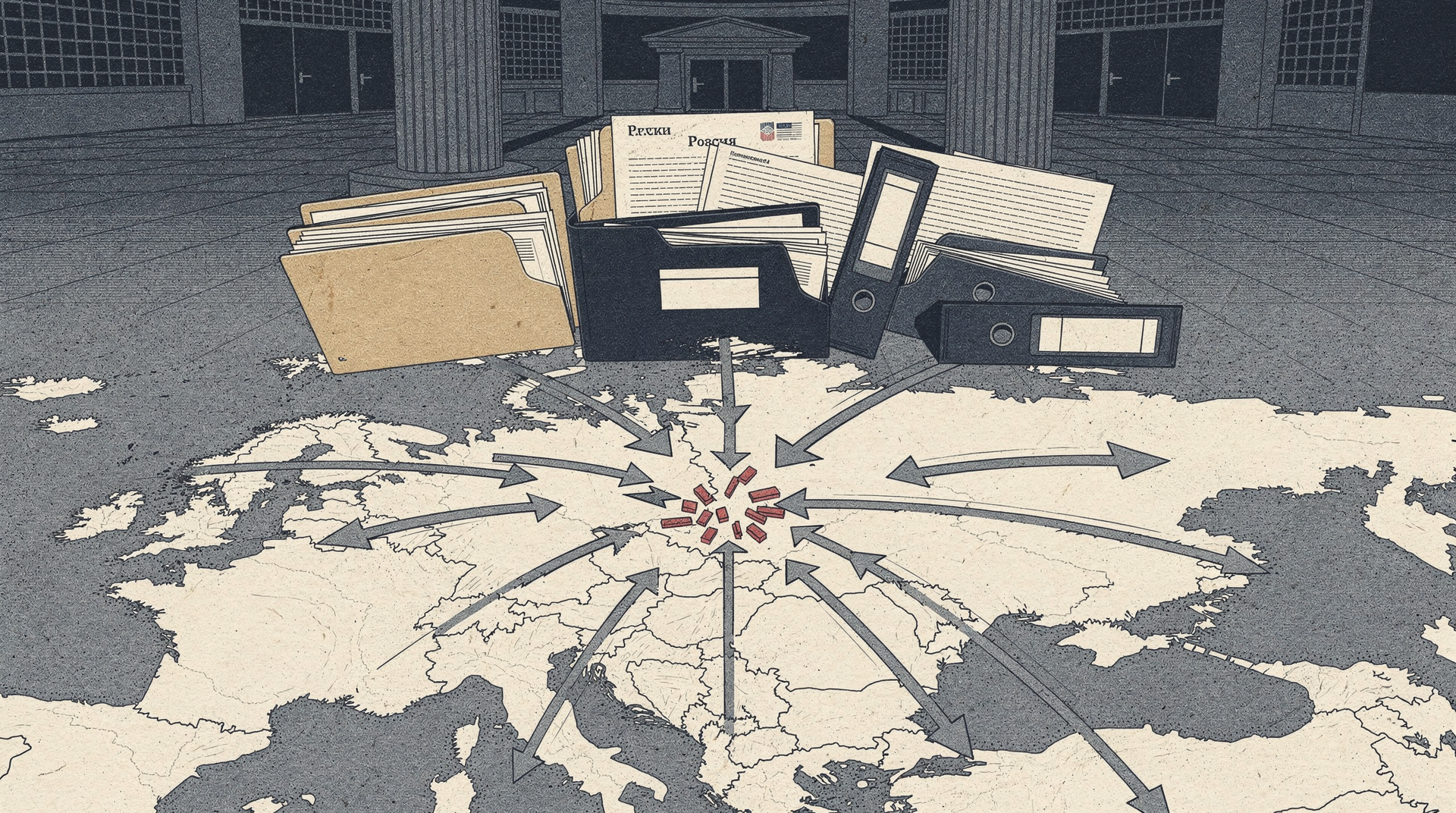
Despite receiving massive military aid from China, Iran, and North Korea, Russia’s institutional rigidity is preventing it from converting that support into meaningful battlefield effectiveness, according to a new analysis published this week by the Center for Strategic and International Studies.
The brief by CSIS analysts Wesley Bailey and Daniel Byman examines the gap between the volume of partner aid flowing into Russia and Moscow’s ability to use it, finding that institutional barriers — language differences, training deficits, and interoperability limits — have created a hard ceiling on what external support can accomplish.
As of mid-2026, Russia has suffered an estimated 1.4 million battlefield casualties, including up to 450,000 deaths. Ukraine, meanwhile, has launched more than 400 strikes at targets 100 kilometers or more inside Russian territory since January 2026, demonstrating sustained offensive reach despite the prolonged conflict.
The analysis identifies a key distinction in how Russia absorbs different types of aid. Familiar material — Iranian-manufactured drones and Chinese microelectronics — integrates with relative ease into existing Russian military systems. An estimated 90 percent of Russia’s microelectronics came from China in 2023, and that pipeline continues to flow.
But aid requiring institutional adaptation tells a different story. Chinese intelligence, surveillance, and reconnaissance data intended to improve Russian targeting accuracy goes largely unused, the analysis finds, because Russian military structures lack the training and procedures to incorporate externally sourced ISR into their targeting cycle. North Korean troop integration has faced similar obstacles, with language barriers and incompatible command structures limiting their operational utility.
The findings carry direct implications for the coalition of embassies and missions coordinating security assistance to Ukraine. If Russia cannot convert partner aid into proportional military gains, the effectiveness of allied sanctions — which aim to restrict exactly this kind of capability transfer — may be greater than raw aid volumes suggest.
For U.S. Embassy Kyiv and U.S. Embassy Moscow, the analysis provides a credentialed intelligence baseline for assessing the trajectory of the conflict and the durability of Russia’s war effort despite its expanding network of military partners.

