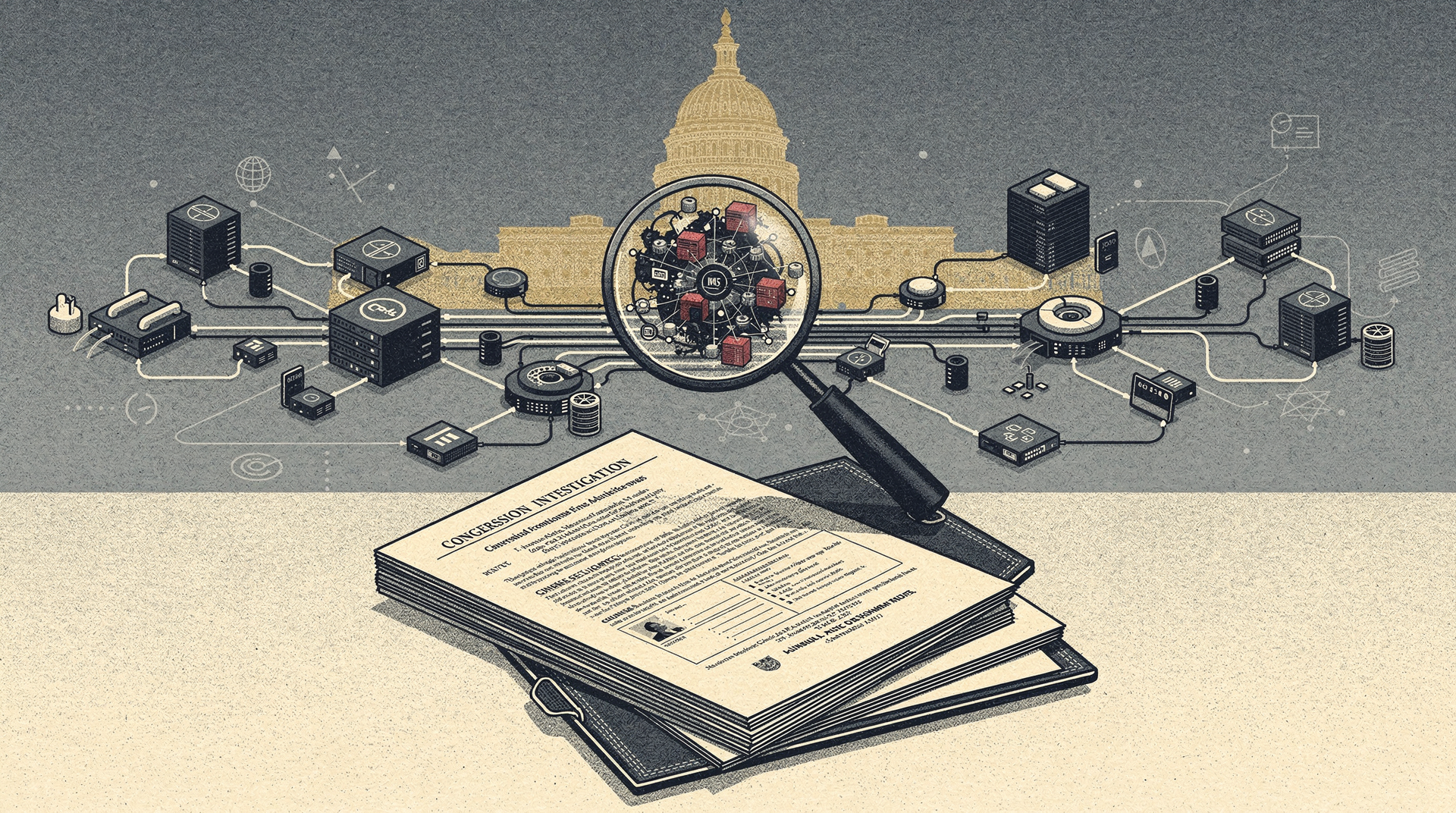
Chinese state-owned telecommunications firms remain “deeply embedded” in American internet infrastructure despite years of federal efforts to revoke their operating licenses, according to a congressional investigation published Tuesday by the House Select Committee on the Chinese Communist Party.
The report, titled “Stranger Pings,” found that China Mobile, China Unicom and China Telecom maintain “extensive unregulated footprints” within U.S. networks through subsidiary operations, interconnection agreements and points of presence that were not covered by previous license revocation orders.
The investigation — conducted on a bipartisan basis by the select committee — documented how the three state-owned carriers continue to route, process and potentially access U.S. internet traffic despite the Federal Communications Commission’s revocation of their Section 214 authorizations between 2019 and 2022. The report found that subsidiary entities and commercial partnerships have allowed the companies to maintain network access through channels that fall outside existing regulatory frameworks.
The findings carry direct implications for U.S. Mission China, which operates diplomatic facilities in Beijing, Shanghai, Guangzhou, Wuhan and Shenyang. Communications security between those posts and Washington has been an ongoing concern for the State Department, and the report’s findings add new urgency to discussions about the integrity of diplomatic and commercial communications channels.
For international business executives and technology professionals operating in or trading with China, the report raises immediate questions about data security, regulatory compliance and supply-chain risk. The committee recommended a series of legislative and regulatory actions, including closing loopholes in FCC authority, requiring enhanced disclosure from foreign-owned network service providers and directing the Commerce Department to audit points of access maintained by Chinese state-owned enterprises.
The select committee’s chairman called the findings “a serious national security vulnerability hiding in plain sight,” while the ranking member described the investigation as evidence that “our regulatory tools have not kept pace with the threat.” No timeline has been set for legislative action on the committee’s recommendations, and the relevant executive agencies have not yet issued formal responses to the report.