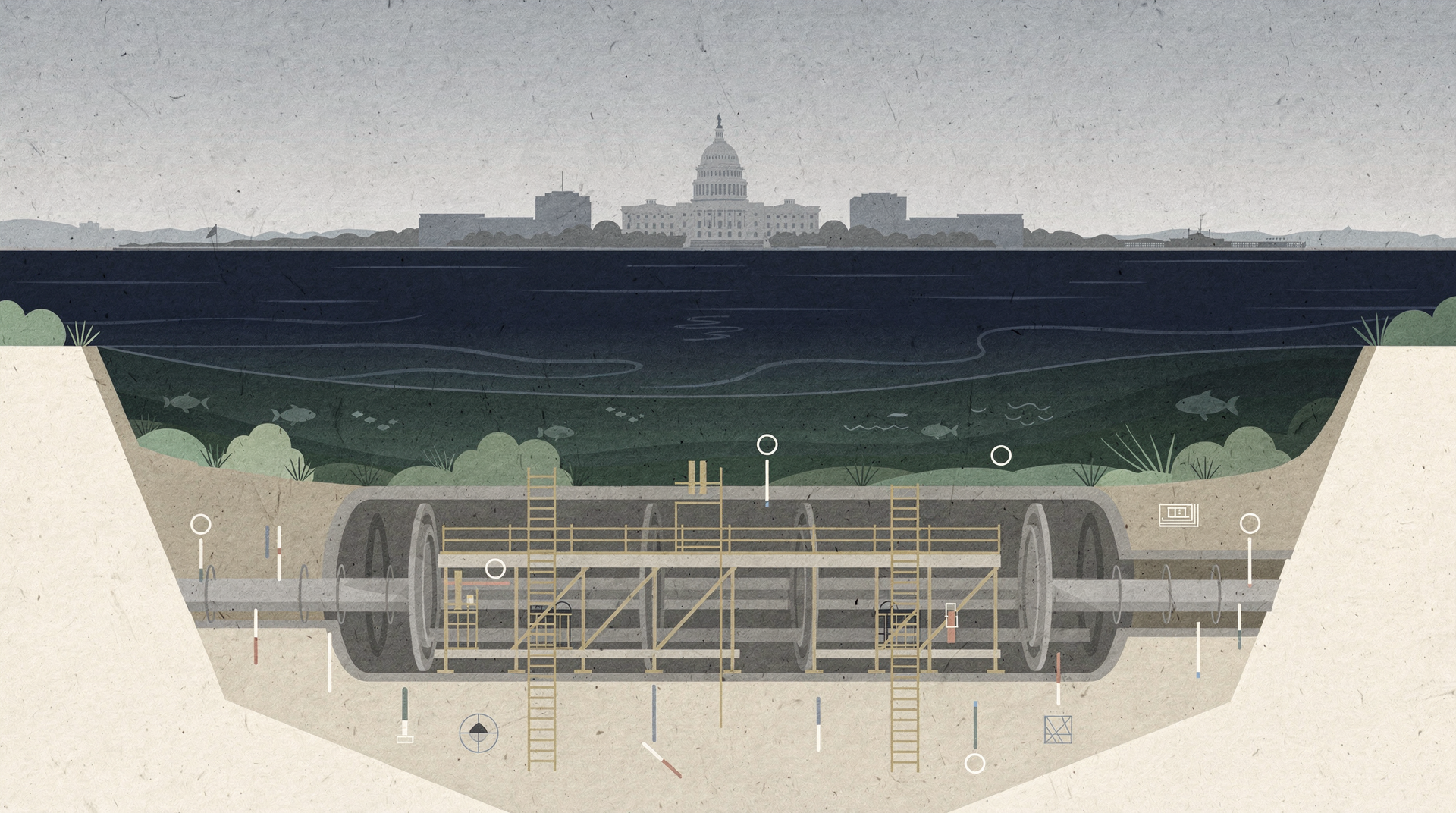
WASHINGTON — Testing conducted Oct. 7 found no lasting environmental harm from the 243 million gallons of sewage that poured into the Potomac River after the Potomac Interceptor sewer line collapsed in January, DC Water announced.
E. coli levels at six monitoring sites along the river have returned to normal ranges, according to the utility’s expanded testing program. The findings mark the first formal health clearance since the Jan. 19 collapse, which triggered one of the National Capital Region’s largest environmental emergencies in recent memory.
DC Water has launched a 10-year, $625 million rehabilitation project to repair and reinforce the full Interceptor system, a sewer trunk line that runs beneath the Potomac and serves portions of the District, Maryland and Virginia.
The price tag carries direct implications for ratepayers. DC Water’s Board of Directors approved rate increases for FY2027 earlier this year, and the rehabilitation costs could put additional upward pressure on bills in future budget cycles.
CEO David Gadis testified before the House Energy and Commerce Subcommittee on Oversight and Investigations in May 2026, detailing the circumstances of the collapse and the utility’s remediation plan. Congressional members pressed Gadis on whether deferred maintenance contributed to the failure.
DC Water has held community meetings across all three jurisdictions — the District, Maryland and Virginia — to update residents on the rehabilitation timeline, water quality testing and potential service impacts. The utility said additional public engagement sessions are planned as the project advances.
The Interceptor rehabilitation is expected to be the single largest capital project in DC Water’s history and will overlap with the utility’s search for a new CEO, whose hire is expected by early November.