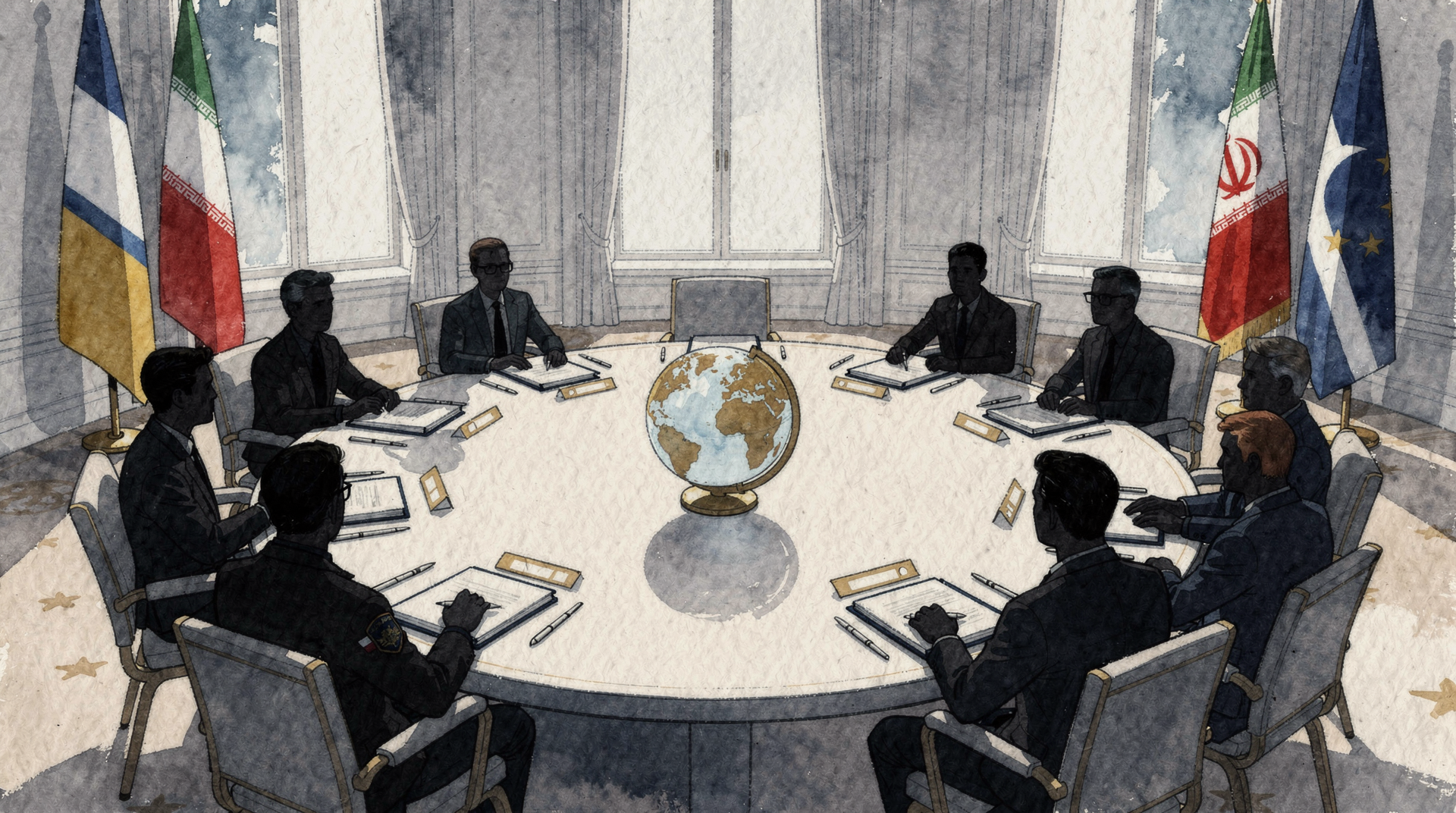
The Warsaw Security Forum’s New Security Leaders (NSL) program, held Oct. 10-14, brought 40 new members and 70 to 80 returning alumni to Warsaw.
Joshua Burgin, who coordinates the program, said its goal is to establish professional relationships among rising leaders before they reach senior positions in government, defense and other fields.
“The notion that rising leaders, the ones that aren’t household names, are coming together decades ahead of when they’re going to reach the apex of their particular power, as they’re growing, as they’re working, building those connections,” Burgin said in an interview.
Burgin said the program provides opportunities for participants to develop relationships that extend beyond formal meetings and conferences.
“We talk about the transatlantic alliance being important. We share incredible values. We have shared history. We have, in many cases, shared religious faith along a broad vector there, and the notion that we don’t spend enough time with each other,” he said.
Unlike traditional academic exchange or study-abroad programs, NSL focuses on maintaining professional relationships among participants over time, Burgin said.
“It’s not the same thing to come here during a semester in college, to come here for a summer after college,” he said. “It’s a wholly different thing to have peer-level contacts that you’re maintaining actively, that are in your phone, that you’re talking with on WhatsApp.”
The nonpartisan program has featured speakers from different political and professional backgrounds, including former Defense Secretary Lloyd Austin and retired Gen. David Petraeus, a former CIA director. Petraeus also spoke at the broader Warsaw Security Forum during its most recent gathering.
Burgin, a Florida native, developed an interest in Central and Eastern Europe while spending a year in Moscow as a high school student in the early 1990s. During that time, he studied Russian, laying the foundation for his subsequent involvement in regional affairs.
He later attended Harvard Kennedy School and became involved with the Warsaw Security Forum after discussing the organization with a military colleague who had studied at the Johns Hopkins School of Advanced International Studies. Burgin has attended the forum regularly since becoming involved.
The Kazimierz Pulaski Foundation established the Warsaw Security Forum in 2014 following Russia’s annexation of Crimea and the emergence of Russian-backed forces in eastern Ukraine.
Burgin said the events prompted the forum’s founders to establish a platform for discussions about European security and transatlantic cooperation.
“They looked at each other and said, ‘This cannot stand. We have to take some action,'” Burgin said, describing the founders’ response to Russian military activity in Ukraine.
Since its establishment, the forum has grown from approximately 800 attendees to nearly 3,000 participants representing 90 countries at its most recent gathering.
Burgin compared the forum’s development with that of the Munich Security Conference, which has operated for more than six decades and remains an established venue for international security discussions.
The NSL program is one component of the Warsaw Security Forum’s broader efforts to bring together policymakers, military officials, researchers and other professionals involved in security and foreign policy.
Burgin said the United States consistently accounts for the largest number of NSL applicants. He encouraged prospective participants who are not initially accepted to consider attending the broader forum and becoming involved in its professional network.
“If you’re not accepted and can find another way to attend the forum, come, demonstrate that you want to be part of the community,” he said.
The next Warsaw Security Forum is expected in 2027, although the Kazimierz Pulaski Foundation has not publicly confirmed dates for the event.
Additional information about the New Security Leaders program is available through the Kazimierz Pulaski Foundation.