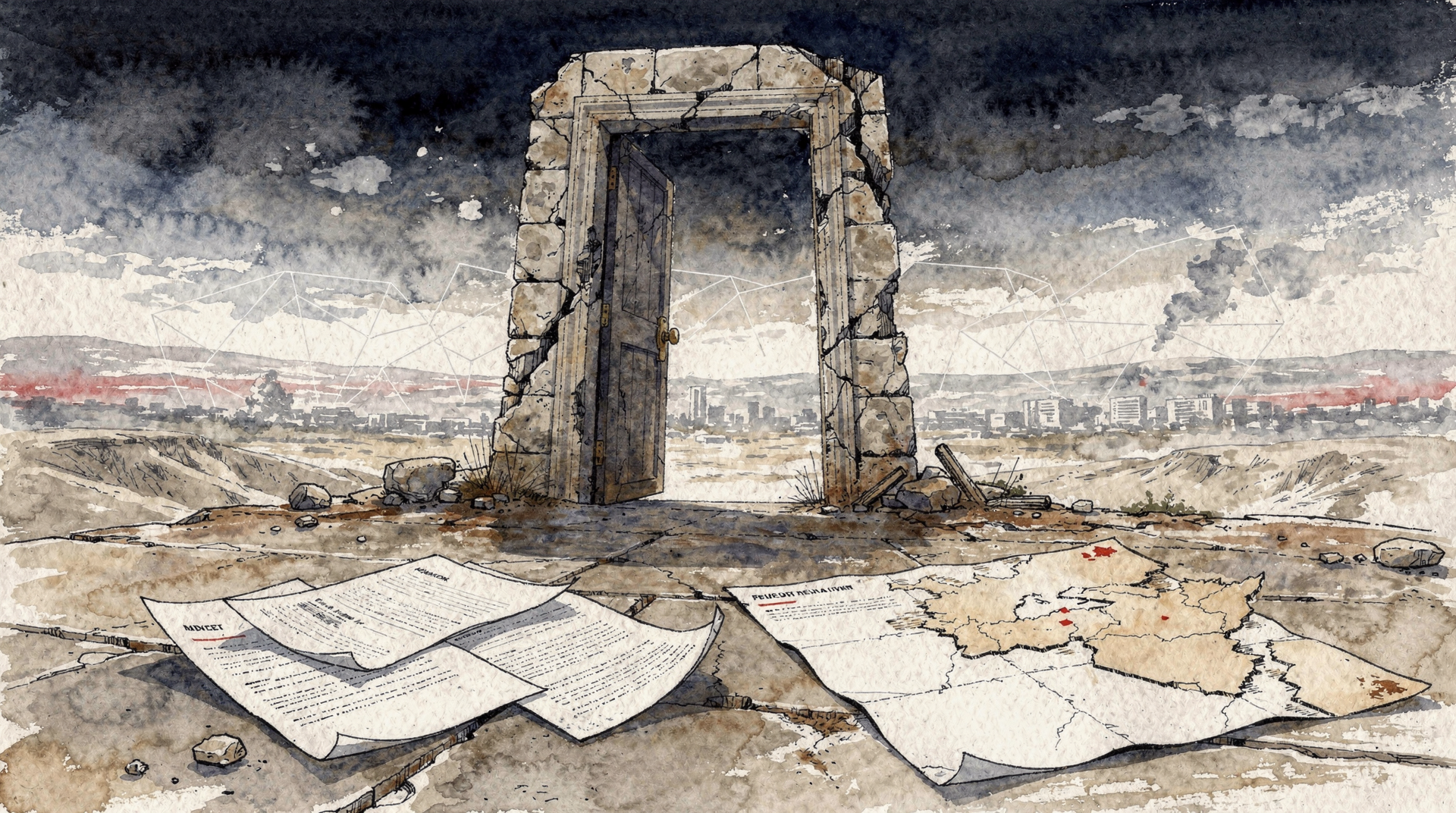



Israeli Prime Minister Benjamin Netanyahu on Sunday formally rejected President Donald Trump’s 15-point Gaza plan, telling his cabinet that the Israeli military “will not carry out any withdrawal until Hamas is genuinely disarmed,” according to a report by the Associated Press published by WTOP News.
The rejection places Netanyahu in direct public opposition to a framework the White House had presented as a diplomatic breakthrough — an unusual rupture in the US-Israel relationship at a moment when Washington is simultaneously managing an active military conflict with Iran. No immediate White House response was issued.
Trump’s Board of Peace announced last month what it called an agreement for the “complete disarmament” of Hamas and other armed groups in Gaza, with Israeli forces withdrawing as disarmament proceeded. The framework called for focusing initially on Hamas’s heavy weaponry, military production sites, weapons depots, and the group’s extensive tunnel network. Netanyahu dismissed those terms Sunday, saying Israel “rejects the 15-point document” and insisting that any disarmament be “genuine” rather than “fictitious.” He acknowledged ongoing discussions with American officials but added, “They have ideas; some of them are acceptable to us and some are not.”
Hamas’s political bureau responded that the group “reaffirms its commitment” to the plan and called on mediators to pressure Israel. Bassem Naim, a senior Hamas official, said the group expected the United States and intermediaries to hold Netanyahu accountable to the agreed framework. Hamas has said it would hand over heavy weapons on condition that Israel end “all forms of aggression” and withdraw from Gaza — a sequencing demand that Israel flatly rejects.
The BBC reported that Netanyahu’s stance, while not entirely surprising, reflects the difficult political terrain he navigates ahead of Israeli elections scheduled for Oct. 27. Far-right coalition members, including National Security Minister Itamar Ben Gvir, have dismissed the draft plan as “not acceptable,” putting additional domestic pressure on the prime minister to resist concessions. The BBC noted that Netanyahu “has taken some time” to issue his formal rejection, “perhaps reflecting the difficult position the Israeli leader is in” — unwilling to accept Trump’s terms but reluctant to alienate his closest ally.
The diplomatic standoff carries significant implications for Congress. Lawmakers on the Senate Foreign Relations and House Foreign Affairs committees face difficult questions about continued US aid to Israel when they return from recess in September. The rejection also complicates the administration’s broader Middle East strategy, which has sought to stabilize Gaza while prosecuting a war with Iran.
Al Jazeera noted that Netanyahu also reiterated Sunday that “as long as I am prime minister, no Palestinian state will arise” — a position that further narrows the diplomatic space for US negotiators. The outlet reported that Israel is becoming “increasingly unpopular” in the United States, with the Democratic Party “very much sliding towards the Palestinian cause,” adding a domestic political dimension to the standoff.
The Board of Peace’s high representative for Gaza, Nikolay Mladenov, defended the plan Sunday as “the only way forward” to prevent a repeat of the Oct. 7, 2023, Hamas attack on Israel. He told Israel’s Channel 12 that Israel had been asked “to give the process a chance.” But with no mechanism to compel Israeli compliance, midterm politics constraining the administration’s leverage, and Israeli elections looming, the path from rejection to a revised framework remains unclear.