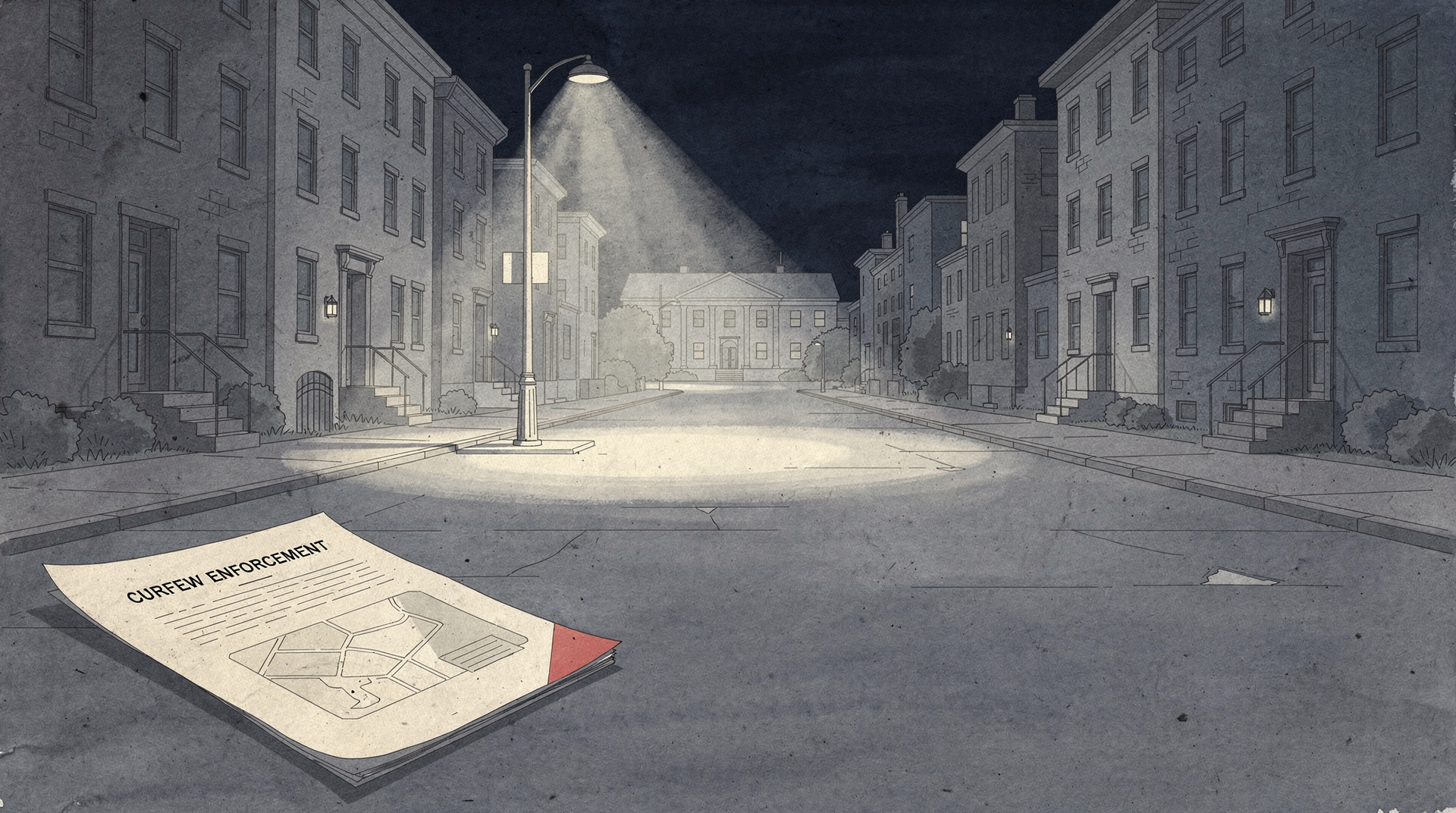
Metropolitan Police Department Chief of Police announced a new youth curfew zone in the District, according to a department notice published Aug. 6, a move timed one week before the start of the 2026-2027 school year and coinciding with a series of recent arrests involving young people.
The MPD announcement, posted on the department’s official website, establishes designated areas where youth curfew laws will be actively enforced as students prepare to return to classrooms. The curfew zone designation gives officers authority to stop and detain minors found in the area during specified nighttime hours.
The timing of the announcement appears coordinated with the Mayor’s Office, which simultaneously released a back-to-school checklist for families on its website. Together, the actions signal an escalated public safety posture heading into the new academic year.
Youth curfew enforcement in D.C. has a fraught history. Civil liberties organizations, including the ACLU of the District of Columbia and the D.C. Public Defender Service, have previously raised concerns that curfew zones disproportionately affect Black and Latino youth and are concentrated in wards east of the Anacostia River. Enforcement data from prior curfew zone implementations have shown uneven application across the city’s eight wards.
D.C.’s youth curfew law allows police to detain minors found unaccompanied during overnight hours, generally between 11 p.m. and 6 a.m. on weeknights and midnight to 6 a.m. on weekends for those under 17. Designated curfew zones can carry stricter hours and more aggressive enforcement.
The MPD’s announcement did not specify which wards or neighborhoods would be covered by the new zone, details that youth advocates and public defenders have said are critical for assessing whether the policy is being applied equitably. The department also did not release effectiveness data from prior curfew zone designations.
Youth advocacy organizations in the District have long argued that curfew enforcement is a blunt instrument that criminalizes young people for being outside rather than addressing the root causes of youth violence. These groups have called for investment in after-school programs, recreation centers and youth employment as more effective alternatives.
The announcement comes amid heightened concern about youth safety in the District. MPD reported multiple arrests in the same period as the curfew zone announcement, though the department did not draw a direct connection between those incidents and the new designation.
For D.C. families, particularly those in the affected neighborhoods, the curfew zone raises immediate practical questions: What are the exact boundaries and hours? What happens if a minor is detained? And what rights do parents and guardians have in the enforcement process? MPD has directed families to its website for additional information.
The D.C. Council’s Committee on the Judiciary and Public Safety, which has oversight of MPD, has not publicly commented on the new curfew zone. Council members have previously expressed divided views on curfew enforcement, with some supporting the tool as necessary for public safety and others questioning its effectiveness and equity.
As D.C. Public Schools prepares to welcome students back for the new year, the curfew zone will be one of several public safety measures families navigate alongside school registration, transportation planning and supply drives.