The WMATA Board of Directors on Thursday approved two reimbursable funding agreements with the District totaling $305 million for transit improvements tied to the future Washington Commanders stadium at the RFK campus — one of the largest single-station investments in Metro’s history.
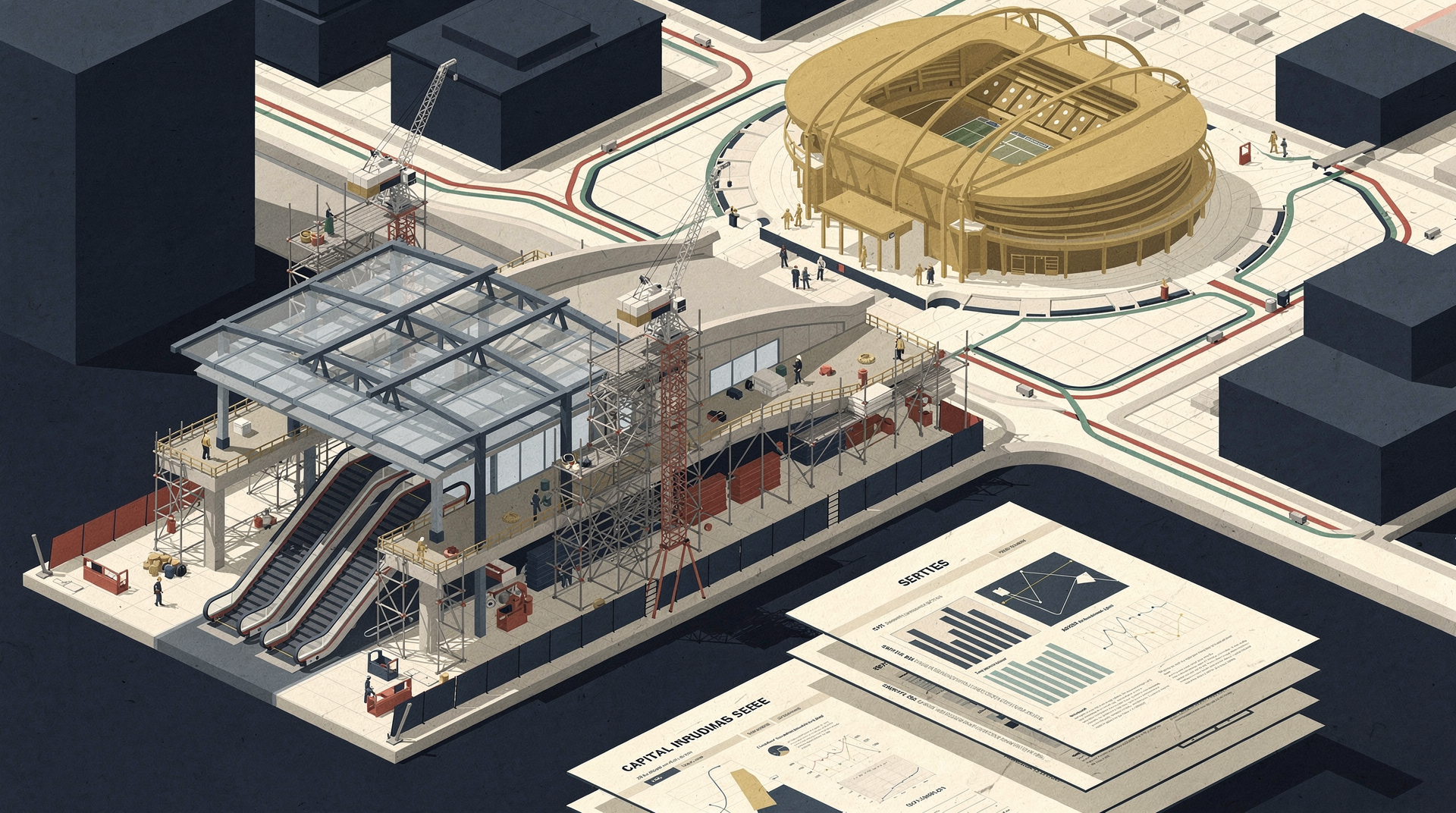
The centerpiece is a $300 million expansion of Stadium-Armory station, which will upgrade elevators, escalators, stairs, and mezzanine areas to accommodate the massive crowds expected on NFL game days. A separate $5 million agreement funds initial planning for the Gold Line, a proposed bus rapid transit route that would connect Union Station to Stadium-Armory through the heart of the developing RFK campus.
WMATA General Manager Randy Clarke said the station could become “one of the busiest” in the system once the stadium opens for the 2030 NFL season. “Without Metro being ready, the games are not going to work well,” Clarke said.
The District is committing the $300 million over four fiscal years, a substantial obligation during a period of severe budget stress. Mayor Bowser this week returned the FY2027 budget unsigned, warning that the Council’s spending plan creates an $837 million structural deficit. How the city absorbs a $300 million transit commitment against that backdrop — and who bears the risk of cost overruns — remains an open question.
The $5 million Gold Line allocation is modest by comparison, covering only preliminary planning and design work. Transit advocates have described the bus rapid transit concept as a potential model for the region, but the gap between planning funds and construction dollars raises questions about whether the Gold Line will be operational in time for the stadium’s opening.
Under the reimbursable agreement structure, the District will fund the work and WMATA will manage construction. The arrangement shields WMATA’s operating budget from direct exposure but places the capital risk squarely on DC’s finances. The Board’s approval moves the project into the design and procurement phase, with construction expected to accelerate in 2028.