Pakistan, Saudi Arabia, and Turkey signed a mutual defense agreement in Mecca in August that commits each nation to treat an armed attack on any one of them as an attack on all three, according to a Carnegie Endowment analysis published Sunday that frames the pact as a direct response to declining American influence in the Middle East.
The agreement — signed August 7 by Turkish President Recep Tayyip Erdogan, Saudi Crown Prince Mohammed bin Salman, and Pakistani Prime Minister Shehbaz Sharif — represents the first mutual defense commitment among three middle powers in the Muslim world forged independently of the United States. Its implications for NATO cohesion, nuclear proliferation, and American leverage in the region are far-reaching.
Carnegie analysts Alper Coşkun and Amr Hamzawy write that the pact was driven by “eroding American reliability and influence,” particularly in the wake of the U.S.-Israeli war with Iran. Hamzawy noted that Washington “launched its war against Iran without consulting its Gulf allies, above all Saudi Arabia,” and that direct Iranian attacks on Saudi territory — along with proxy strikes by Yemen’s Houthis and pro-Iran militias in Iraq — compelled Riyadh to seek military partnerships beyond its traditional American patron.
Each signatory brings a distinct strategic asset to the arrangement. Saudi Arabia contributes economic depth and energy resources. Turkey offers a large military and an advanced defense industry alongside its NATO membership. Pakistan provides the only nuclear arsenal in the Muslim world. The full terms of the agreement have not been publicly disclosed, adding strategic ambiguity to its scope and obligations.
The pact has already faced an early test. Carnegie’s Coşkun noted that renewed Houthi attacks on Saudi Arabia prompted Turkey to offer “tangible support” including air defense systems, while refraining from offensive operations — illustrating the balancing act the agreement’s members will have to navigate.
The BBC reported on the day of the signing that the agreement drew a sharp response from Tehran, where a senior member of parliament warned Saudi Arabia that “a paper agreement with Turkey and Pakistan does not bring them security.” The BBC noted that for Pakistan, the pact offered complementary benefits amid its own tensions with India, which escalated into open conflict in May 2025.
A Hoover Institution analysis published in September noted that the pact’s mutual defense clause “at least declaratively resembles NATO’s concept of collective defense under Article 5,” though it cautioned against labeling the arrangement a “Muslim NATO” given the geographic distance, differing threat perceptions, and absence of joint command structures among the signatories. The Hoover researchers also noted that the agreement “could signal a new phase in regional states’ efforts to build security networks that do not rely exclusively on the United States.”
The timing posed a striking contrast: the agreement came just one month after Turkey hosted a NATO summit in Ankara that was widely seen as a signal of renewed Turkish commitment to the Western security architecture. Turkish officials have insisted the two alliances are complementary, not contradictory, and Carnegie’s Coşkun noted that President Trump offered an “enthusiastic endorsement” of the Mecca Pact, including an “emphatic ‘Wow’ on social media.”
For Washington, the pact raises questions about whether this is a temporary defensive hedge or the foundation of a post-American regional security architecture. Carnegie’s Hamzawy framed it as part of a broader trend: Middle Eastern states “seeking new ways to collaborate with each other in matters of security, defense, and diplomacy” as American guarantees prove insufficient for the region’s escalating threats.
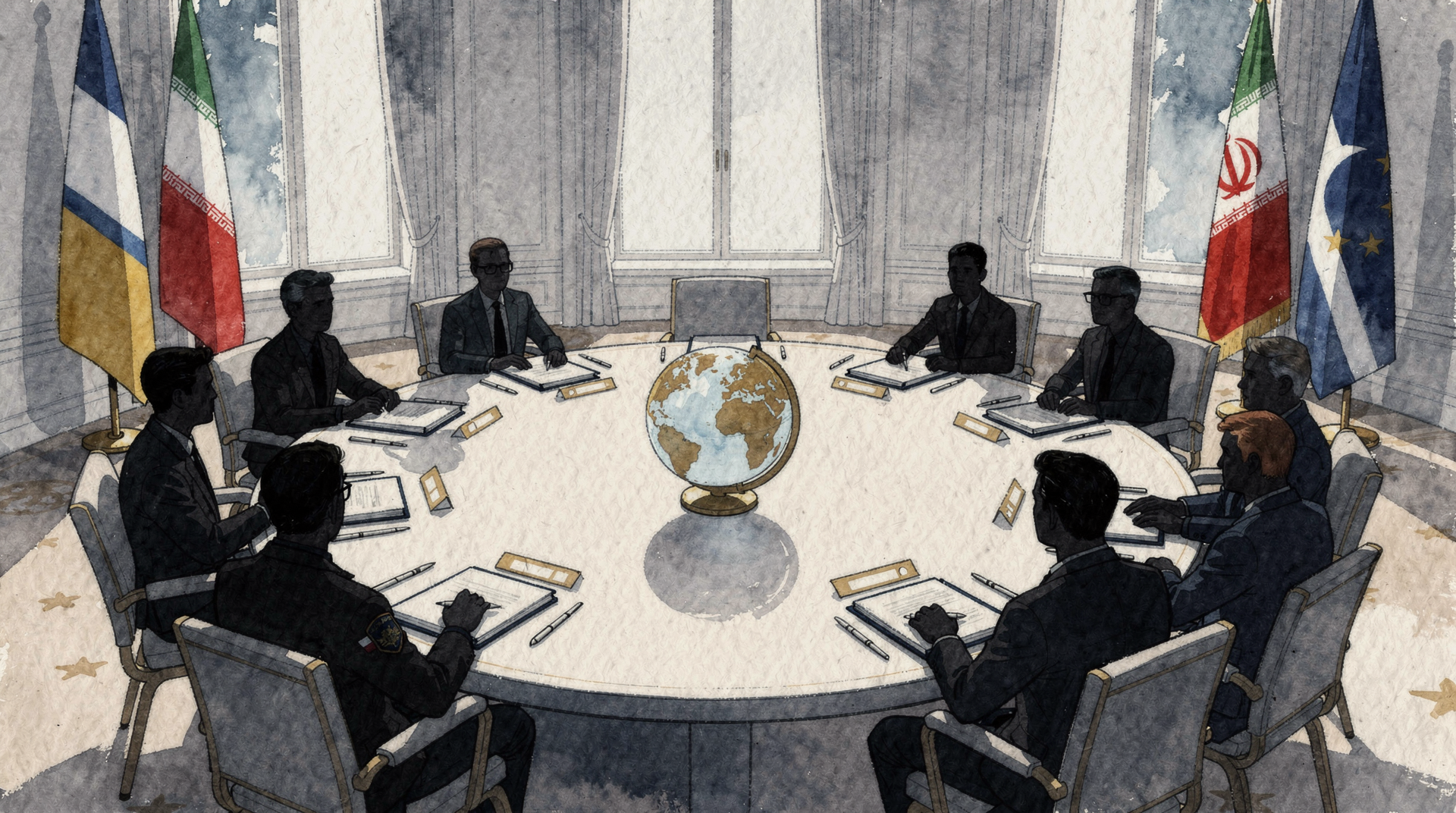
Image: Pakistan, Saudi Arabia, and Turkey signed the “Mecca Pact” on August 7, creating the first mutual defense bloc among three middle powers in the Muslim world forged entirely outside the U.S.-led security architecture, according to a Carnegie Endowment analysis published Sunday.