

Elections officials in Maryland and Virginia pushed back this week against President Trump’s assertion that the nation’s voting system is fundamentally broken, offering detailed rebuttals of claims the president made during a primetime televised address, according to a report by WTOP.
The response came as an Associated Press fact-check of the documents Trump released during the address found they outlined potential vulnerabilities in election systems rather than evidence of actual voter fraud — a critical distinction with significant legal and policy implications. The fact-check concluded that the materials catalogued the types of theoretical weaknesses routinely identified by election security professionals, not documented cases of ballots being cast, counted, or altered fraudulently.
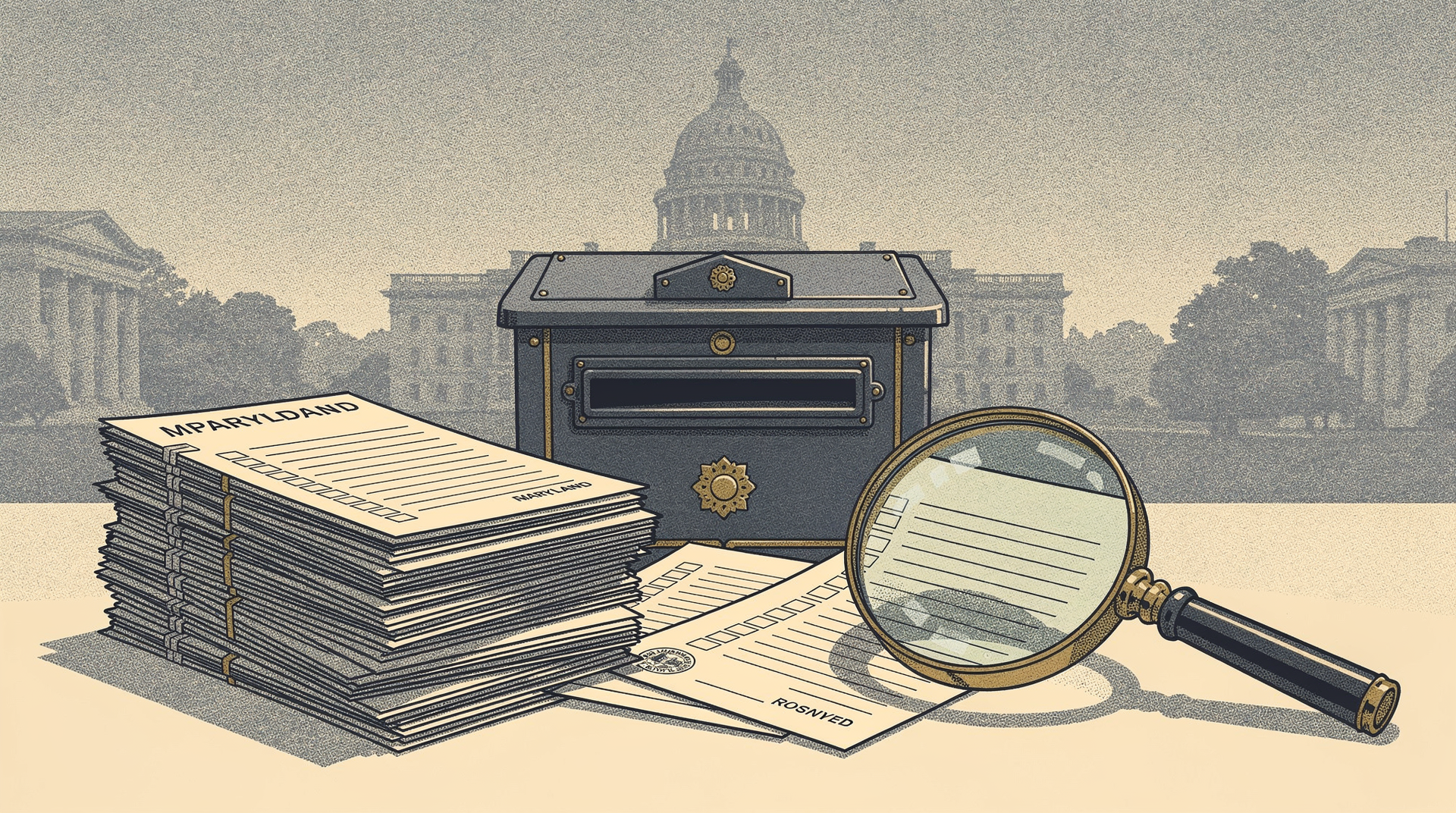
Jared DeMarinis, Maryland’s elections administrator, emphasized the state’s paper ballot system and its pre- and post-election audit processes as safeguards against fraud. He pointed to the physical paper trail as a built-in verification check that allows independent review of machine-tabulated results, a layer of transparency absent in purely electronic voting systems. DeMarinis invited skeptics to observe the process firsthand, a standing offer that Maryland has extended in previous election cycles.
Samantha Alfaro, elections communications manager for Loudoun County, Virginia, similarly defended the integrity of the system. Alfaro described the decentralized nature of American elections — administered by thousands of local jurisdictions rather than a single federal authority — as “a feature of our democracy,” not a vulnerability. She also extended an open invitation for public observation of election administration procedures in Loudoun County.
The officials’ comments carry particular urgency with Virginia’s August 4 primary days away. Election administrators across the commonwealth are actively preparing for a statewide vote while simultaneously responding to presidential rhetoric that casts doubt on the very systems they oversee. Virginia conducts its elections through 133 separate local election offices, each managed by a locally appointed or elected general registrar.
The broader confrontation reflects a deepening institutional tension between the federal executive branch and state-level election administration. DHS Secretary Mullin has signaled that the department may take enforcement action against states that resist federal election security directives, though the specific legal authorities available to compel state compliance remain unclear. Election administration has historically been a state and local function, and multiple federal court precedents reinforce that division of authority under the Constitution.
The question of what enforcement tools the federal government can actually deploy is legally complex. The Help America Vote Act of 2002 established minimum standards and created the Election Assistance Commission, but it did not grant the executive branch unilateral authority to override state election procedures or impose penalties for noncompliance with presidential directives.
Maryland and Virginia operate under markedly different election systems, but both have invested in safeguards designed to detect and prevent fraud. Maryland uses a uniform paper ballot system statewide with centralized administration, while Virginia’s 133 local election offices each maintain their own voter rolls, equipment, and poll worker training — a decentralized model that makes the kind of coordinated systemic fraud alleged by the president logistically impractical, election security experts have noted.
The Senate Judiciary Committee, House Judiciary Committee, and Senate Intelligence Committee all have oversight jurisdiction over election security and the federal government’s role in the process, though none has announced hearings specifically addressing the president’s claims or the DHS enforcement posture.