Iran’s Supreme National Security Council on Saturday issued sweeping conditions for reopening the Strait of Hormuz, demanding the United States permanently end the Iran war, lift a naval blockade of Iranian ports, withdraw military forces from the region, and pledge never to threaten Iran again, the Associated Press reported via WTOP News.
The demands represent a material escalation in the diplomatic standoff over the critical waterway, which carried roughly 20% of the world’s oil supply before the conflict disrupted traffic five months ago. The council’s secretary, Mohammad Bagher Zolghadr — also a Revolutionary Guard commander — published the conditions through Iranian state media, adding that Iran must be “completely compensated” for war damage, have sanctions lifted, and receive unconditional release of frozen assets.
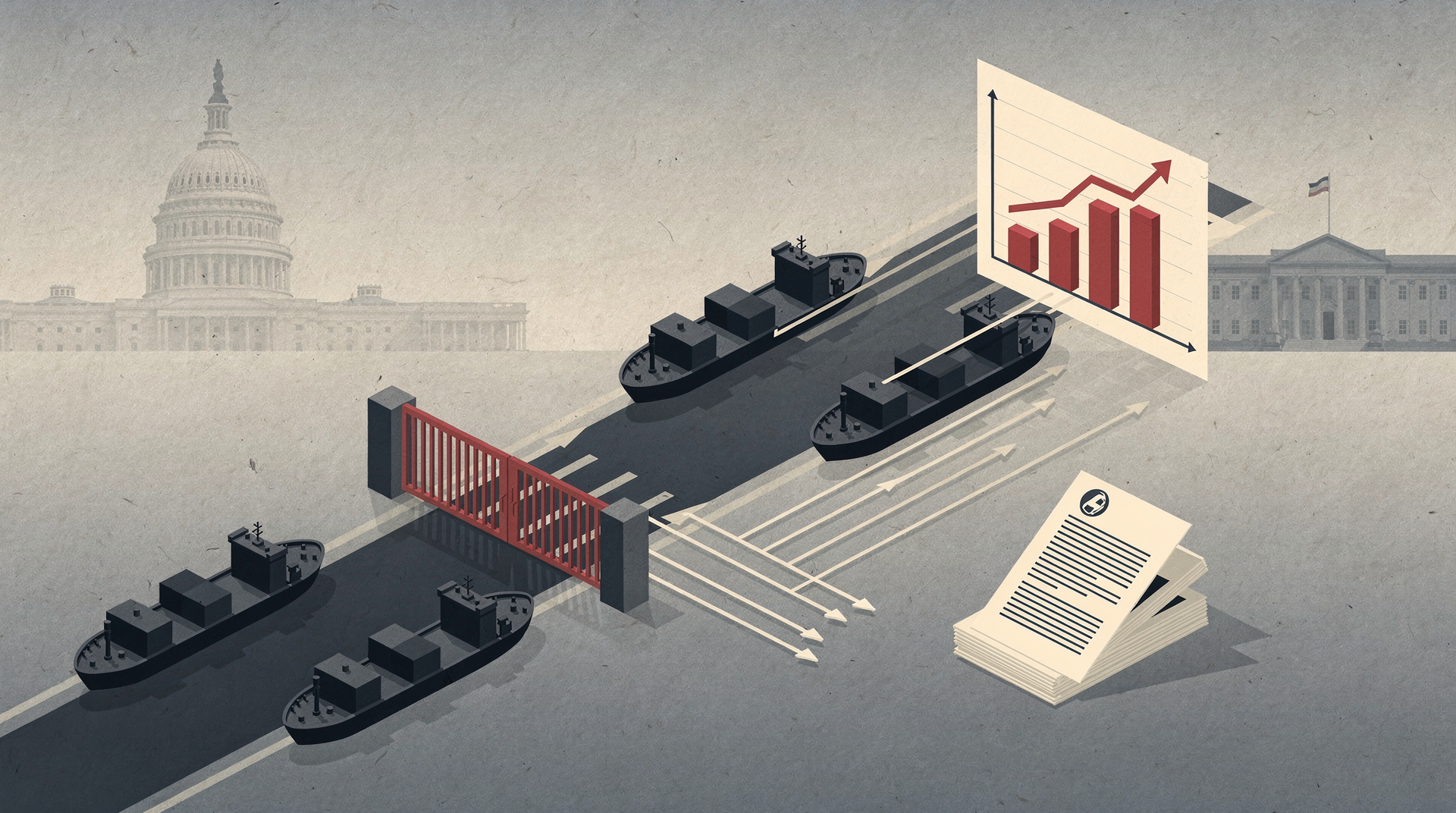
The strait’s continued disruption is already extracting a cost from American consumers. Gasoline prices remain at approximately $4.06 per gallon — 36% above pre-war levels — according to CNBC, which reported that the wars in Iran and Ukraine have knocked out roughly 5 million barrels per day of refining capacity worldwide. Patrick De Haan, head of petroleum analysis at GasBuddy, told CNBC that prices could set a Labor Day record if Washington and Tehran fail to reach a stable agreement. The global refining shortfall means fuel prices may remain “unusually expensive” even as crude prices moderate, analysts said.
Iran simultaneously signaled it is negotiating with Oman on a temporary arrangement that would route ships entering the strait near Iran and exiting near Oman, without tolls during an interim period. Iranian Foreign Minister Abbas Araghchi said the two countries were in the “final stages” of an agreement on navigation but stressed that reopening the strait requires additional conditions “conveyed through intermediaries.” Two people familiar with the talks told the AP the arrangement is endorsed by Gulf Cooperation Council members and is expected to be jointly announced by Iran, Oman, the US, and the UN’s International Maritime Organization.
The United Arab Emirates reported Saturday that one of its ships, owned by state oil company ADNOC, was struck by an Iranian missile while transiting the strait. ADNOC said there were no casualties but disclosed that more than a dozen of its vessels have been attacked since the war began in February, killing one crew member and wounding 20 others.
France 24 reported that Iran’s Revolutionary Guards stated Sunday they would maintain the blockade “until the enemy accepts all our conditions,” characterizing the strait as “a theatre of war for us and not just a waterway.” President Trump, in an interview with Axios on Sunday, said the US was “only semi-negotiating” with Iran and watching economic pressures “take their toll.” He described the standoff as “like a chess game.”
The political dimensions of the crisis are sharpening. The 60-day window established by a June memorandum of understanding between the US and Iran — intended to produce a final deal — expires in just over a week with no resolution in sight. Congress returns in September to a defense budget debate that must reckon with both depleted American weapons stockpiles and the domestic cost-of-living impact of sustained high energy prices heading into November’s midterm elections.