

CISA issues emergency advisory urging water facility operators to disconnect exposed systems as analysts link campaign to broader Iran conflict
By Washington Signal | WASHINGTON
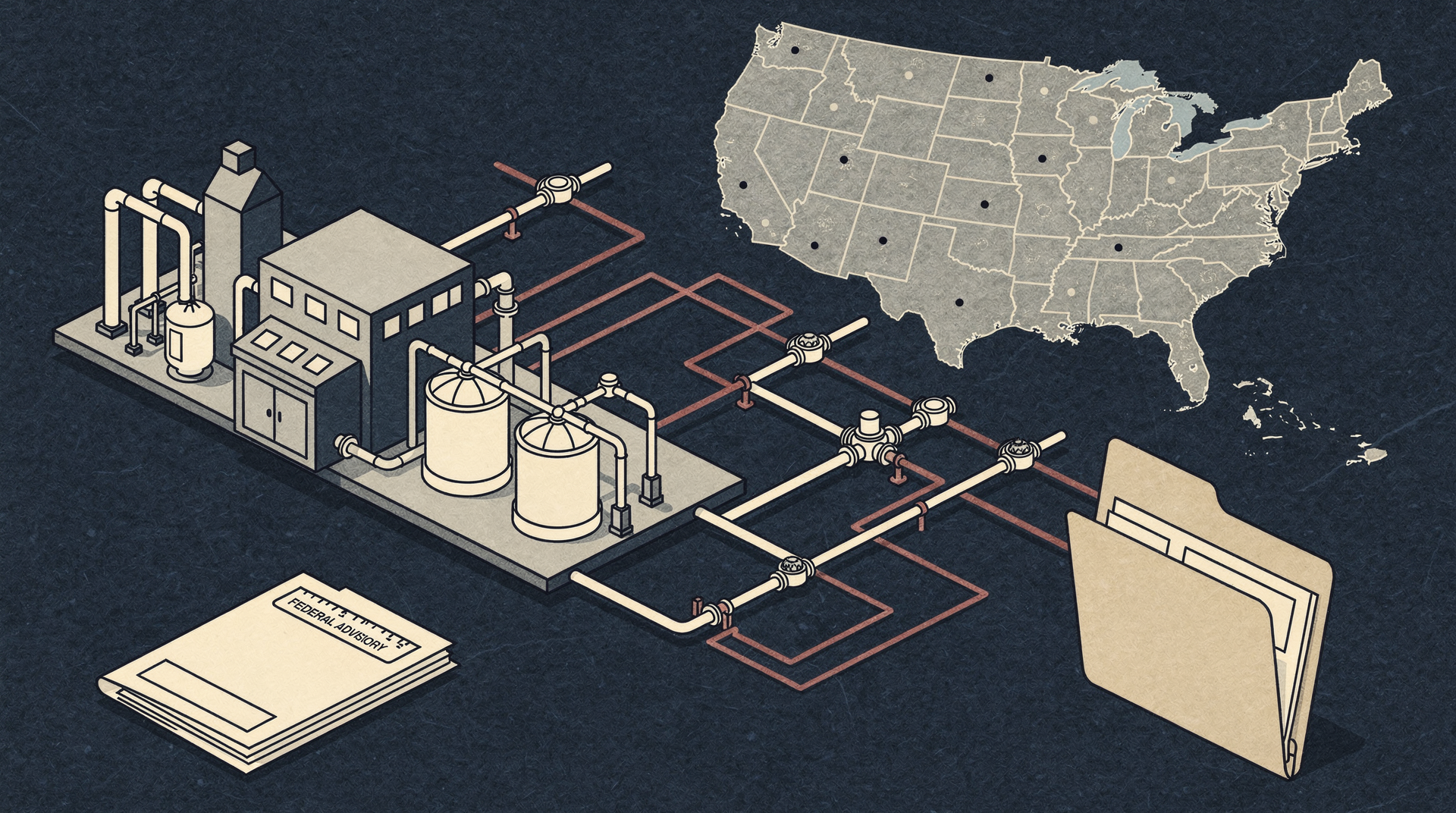
Iran-linked hackers have carried out concurrent cyberattacks against water treatment and distribution facilities in at least six U.S. states, prompting the Cybersecurity and Infrastructure Security Agency to issue an emergency advisory on Thursday urging operators to disconnect internet-exposed control systems. The campaign, detailed in a CSIS analysis published August 6, represents an escalation of Iran’s cyber operations against U.S. critical infrastructure amid the broader military conflict between Washington and Tehran that began in February 2026.
CISA’s advisory called on water utility operators to immediately audit their systems for unauthorized access, disconnect programmable logic controllers and other operational technology from internet-facing networks, and implement emergency access controls. The directive reflects the severity of the intrusions, which targeted the industrial control systems that manage water treatment processes including chemical dosing and pressure regulation, according to the CSIS analysis authored by Nikita Shah.
The attacks have not resulted in reported disruptions to water service or public health incidents, but cybersecurity experts warn that the access obtained by the attackers could have been used to manipulate treatment processes in ways that would be difficult to detect without specialized monitoring. The targeting of water infrastructure — a sector with historically weak cybersecurity defenses — follows a pattern established in previous Iranian cyber campaigns against U.S. municipal systems.
The CSIS analysis places the attacks within the context of Iran’s broader wartime cyber doctrine, which has shifted from espionage and disruption to what the report describes as “direct war support” across six operational dimensions. Those dimensions include attacks on critical infrastructure, intelligence collection against military targets, influence operations, financial disruption, supply-chain compromise, and retaliatory strikes designed to impose domestic political costs on the United States.
The campaign’s scope — spanning at least six states — distinguishes it from previous isolated incidents and suggests a coordinated operational effort directed by Iran’s Islamic Revolutionary Guard Corps cyber units. U.S. intelligence agencies have attributed previous water-sector intrusions to IRGC-affiliated groups, and the CSIS analysis indicates the current campaign follows established Iranian tradecraft and infrastructure patterns.
For water utility operators and municipal officials, the immediate priority is compliance with CISA’s disconnect advisory. Facilities that rely on internet-connected supervisory control and data acquisition systems are particularly vulnerable. CISA has made technical guidance and incident-response resources available to affected utilities.
The attacks underscore the degree to which the U.S.–Iran conflict has extended beyond the conventional military domain into critical civilian infrastructure. The Virtual Embassy Tehran, the primary U.S. diplomatic platform for Iran-related communications, has been a focal point for public messaging on the conflict’s domestic implications.
Federal officials have not announced charges or formal attributions in connection with the current campaign, but the pattern of activity and the CSIS assessment point to a sustained Iranian cyber effort that is likely to continue as long as the broader military confrontation persists.