The House on Wednesday passed H.R. 8595, the National Security, Department of State, and Related Programs Appropriations Act for fiscal year 2027, on a near party-line vote of 217-209, according to the House Appropriations Committee. The measure is the third FY2027 spending bill to clear the House floor as Republican appropriators work to advance all 12 annual funding measures before the September 30 deadline.
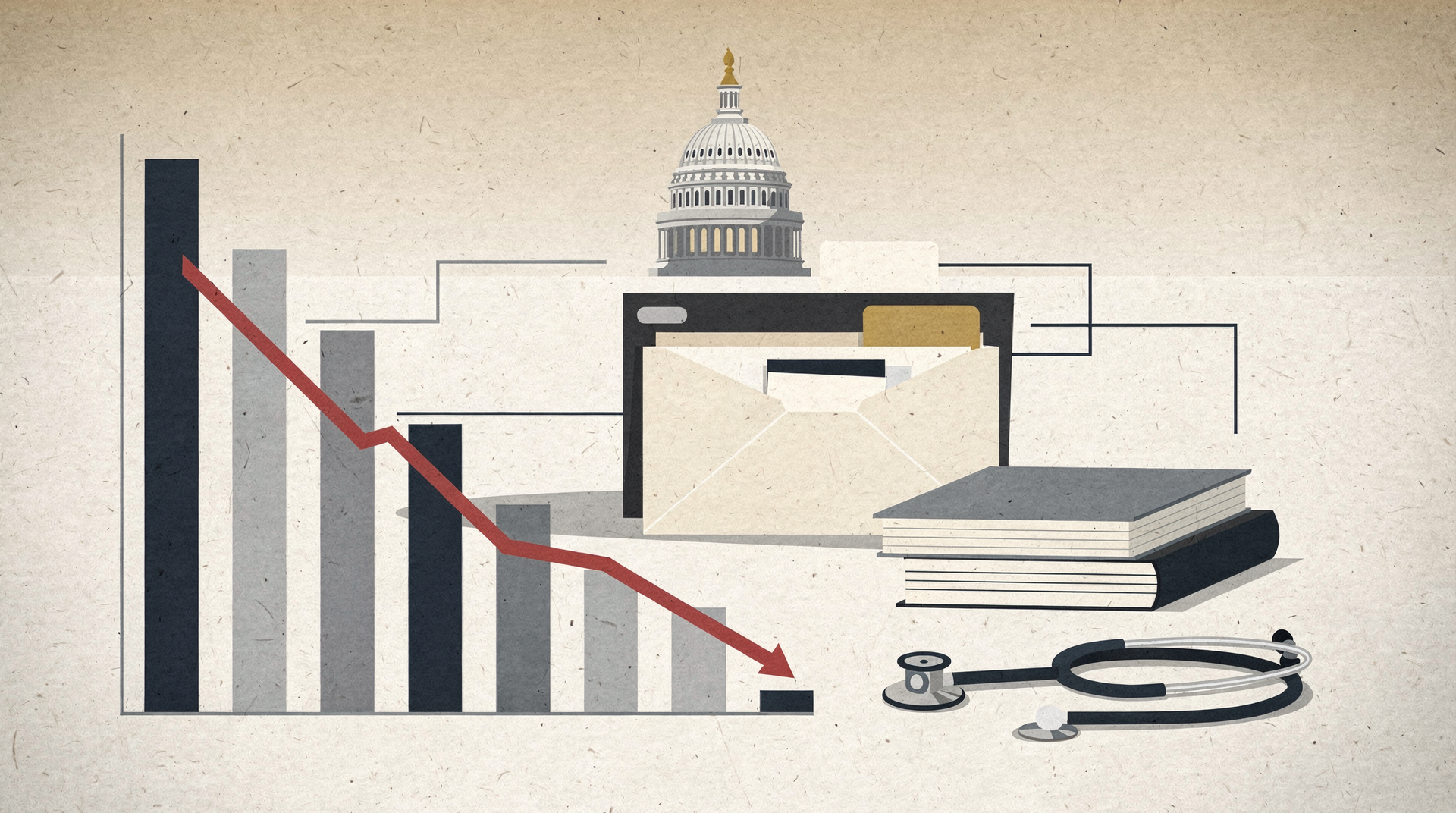
The bill includes $2.69 billion in cuts from FY2026 enacted levels, continuing what National Security Subcommittee Chairman Mario Díaz-Balart (R-FL) called a pattern of “nearly $12 billion in responsible cuts” under the subcommittee’s jurisdiction since 2023. It increases funding for counter-narcotics and fentanyl-trafficking law enforcement, maintains financial support for allied nations that align with U.S. interests, and reduces spending on international organizations the committee says have “lost sight of their mission.”
Chairman Tom Cole (R-OK) framed the legislation as a statement of governing philosophy. “True leadership isn’t merely declared — it is upheld through the choices we make, the priorities we fund, and the resolve we show in putting America first,” Cole said. The bill also includes provisions supporting democratic transitions in Cuba, Venezuela, and Nicaragua, and demands “full accountability and transparency” from international bodies receiving U.S. funding.
Only one Democrat crossed the aisle to support the bill, while one Republican voted against it. As part of a legislative procedure known as MIRVing, the Safeguard American Voter Eligibility (SAVE) America Act — which would require proof of citizenship to register to vote in federal elections — was merged with the spending bill before being sent to the Senate, as reported by The Hill. The Senate is widely expected to strip that provision during its own consideration of the measure.
The passage builds on House Republicans’ track record in the appropriations process. The GOP completed all 12 FY2026 spending bills in January — a rare achievement that Cole and Speaker Mike Johnson celebrated as a demonstration of governing capacity and a return to regular order. Replicating that pace for FY2027, however, faces steeper odds with nine more bills still to be considered and deep partisan disagreements over funding levels for non-defense programs.
Bloomberg Government reported that the bill’s spending levels are unlikely to survive bicameral negotiations intact. The Senate has not yet advanced its own FY2027 State Department spending legislation, and the upper chamber’s bipartisan dynamics and 60-vote threshold typically produce different funding priorities. Lawmakers are widely expected to miss the September 30 deadline, likely necessitating a short-term continuing resolution.
A notable floor vote came on an amendment by Rep. Thomas Massie (R-KY) to zero out security aid to Israel. The amendment failed 104-314, but the margin revealed shifting dynamics on the issue — particularly within the Democratic caucus, where the vote split members — foreshadowing what could become an increasingly contentious debate as the appropriations process continues.
The path from House passage to enacted law remains uncertain, but Republicans are using the early legislative momentum to establish their negotiating position for what will likely be a protracted spending season.