

Senate Judiciary Chairman Chuck Grassley delivered a floor speech on June 9 and sent a letter to Office of Personnel Management Director Scott Kupor demanding the agency revise a proposed nondisclosure agreement form he says violates federal whistleblower protection law.
The confrontation pits the Senate’s most prominent whistleblower advocate — a Republican who co-founded the bipartisan Whistleblower Protection Caucus — against the Trump administration’s own personnel agency over a form that would apply to every federal civilian employee. For Washington’s regulatory and legal community, the dispute raises immediate questions about whether the administration is using NDAs to chill protected disclosures at a time of escalating tension between the executive branch and the federal workforce.
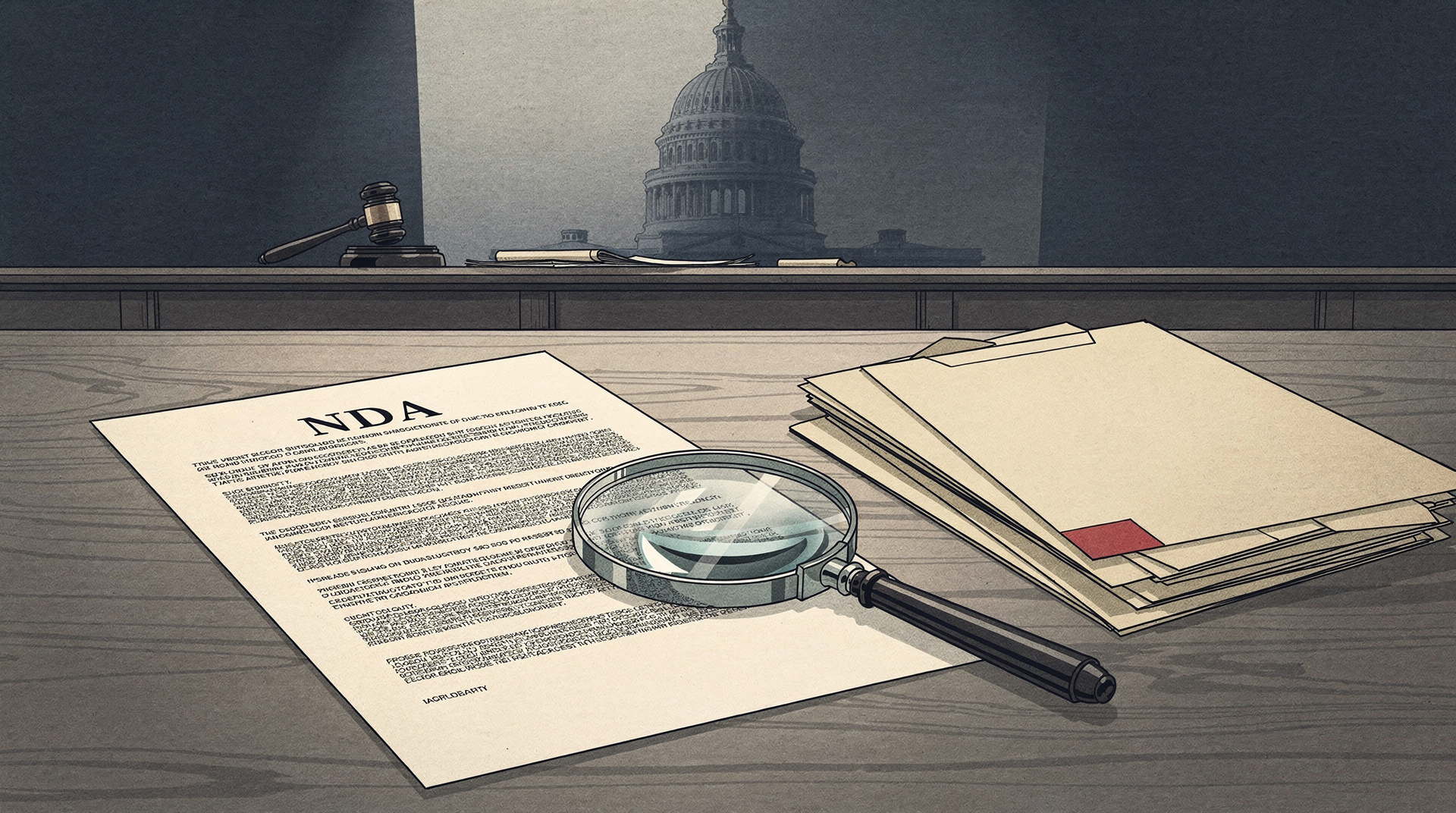
Grassley’s objection centers on the anti-gag provision included in OPM’s draft NDA, which was published in the Federal Register on May 26 with a 30-day comment period. According to Grassley’s statement, the form includes only a partial version of the anti-gag language required by law. It fails to notify employees that disclosures to the Office of Special Counsel — one of three congressionally authorized whistleblower channels — are protected.
“Legally protected whistleblower disclosures aren’t leaks. The failure to comply with the law isn’t only a chilling effect that discourages whistleblowers, it’s also illegal,” Sen. Chuck Grassley said.
The anti-gag provision, which Grassley spent decades pushing into federal statute, requires all agency nondisclosure forms to inform employees of their right to report wrongdoing to Congress, an Inspector General, or the Office of Special Counsel. The OPM draft omits the third channel. Grassley also flagged the provision’s placement at the beginning of the form rather than near the signature line, where he argues employees need the reassurance that they are not surrendering protected rights.
OPM justified the NDA proposal by citing recent unauthorized disclosures of law enforcement and military information that it said endangered personnel. Grassley acknowledged those concerns but drew a sharp line: “It can be a fact-specific analysis to determine which side of the line a disclosure falls on. But, during that analysis, the benefit must be given to the patriotic whistleblower.”
Grassley is not the only lawmaker scrutinizing the proposal. Rep. Raja Krishnamoorthi (D-Ill.), a member of the House Oversight Committee, sent his own letter to Kupor calling the NDA “over-broad” and warning it would leave employees “questioning whether communications with Congress, inspectors general, law enforcement or other authorized oversight bodies could jeopardize or seriously damage their careers,” according to Government Executive. Federal employee unions have also argued that while the form is nominally voluntary for agencies, the pressure to adopt it will effectively make it mandatory.
The draft NDA text published on Regulations.gov states that failure to sign “may result in removal from federal service and potential debarment,” while a violation could trigger “disciplinary or suitability action, up to and including removal and debarment from future federal employment.”
Grassley said he would continue to review the draft rule, and warned that if OPM implements the form without corrections, he intends to use congressional oversight authority to ensure it is not used to silence federal workers. “This senator intends to do just that,” he said. The 30-day public comment period remains open, and additional congressional scrutiny is expected as the deadline approaches.