The District of Columbia released a draft master plan in July for the redevelopment of the RFK Stadium site, opening a formal public review period for one of the most consequential land-use decisions in Washington in decades.
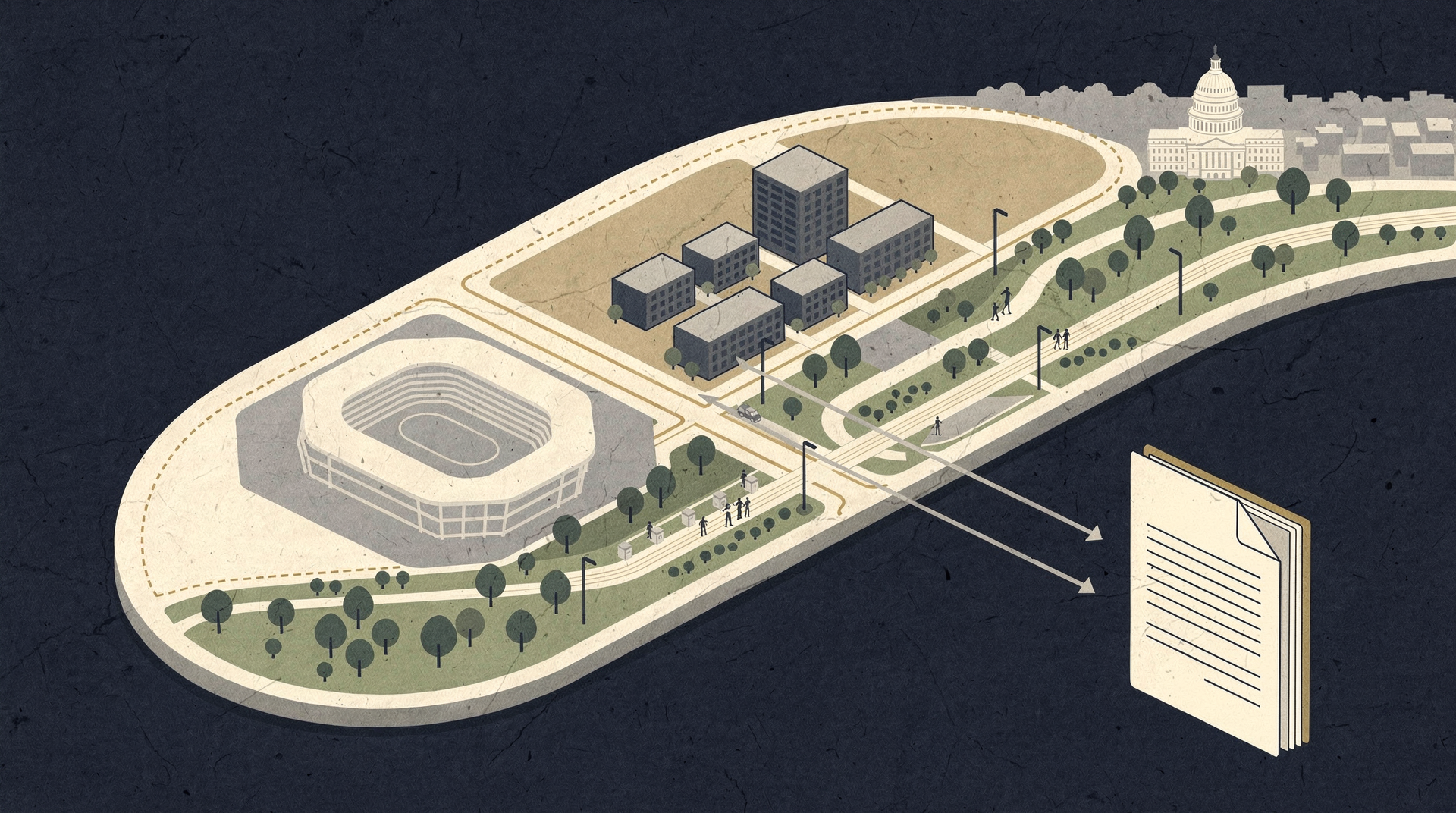
The plan, confirmed in DMPED’s July 2026 Digest, outlines a vision for the massive Anacostia River parcel that includes a potential new stadium, thousands of housing units, parkland, and mixed-use development. The site — approximately 190 acres of largely underutilized land east of Capitol Hill — has been the subject of intense public interest and political maneuvering since Congress authorized its long-term transfer from federal control to the District.
That Congressional action is what makes the master plan more than a routine local development story. Because the RFK site was federally held land, the plan’s contents will draw scrutiny from Capitol Hill, where the House Oversight Committee and other panels retain interest in how the District uses the conveyed property. Any conditions attached to the original transfer legislation could constrain or shape the final development program.
The draft plan’s housing component is likely to attract the most attention in a city facing persistent affordability pressures. The scale of the site offers the District a rare opportunity to add significant housing supply — including affordable units — without the displacement dynamics that typically accompany infill development in established neighborhoods.
A potential new stadium for a professional sports franchise adds a commercial anchor to the plan but also introduces public financing questions that have proven contentious in other cities. The parkland and open-space components respond to long-standing community demands for improved Anacostia River access and environmental restoration.
The public review period invites residents, stakeholders, and federal officials to weigh in on the draft plan’s priorities and tradeoffs. Community engagement sessions are expected in the coming weeks, and the plan will likely undergo multiple revisions before any final approvals.
For federal stakeholders, the RFK site represents a test case in how Congress manages the afterlife of conveyed federal land — and whether the District’s development ambitions align with the conditions and expectations that accompanied the transfer.