

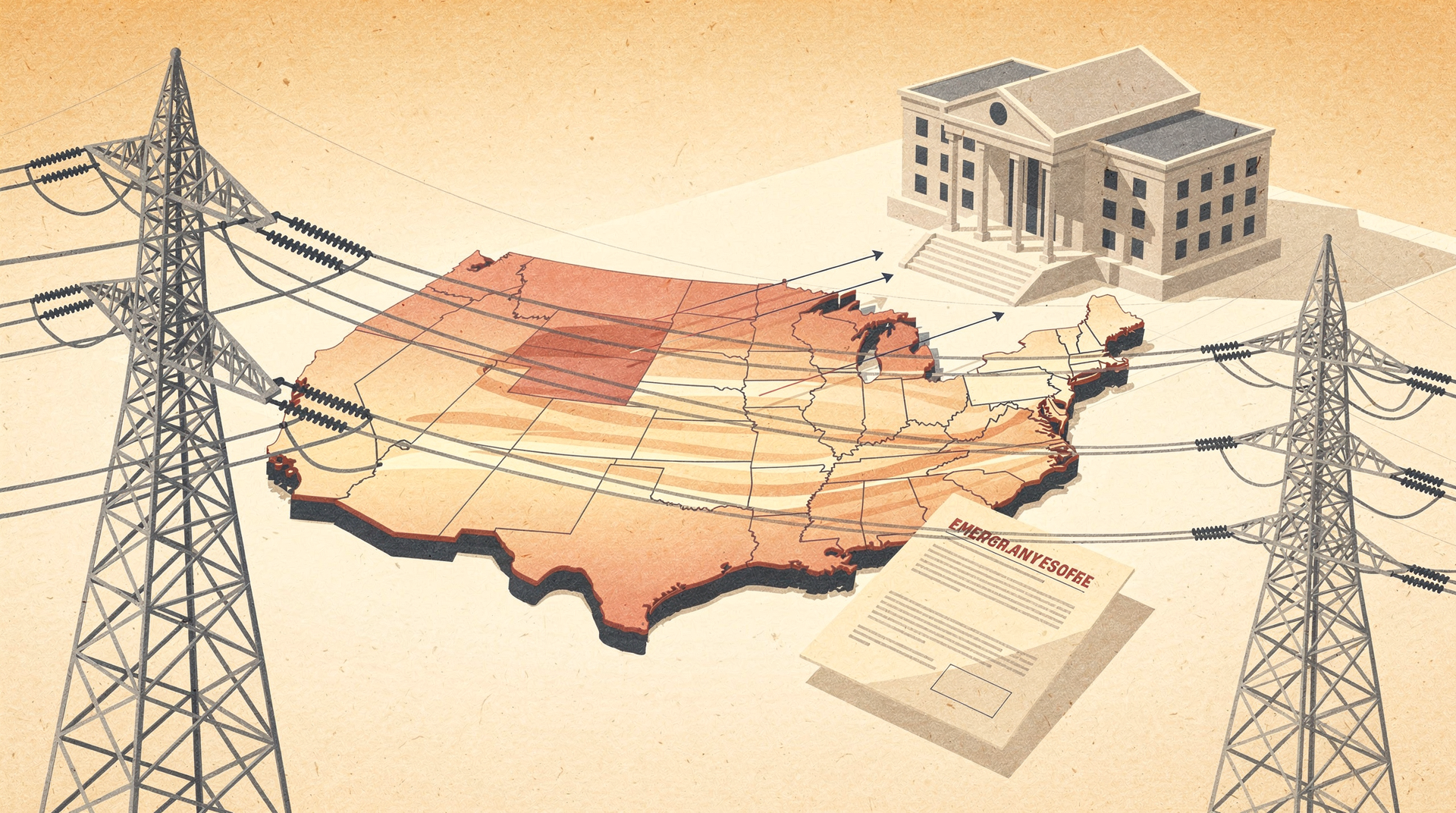
The Department of Energy issued an emergency order on July 26 directing the Southwest Power Pool to dispatch backup generation units across a 17-state region serving approximately 20 million people, as extreme heat drove electricity demand to levels the grid could not reliably meet on its own.
The order — DOE Order No. 202-26-37, authorized by Energy Secretary Chris Wright under the rarely invoked Section 202(c) of the Federal Power Act — is effective through August 3 and represents the latest in a series of emergency interventions that underscore growing fragility in the nation’s electricity infrastructure. For members of the Senate and House Appropriations Committees, the order sharpens the case for permitting reform legislation already moving through Congress and raises pointed questions about summer grid readiness.
The emergency was triggered by a convergence of factors: record electricity demand from sustained high temperatures, unplanned power plant outages, a sharp decline in wind generation, and constrained electricity imports from neighboring grid regions, according to the National Association of Manufacturers. States under the order include Texas, Louisiana, Kansas, Colorado, Oklahoma, Arizona, Missouri, Utah, Wyoming, and Minnesota, among others.
SPP, which serves as the reliability coordinator for a transmission network spanning more than 85,000 miles from North Dakota to Louisiana, had warned that emergency conditions were likely to continue during peak demand periods. Days earlier, the grid operator narrowly avoided rolling outages when a sudden loss of imported electricity from neighboring grids left it with almost no operating reserves, prompting an urgent appeal to consumers to reduce power usage.
“The Trump Administration is tapping into an abundant supply of unused backup generation to maintain affordable, reliable, and secure power for hardworking American families and businesses.” — Energy Secretary Chris Wright, DOE press release
The order authorized SPP to direct backup generation resources to operate “as a last resort” before declaring a Level 3 Energy Emergency Alert — typically one of the final steps before implementing rotating blackouts. SPP is generally a net exporter of electricity because of its large base of wind power, but recent declines in wind generation have flipped that equation, leaving the region dependent on imports that were themselves constrained by demand elsewhere.
This is not an isolated event. DOE has issued multiple 202(c) orders in 2026, including an earlier SPP order on July 20 and several orders for PJM Interconnection covering the mid-Atlantic and eastern United States in early and mid-July. The frequency of these emergency interventions — historically uncommon — has accelerated markedly this summer, with the July 26 order being the 37th such order of the year.
The NAM has emphasized the broader infrastructure context, noting in its “America on Hold” report that permitting delays continue to constrain new energy generation and transmission projects even as demand rises across residential, commercial, and industrial sectors. With August temperatures forecast to remain above normal across much of the country, the emergency order may not be the last — and the policy debate over grid resilience, energy mix, and permitting reform is likely to intensify when Congress returns from recess.