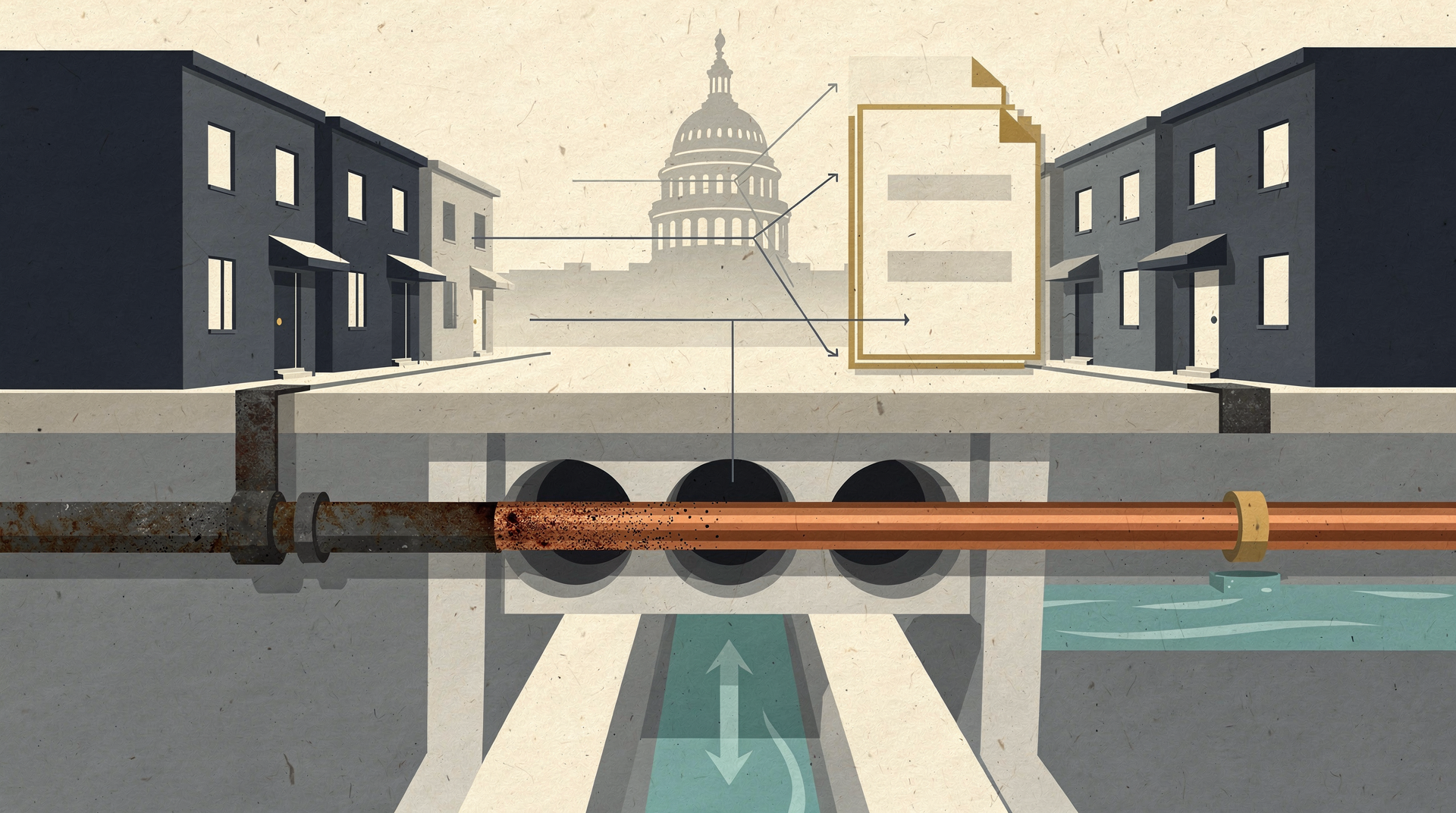
DC Water announced this week that it has replaced more than 12,000 lead service lines since 2019 — including over 3,100 in fiscal year 2025 alone — while breaking ground on the Piney Branch Tunnel, the final major piece of the federally mandated $2.7 billion Clean Rivers Project.
The lead replacement milestone, detailed in the utility’s Summer 2026 newsletter, represents a 40% year-over-year acceleration in the pace of removals. DC Water estimates the program has delivered approximately $33 million in cumulative savings to customers by eliminating the need for individual lead mitigation measures.
The program has reached all eight wards, with disproportionate activity in majority-minority neighborhoods where aging housing stock made lead service lines most prevalent. The accelerated timeline puts DC Water ahead of many peer utilities nationally as the Environmental Protection Agency pushes cities toward full lead service line elimination under revised Lead and Copper Rule requirements.
Separately, the Piney Branch Tunnel groundbreaking marks the capstone of the Clean Rivers Project, which the District has been constructing under a federal consent decree to reduce combined sewer overflows into local waterways. When complete, the tunnel will hold at least 4.2 million gallons of stormwater, diverting it from Piney Branch and routing it to the Blue Plains Advanced Wastewater Treatment Plant for processing before discharge.
The project’s completion will bring DC Water into compliance with Clean Water Act requirements that have driven the multi-billion-dollar infrastructure investment. The environmental benefits extend beyond the District: reduced sewer overflows into Rock Creek and the Potomac River directly support Chesapeake Bay water quality restoration targets that federal and state agencies have pursued for decades.
For District residents, the dual milestones represent tangible returns on years of infrastructure spending — cleaner drinking water, lower individual remediation costs, and reduced sewage pollution in neighborhood waterways.