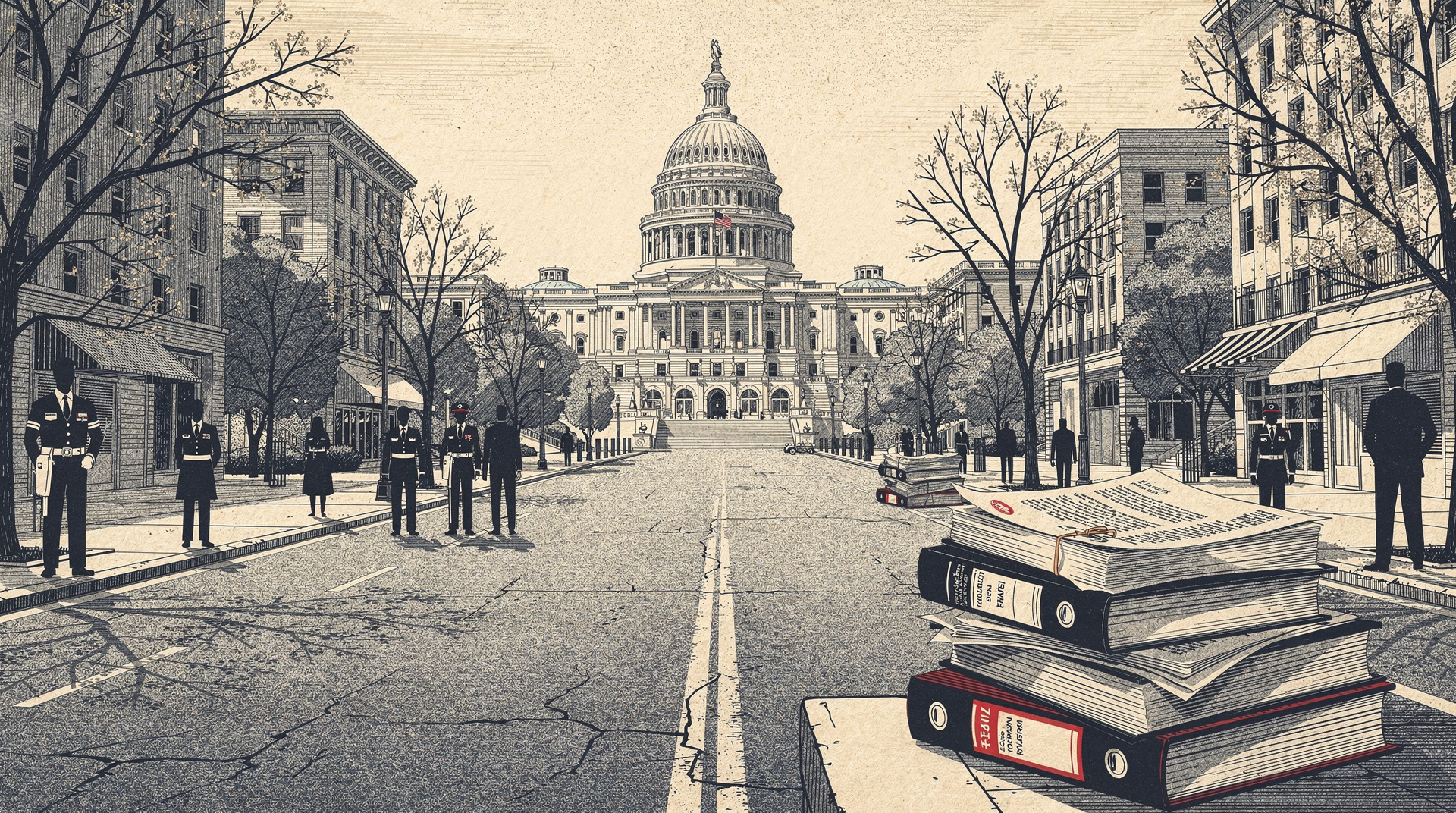
The DC Fiscal Policy Institute and Mayor Muriel E. Bowser issued separate statements this week marking the one-year anniversary of the deployment of military troops, ICE agents and federal law enforcement on Washington streets, calling the sustained federal presence an escalation that has damaged the District’s economy, overridden local law and eroded Home Rule.
DCFPI, a nonpartisan research organization that analyzes budget and tax policy in the District, said in a press release that “nearly 700,000 DC residents are living under escalating interference from the president and Congress,” linking the military surge that began in August 2025 to a cascade of federal actions affecting daily life in the capital.
Among those actions, according to DCFPI: Congress overturned a DC tax law enacted by the D.C. Council, and layoffs driven by the Department of Government Efficiency, known as DOGE, have weakened the local economy that depends heavily on federal employment and contracting.
The think tank simultaneously launched a new advocacy effort called “Together for DC,” hosted at togetherfordc.org, and renewed its longstanding call for DC statehood as the structural remedy for what it describes as congressional overreach into District affairs, according to the DCFPI press release.
Mayor Bowser issued a parallel official statement from the Mayor’s Office addressing the anniversary. The mayor has consistently criticized the federal deployment as unnecessary and damaging to the District’s reputation and economy.
The August 2025 deployment brought uniformed military personnel, Immigration and Customs Enforcement agents and additional federal law enforcement officers onto DC streets in what the federal government described at the time as a public safety and immigration enforcement operation. The deployment drew immediate opposition from District officials, who noted that the District’s elected government was not consulted.
In the year since, the federal presence has become intertwined with broader disputes over DC self-governance. Congress used its constitutional authority over the District to nullify locally enacted tax legislation — a step that DCFPI and other policy organizations have cited as evidence that the District lacks the basic governing autonomy available to every state.
The DOGE-driven federal layoffs compounded the economic impact. Washington’s economy is uniquely dependent on the federal workforce; reductions in federal employment translate directly into lower consumer spending, reduced tax revenue and higher vacancy rates in the District’s commercial corridors.
The launch of the Together for DC campaign suggests that advocacy organizations are shifting from reactive criticism to organized political mobilization heading into the next congressional session.
For DC residents, the anniversary is more than symbolic. The combination of a visible military presence, congressional interference in local tax policy and federal layoffs has produced measurable economic and governance consequences that continue to shape daily life in the District.