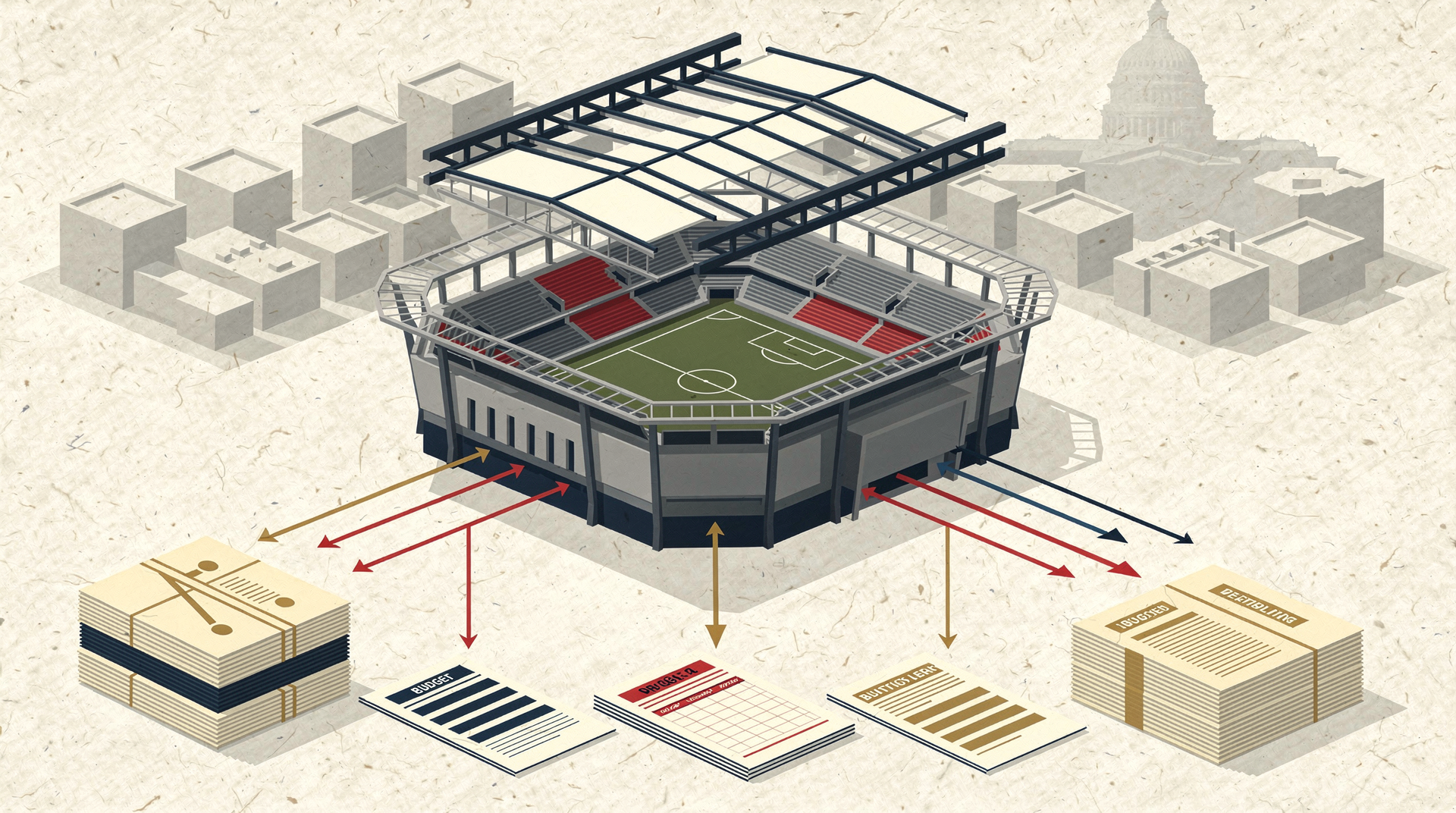
DC Council Chairman Phil Mendelson introduced legislation on Thursday to expand Audi Field with a retractable roof, an additional 8,000 seats, and ancillary event facilities at a total cost of $620 million — a proposal that would commit $300 million in District capital budget funds to one of the largest public-private stadium deals in the city’s history.
Under the bill, the District would contribute $60 million annually over five years from its capital budget, while DC United would cover the remaining $360 million and assume responsibility for all cost overruns, according to WTOP. Sales tax revenues generated by the expanded stadium would repay the city’s investment over time, though the specific payback timeline, revenue assumptions, and economic multiplier projections have not yet been publicly detailed or subjected to independent fiscal analysis.
Mendelson described the legislation as a “first step,” signaling that the proposal will undergo substantial revision through the committee process before any Council vote. Public hearings are expected in the fall, where fiscal impact analyses, community testimony, and competing spending priorities will shape the bill’s trajectory.
The retractable roof is the centerpiece of the expansion plan, designed to transform Audi Field from a seasonal outdoor soccer venue into a climate-controlled, year-round facility capable of hosting concerts, conventions, and other large-scale events throughout the calendar. The 8,000 additional seats would increase the stadium’s total capacity to approximately 28,000, placing it in a competitive tier for major events beyond MLS matches and potentially allowing the venue to attract new revenue streams that currently bypass the District.
The $300 million District contribution, however, raises immediate questions about opportunity costs within the capital budget. DC’s six-year capital improvement plan funds a broad range of competing priorities including school modernizations, road and bridge repairs, affordable housing construction, public facility upgrades, and deferred maintenance across the city’s aging infrastructure portfolio. Council members are expected to scrutinize whether stadium expansion should compete directly with those pressing needs, particularly given ongoing debates about the adequacy of capital spending in underserved neighborhoods east of the Anacostia River.
The proposal also arrives alongside the separate and significantly larger Commanders stadium negotiations for the RFK site — creating a rare and politically fraught moment in which two major stadium financing proposals are simultaneously before DC’s political leadership. The DC Fiscal Policy Institute has previously raised concerns about the cumulative fiscal impact of large public subsidies for private sports facilities, arguing that projected tax revenue recapture from stadium developments frequently falls short of initial projections because assumptions about new economic activity often overstate what would actually occur absent the subsidy.
The financing structure assigns cost overrun risk to DC United, a provision designed to protect taxpayers from the construction inflation that has plagued recent stadium projects nationwide. But the sales tax recapture mechanism — the city’s primary path to recovering its $300 million investment — will depend on attendance levels, event bookings, and consumer spending patterns that remain speculative until the expanded facility is operational.
Mendelson’s bill now enters the Council’s legislative pipeline. Committee assignments, fiscal impact statements from the DC Chief Financial Officer, and public testimony will shape the measure before any floor vote, a process expected to extend well into 2027.