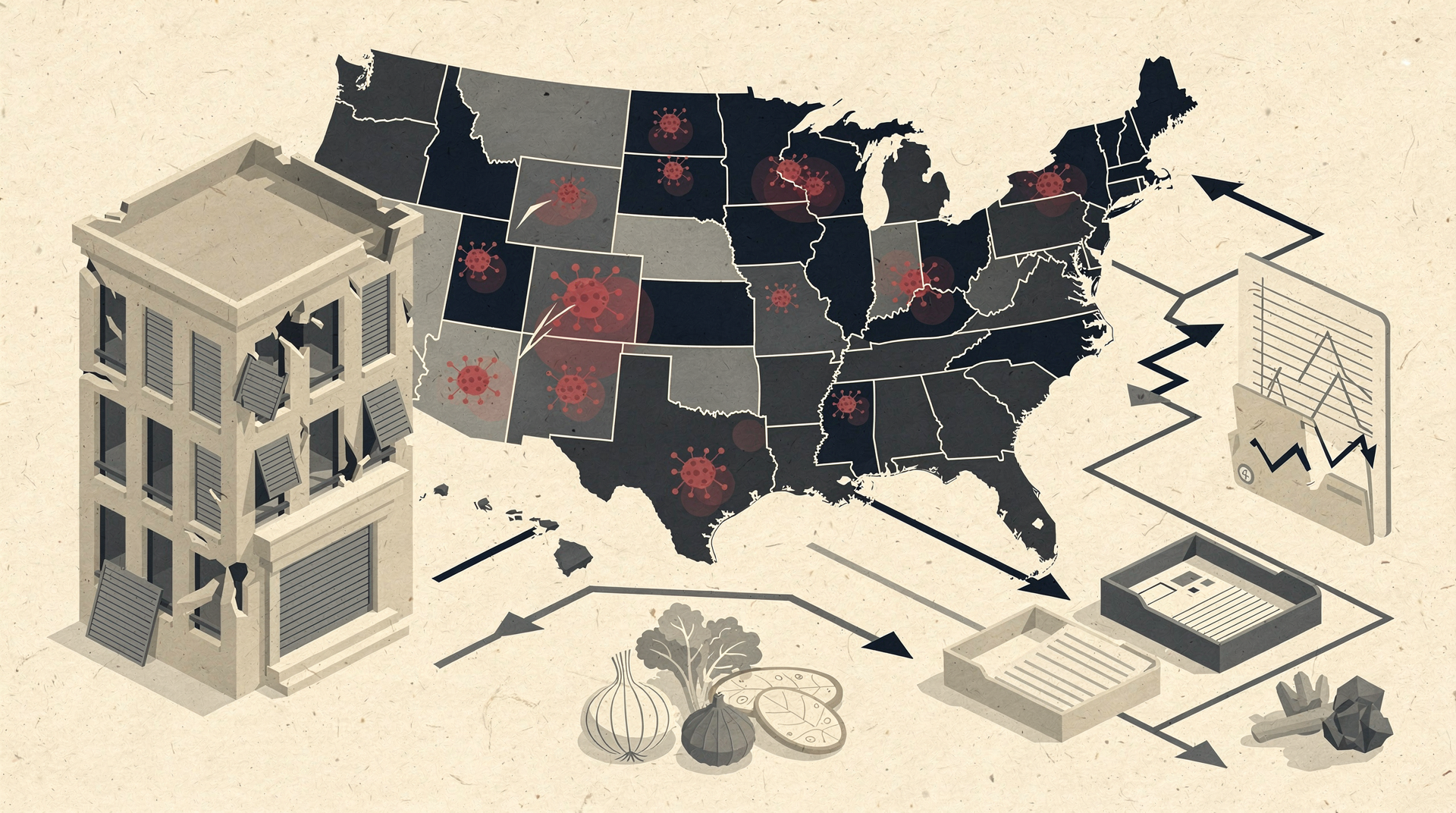
A cyclosporiasis outbreak has spread across 34 states with more than 1,600 confirmed cases and over 100 hospitalizations, Sen. Jon Ossoff said in a letter to HHS Secretary Robert F. Kennedy Jr. released Sunday, accusing the administration of “actively undermining food safety” after it terminated the CDC’s required surveillance of the parasite responsible for the current outbreak.
The outbreak — the largest cyclosporiasis event in recent memory — represents one of the most tangible public health consequences yet of the CDC restructuring under Kennedy. For federal health regulators, food-safety compliance professionals, and state public health officials, the timeline raises immediate questions about the government’s capacity to detect and contain foodborne illness at scale.
Ossoff’s letter documents a specific regulatory decision and its aftermath. Last year, HHS terminated the CDC’s Foodborne Diseases Active Surveillance Network (FoodNet) required monitoring of Cyclospora cayetanensis — the microscopic parasite found on fresh produce and in water that causes cyclosporiasis. The current outbreak emerged months after that surveillance was cut. Six pathogens in total were removed from FoodNet’s core monitoring list as part of broader agency restructuring under the Trump administration.
The CDC confirmed the scope of the crisis in a July 14 press briefing, reporting 1,645 lab-confirmed cases since May 1, with more than 5,100 additional reports under investigation. Agency officials said the true number of infections “is almost certainly higher” because many people with mild illness recover without seeking medical care or being tested. A large outbreak cluster of more than 400 cases has been identified across at least four Midwestern states — Michigan, Ohio, West Virginia, and Kentucky — that appear epidemiologically linked. Michigan alone has reported 3,309 Cyclospora infections.
For context, during the same period in 2025, the CDC received only 249 reports of domestically acquired cyclosporiasis cases — a fraction of the current count.
USA Today reported that the Trump administration had scaled back FoodNet by removing Cyclospora and five other pathogens from its required monitoring list. J. Glenn Morris Jr., an infectious disease expert who helped establish FoodNet in 1995, told the outlet that the cuts eliminated “the early-warning system” for outbreaks like the current one. “Without FoodNet, it meant that going into the outbreak, the people who were investigating it had less information,” Morris said, though he cautioned there is “not a direct cause and effect” between the cuts and the outbreak itself.
“Your foolish and self-indulgent demolition of critical public health programs puts Americans at risk,” Ossoff wrote. His office noted that he has worked across party lines to protect CDC funding, including helping defeat a proposed 50 percent cut to CDC funding in the fiscal year 2026 budget.
The CDC and FDA are conducting traceback investigations involving fresh produce — including white and green onions, cucumbers, and cilantro — but have not yet confirmed a specific food source. Cyclosporiasis symptoms include watery diarrhea, cramping, nausea, and fatigue, and typically begin one to two weeks after exposure. The outbreak season runs through August 31, and with cases continuing to climb across multiple investigation tracks, the federal response capacity stripped by last year’s cuts faces its most significant test yet.