The Federal Reserve’s preferred inflation measure accelerated in May to its highest level since October 2023, according to Joint Economic Committee analysis released on Wednesday, June 25. The reading complicates the central bank’s interest rate path and gives both parties fresh ammunition in the economic policy debate heading into November.
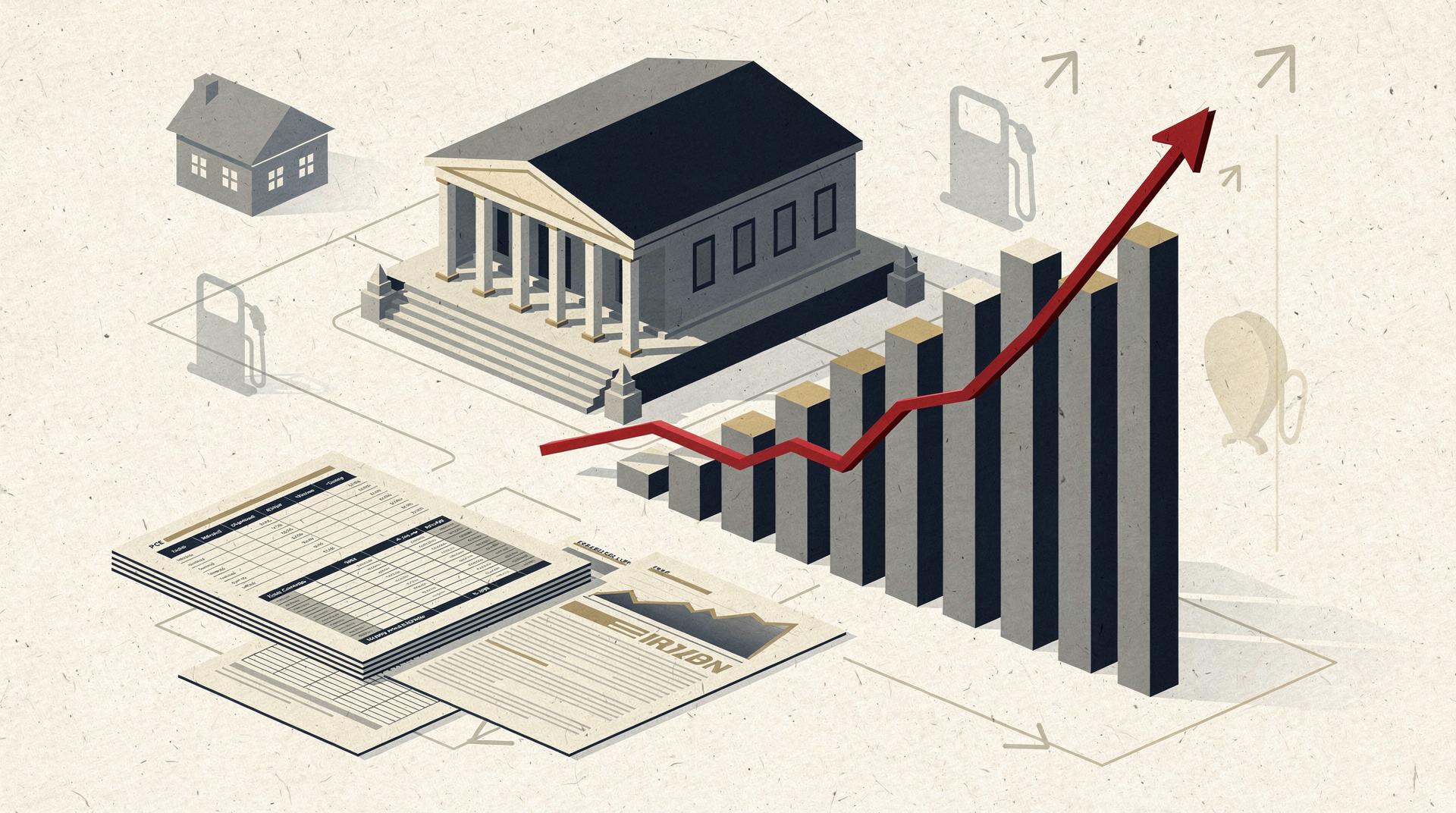
Core personal consumption expenditures — which strips out volatile food and energy costs — rose 0.32% month-over-month and reached a 3.41% annualized rate, the JEC’s Republican staff reported. Headline PCE also ticked up, rising 0.45% for the month compared with 0.40% in the prior period. The Commerce Department’s Bureau of Economic Analysis data showed headline PCE running at a 4.1% annual rate, the highest since April 2023.
For lobbyists, trade associations, and congressional staff tracking legislative calendars, the numbers carry immediate policy weight. Re-accelerating core inflation reduces the likelihood of near-term rate cuts and increases the odds that the Federal Reserve, under Chairman Kevin Warsh, could raise rates later this year. Advisor Perspectives reported that the CME FedWatch tool now shows a 68% probability the Fed will hold rates steady at its next meeting, with a 32% chance of a 25-basis-point hike. Deutsche Bank projects two rate increases before year-end — in September and December — citing broad-based inflationary pressure that extends beyond one-off factors like tariffs and energy disruptions.
The JEC analysis frames the data within the broader tariff and energy debate. Energy prices have been the largest driver of the headline surge, rising 6.5% month-over-month in May, a pattern closely tied to the Iran conflict’s disruption of global oil markets and Strait of Hormuz shipping lanes. But the pickup in core prices — which excludes energy — signals that inflationary pressure is broadening into healthcare, financial services, and insurance.
“Inflation is at a 3-year high due to the war in Iran, and it’s painful for middle-class and moderate-income Americans,” Heather Long, chief economist at Navy Federal Credit Union, told Business Pro. “People are spending more on gas, along with healthcare and utilities.”
Personal income rose in May, offering some offset for consumers, but with the Fed projecting headline PCE to end the year at 3.6% and core at 3.3%, the inflationary environment is expected to persist through 2026. Housing costs rose 0.3% for the month, and financial services and insurance jumped 1.2%, adding strain to household budgets already squeezed by elevated mortgage rates.
The political implications cut both ways. Republicans on the JEC have used the data to argue for supply-side deregulation and expanded domestic energy production as inflation countermeasures. Democrats have pointed to the tariff regime and the Iran conflict as primary culprits behind accelerating prices. Both parties will test those arguments against consumer sentiment that has soured over rising costs for gas, groceries, and housing as the midterm campaign intensifies.
The Fed meets again in July, where it is widely expected to hold rates at the current 3.50%–3.75% range. The more consequential question is whether the September meeting will mark a pivot toward tightening — a decision that would reverberate through the housing market, consumer lending, and the legislative debate over affordability.