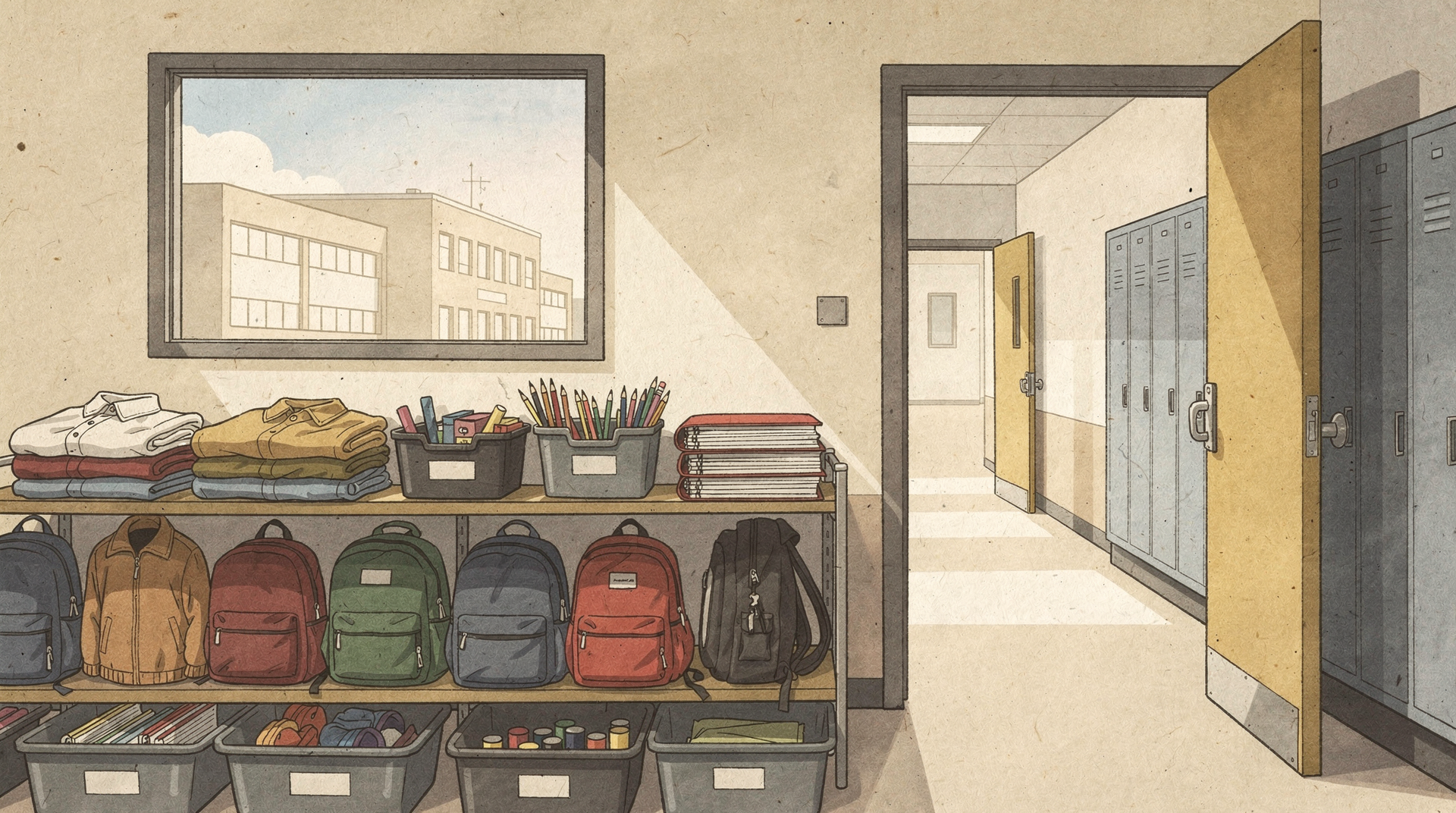
Walt Whitman Middle School in Fairfax County has significantly reduced chronic absenteeism by adopting the Community Schools model, a strategy that integrates social services directly into the school building, according to a feature published Thursday by United Way of the National Capital Area.
Community Schools Coordinator Karen Cordova runs a resource room at the school that provides clothing, shoes, food, weekend meal bags, and school supplies to students on a “no questions asked” basis. The approach is designed to remove the nonacademic barriers — poverty, housing instability, food insecurity — that drive chronic absenteeism in many schools.
The model brings together students, families, educators, and community partners to address the root causes of attendance, behavior, and academic performance challenges rather than treating each issue in isolation.
An eighth-grade student quoted in the United Way feature described the community room as “a safe space because I can always come when I’m feeling troubled without feeling rejected.”
The Community Schools approach has gained traction in federal and state education policy circles as districts nationwide confront pandemic-era attendance declines that have persisted well beyond school reopenings. The model is supported by several federal funding streams, including Title I and 21st Century Community Learning Centers grants.
With the new school year approaching across the Washington region, the Whitman case study offers a concrete data point for school administrators, county officials, and education policy advocates weighing how to invest limited resources in student support. Whether the model is scalable beyond individual schools with dedicated coordinators remains an open question for districts considering adoption.