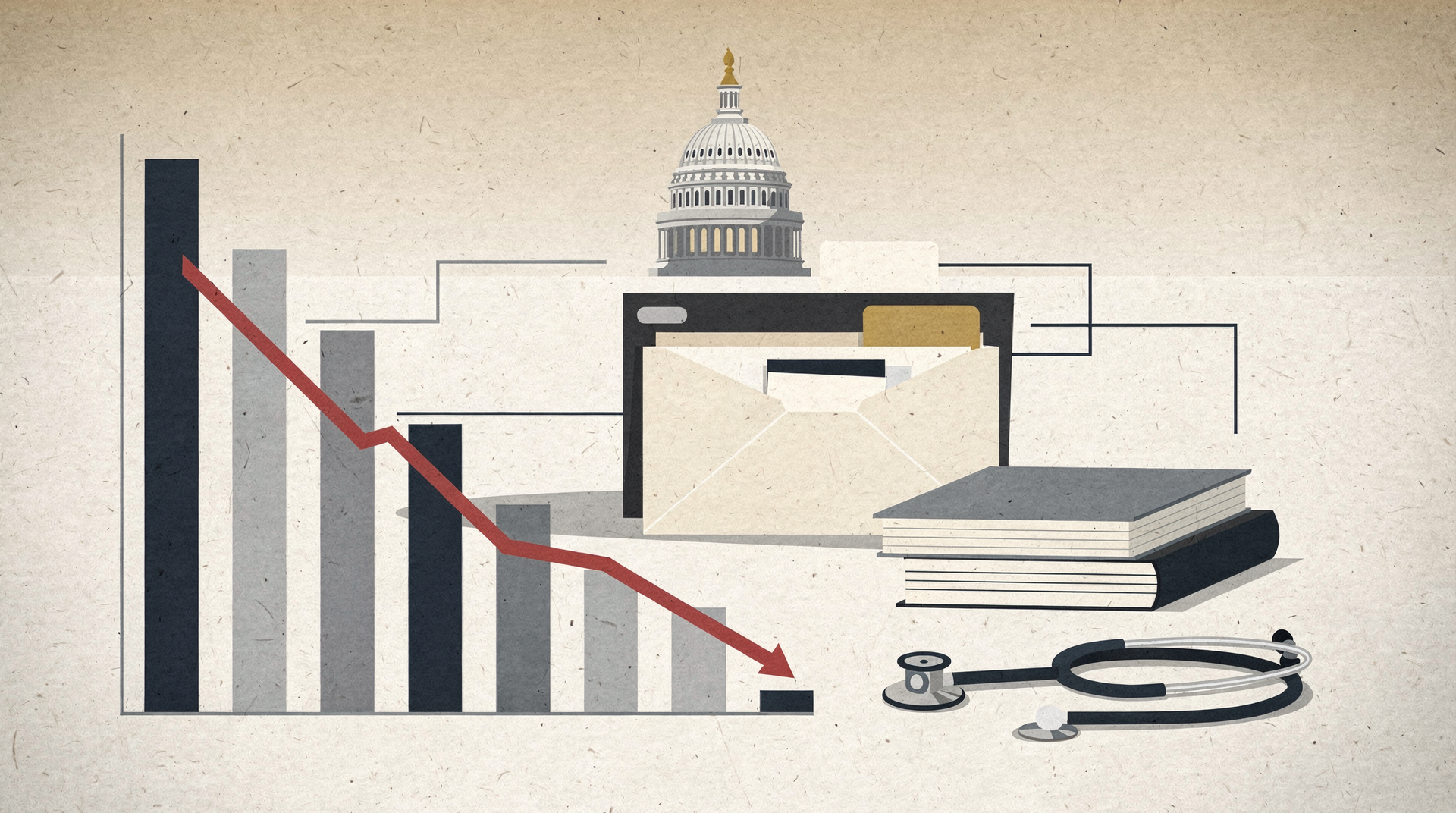


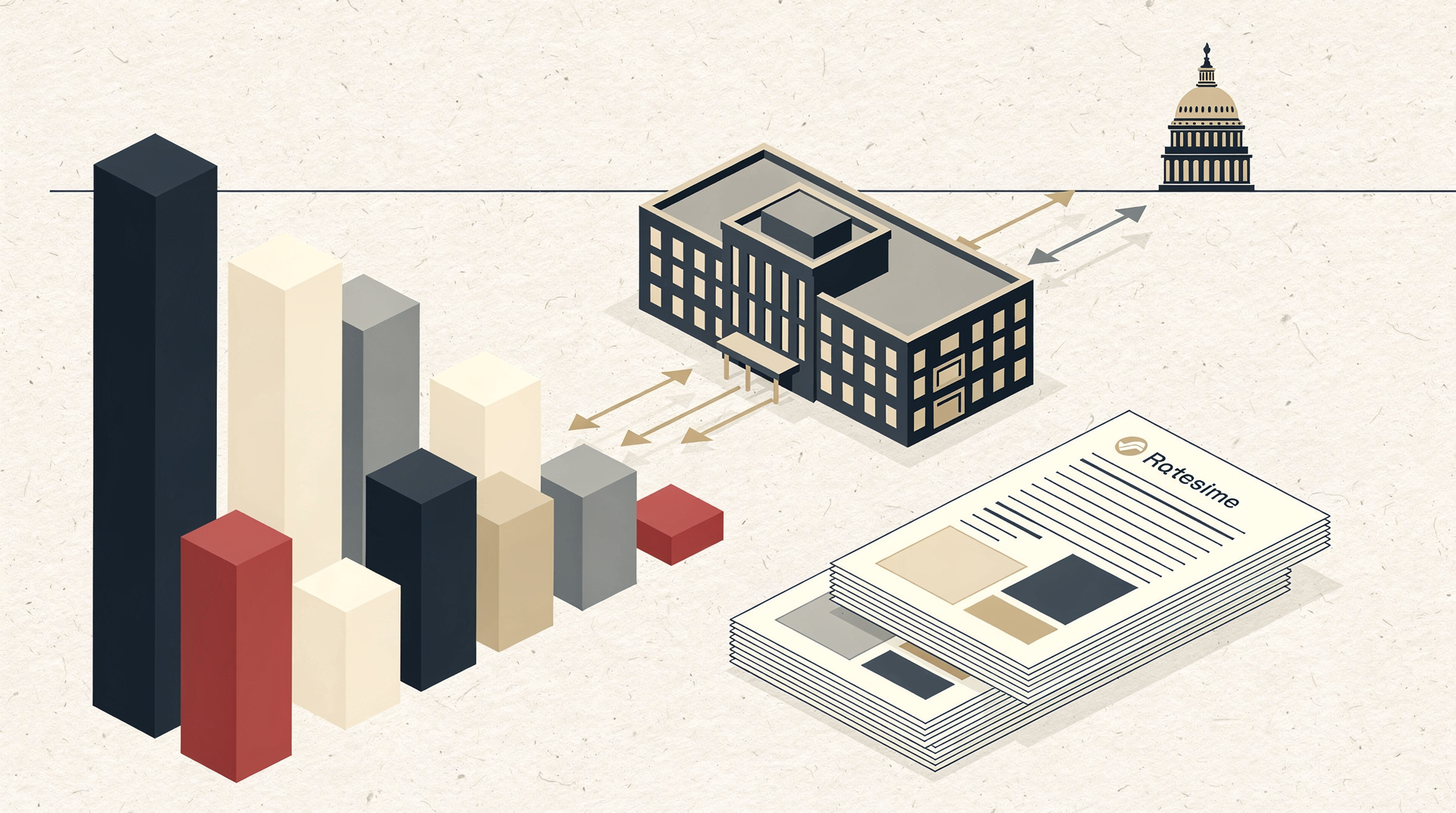
Ohio stands to lose approximately 51,000 jobs and $5.3 billion in economic activity by 2029 as Medicaid cuts, food assistance reductions, and the expiration of Affordable Care Act subsidies in the 2025 reconciliation law fully take effect, according to a Commonwealth Fund analysis published on June 9.
The projections, drawn from a Commonwealth Fund issue brief that modeled every state’s economic exposure, quantify the downstream damage that health policy researchers say will cascade through hospitals, pharmacies, social services agencies, and local businesses when federal healthcare and nutrition spending contracts. The DCCC deployed the Ohio-specific data on Monday against Rep. Mike Carey (OH-15), calling the state’s projected losses the “eighth-worst of any state in the country.” But the underlying analysis is nonpartisan, and its methodology is independent of the political uses to which the data has been put.
Researchers used the IMPLAN economic modeling system — a standard tool employed by government agencies and private-sector forecasters — to estimate the combined effects of H.R. 1, formally the One Big Beautiful Bill Act, and the January 2026 expiration of enhanced ACA premium tax credits. The model captures not only direct job losses in healthcare but also multiplier effects: when federal dollars stop flowing to hospitals and clinics, the spending reductions ripple outward to suppliers, local retailers, and the tax base.
Nationally, the picture is sobering. The Commonwealth Fund projects 1.65 million jobs lost across all 50 states by 2029, equivalent to a one-percentage-point increase in the national unemployment rate. The law cut more than $900 billion from Medicaid over a decade, $187 billion from the Supplemental Nutrition Assistance Program, and allowed enhanced ACA marketplace subsidies to lapse. In Ohio alone, roughly 600,000 residents who purchased insurance on the ACA exchanges saw premiums double when tax credits expired, and enrollment dropped 20 percent, according to KFF data cited in the analysis.
H.R. 1 did include a $50 billion Rural Health Transformation Program intended to offset coverage losses in rural areas, providing $10 billion annually over five years. But the Commonwealth Fund found these gains “overshadowed” by the larger cuts: the net federal funding loss reaches $160 billion in 2029, driving GDP contractions roughly 23 percent larger than the funding reductions themselves.
A separate RAND Corporation analysis published on June 18 reached broadly consistent conclusions, estimating that state Medicaid funds will decline by $665 billion over the 2025–2034 period, with 7.6 million fewer Medicaid enrollees by 2034. RAND found that states relying heavily on state-directed payments and provider taxes — including Arizona, California, and New York — face the steepest funding reductions.
Republicans counter that the law promotes fiscal responsibility and workforce participation. Supporters of H.R. 1 have argued that Medicaid work requirements will incentivize employment and that the bill’s deficit-reduction provisions address unsustainable federal spending. The law also included significant tax cuts that proponents say will stimulate broader economic growth.
As state-level projections continue to emerge, similar data is being deployed by Democratic campaigns in competitive districts nationwide heading into the 2026 midterms — turning a policy dispute into a central campaign weapon.