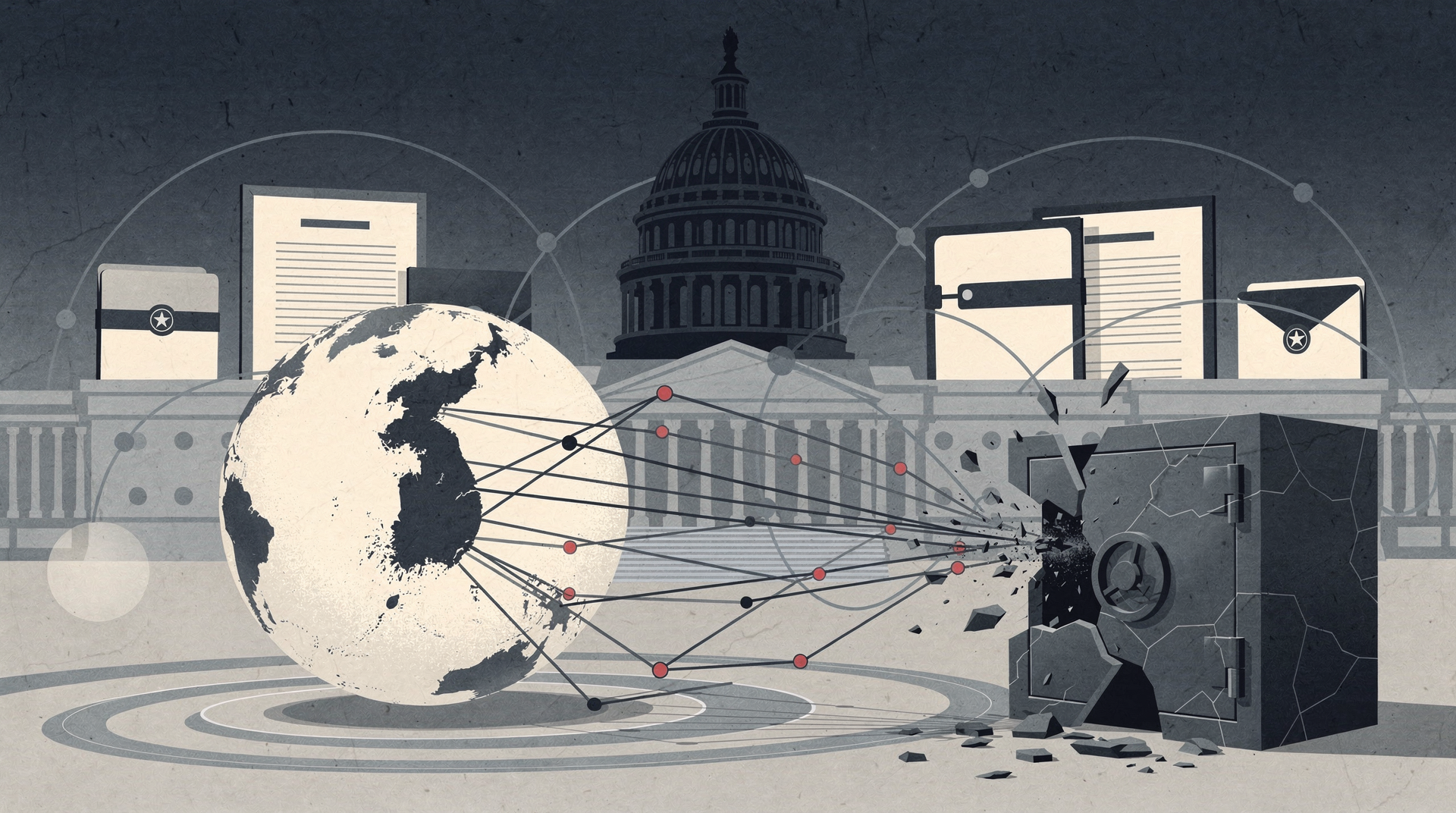
The Center for American Progress and the American Enterprise Institute — from opposite ends of the policy spectrum — published analyses within 24 hours of each other this week reaching the same conclusion: the Trump administration has constructed a de facto licensing system for frontier artificial intelligence models despite explicitly promising not to create one.
The rare cross-ideological convergence, spanning publications released Tuesday and Wednesday, centers on a sequence of administration actions that began in April when Anthropic announced its Mythos model possessed advanced cybersecurity capabilities. By June, the Commerce Department had applied export controls to Anthropic’s Mythos and Fable models, forcing the company to cut off all customer access. Two weeks later, OpenAI previewed its GPT-5.6 model in a limited release, explicitly noting it had done so “at the request of the U.S. government” and was starting with “a small group of trusted partners whose participation has been shared with the government.” By July, Axios reported the administration had given OpenAI “the green light” for a broader launch — formalizing a pattern of government approval before public release.
CAP’s analysis, authored by Vice President of Technology Policy Adam Conner, argues these actions amount to a system in which the administration determines the standards models must meet, who receives early access, and when companies may release products to the public — the functional equivalent of a licensing regime. CAP points to the June executive order on AI, which explicitly stated that nothing in the order should be construed to authorize “a mandatory governmental licensing, preclearance, or permitting requirement.” Less than two weeks later, the Commerce Department imposed export controls on Anthropic.
AEI scholar James Pethokoukis arrived at a parallel conclusion, calling the administration’s framework “ad hoc, opaque, discretionary, and effectively mandatory.” Pethokoukis noted that the cyber benchmarks used to evaluate models are classified, the list of “trusted partners” who receive early access is secret, and the framework itself will not be published. He quoted Neil Chilson of the Abundance Institute: “There may be good reason to classify the benchmark used to test those models. There is no good reason to hide how the program works.” Anton Leicht of the Carnegie Endowment was more direct: “No sane AI developer will take the risk of simply releasing a frontier model ever again.”
The convergence is notable given the institutions’ sharply different ideological priors. R Street Institute fellow Adam Thierer, quoted in the AEI piece, put it bluntly: “If Joe Biden would have done anything close to what the Trump admin is doing now to approve AI models behind closed doors with zero transparency, every Republican would have lost their minds.”
CNBC reported in July that the administration has taken steps to dictate which companies and entities receive access to frontier models, though a White House official told the outlet that engagements with the government are “voluntary” and that “decisions on timing and scope of releases rest entirely with the companies.”
Both CAP and AEI call on Congress to act. CAP urges immediate hearings and legislation establishing an AI governance framework with mandatory disclosures, judicial review, and congressional override authority. AEI presses for a system that moves toward “openness, certainty, and decentralization.” Several senators have already sent a letter to the administration seeking information about the framework, though no hearings have been publicly scheduled.
Source Notes
- Primary source: Center for American Progress
- Supporting primary source: American Enterprise Institute
- Secondary source: CNBC