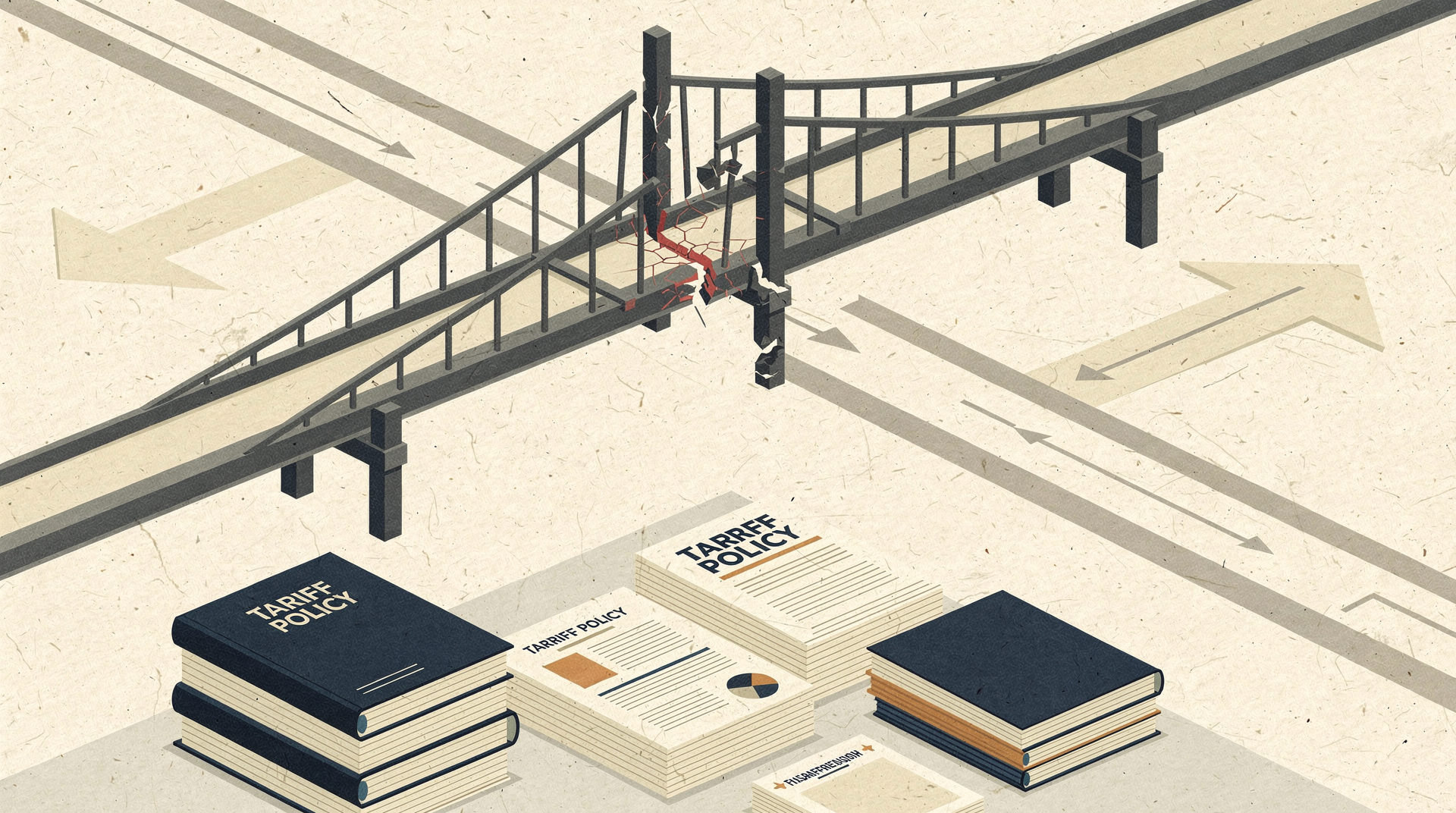
Canada withdrew from a planned joint ceremony for the opening of the Gordie Howe International Bridge connecting Detroit and Windsor, Ontario, after President Trump announced on Monday that the U.S. would impose 50% tariffs on most Canadian goods, according to WTOP News.
Trump accused Canada of discriminating against American automobiles, dairy products, and alcohol, framing the tariffs as a corrective to what he described as an unfair trade relationship. Canadian Prime Minister Mark Carney and Ontario Premier Doug Ford responded sharply, with Canada announcing it would hold a separate, Canadian-only ceremony for the bridge. The span is still expected to open to traffic on July 27.
The cancellation of a joint infrastructure celebration — for a bridge that took more than a decade to plan and build — underscores the severity of the bilateral trade breakdown. The Gordie Howe bridge was conceived as a symbol of cross-border economic integration; its opening is now a marker of diplomatic estrangement.
A 50% tariff on Canadian goods would have sweeping economic consequences for American consumers and industries. Canada is the largest source of U.S. imports of crude oil, lumber, and aluminum, and a critical partner in the integrated North American automotive supply chain. The U.S. Census Bureau’s trade data shows bilateral goods trade between the two countries exceeded $700 billion in 2025, making Canada the United States’ largest trading partner by volume.
Trade associations across multiple sectors — including automotive, agriculture, and construction — are expected to mobilize against the tariffs, which would raise costs on inputs that flow across the border multiple times during manufacturing. Lumber tariffs alone could add thousands of dollars to the cost of new home construction, compounding housing affordability pressures.
On Capitol Hill, members of the House Ways and Means Committee and the Senate Finance Committee have jurisdiction over trade policy, though Congress has historically deferred to the executive branch on tariff actions. Whether any Republican members break with the president on a 50% levy against America’s closest ally remains an open question.
Canada has not yet announced specific retaliatory measures but has signaled they are forthcoming. The trajectory of the trade war — and its impact on consumer prices, supply chains, and the broader North American economy — will depend on whether either side moves toward negotiation or escalation in the weeks ahead.