Shaheen-Lankford legislation ties security assistance to measurable progress on disarmament of Iranian-backed militia
By Washington Signal | WASHINGTON
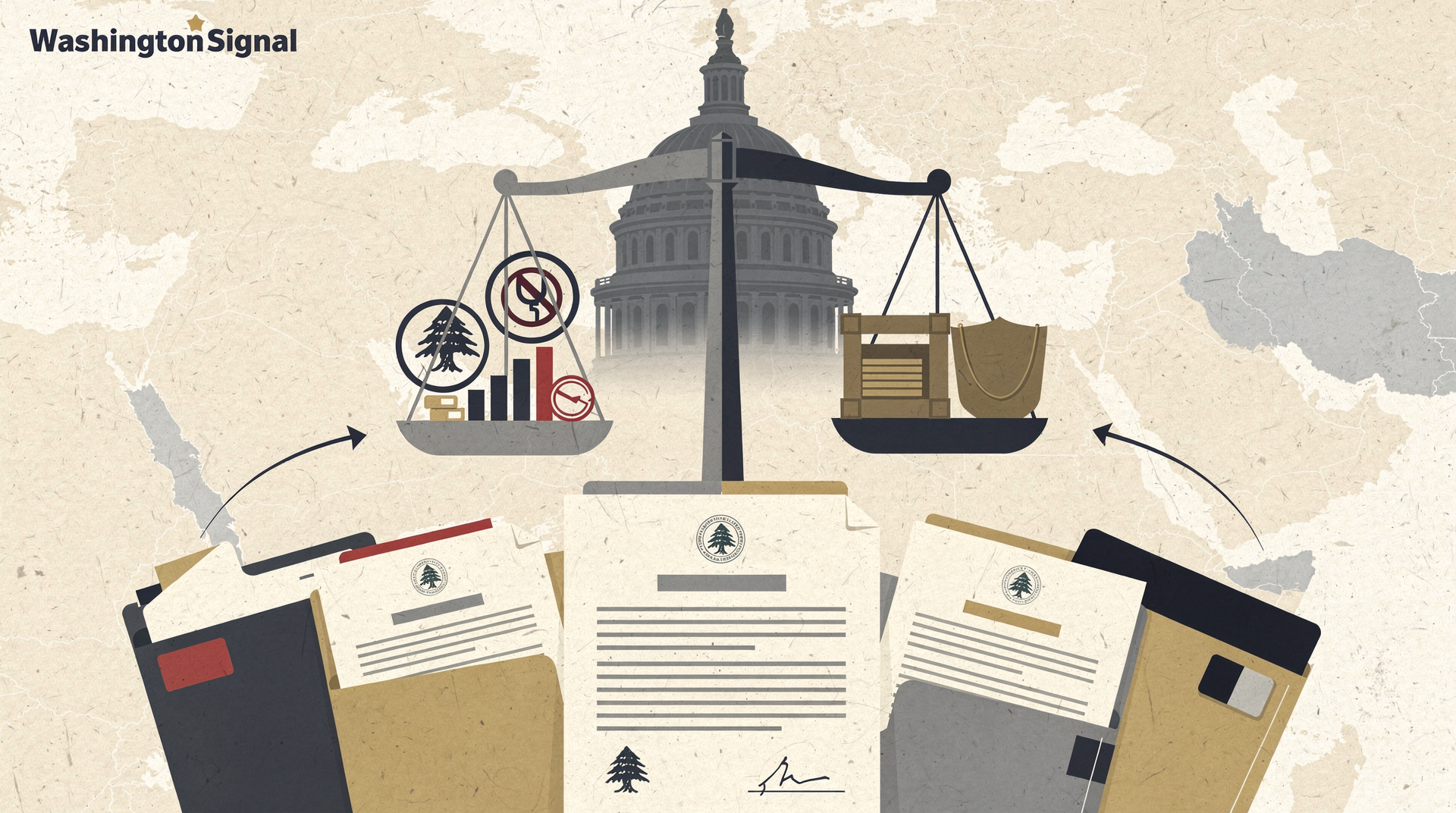
Senators Jeanne Shaheen and James Lankford on Thursday introduced the Lebanon Sanctions, Stabilization and Support Act, bipartisan legislation that would authorize $200 million in annual security assistance to the Lebanese Armed Forces while imposing targeted sanctions on foreign persons supporting Iran’s financing of Hezbollah. The bill, introduced August 7, links U.S. aid to measurable benchmarks on Hezbollah’s disarmament and seeks to reinforce the trilateral U.S.–Israel–Lebanon diplomatic framework.
The legislation addresses multiple dimensions of the crisis in Lebanon simultaneously. On the sanctions side, it targets individuals and entities that facilitate Iranian financing of Hezbollah or obstruct efforts to disarm the militia, according to a joint announcement from the senators’ offices. On the assistance side, it authorizes substantial funding for the Lebanese Armed Forces and Internal Security Forces — the state institutions that proponents argue must be strengthened if Hezbollah’s parallel military infrastructure is to be dismantled.
Crucially, the bill includes a conditionality mechanism. Security assistance would be contingent on demonstrated progress by the Lebanese government against Hezbollah’s weapons stockpiles and organizational infrastructure. That approach reflects a broader Congressional consensus that unconditional aid to Lebanon has failed to shift the balance of power between state institutions and the Iranian-backed militia.
Shaheen, the committee’s ranking Democrat, described the legislation as a reflection of U.S. strategic interests in a stable, sovereign Lebanon, emphasizing the humanitarian toll of the ongoing instability. An estimated 1.2 million people remain internally displaced in southern Lebanon, a figure that underscores the scale of the crisis and its direct citizen-security implications.
Lankford, a Republican from Oklahoma, framed the bill as a necessary complement to diplomatic efforts, arguing that sanctions pressure and security capacity-building must proceed in parallel with negotiations. The bipartisan co-sponsorship signals that the legislation may attract broad support in the Senate, though its timeline for committee consideration and floor action remains to be determined.
The bill directly implicates three diplomatic posts. U.S. Embassy Beirut is the primary post affected, but the legislation’s connection to the U.S.–Israel–Lebanon negotiating framework means U.S. Embassy Jerusalem also has a direct stake. The sanctions targeting Iran’s financing role implicate the Virtual Embassy Tehran as well.
For defense contractors and security assistance providers, the $200 million annual authorization represents a significant commitment that would fund equipment, training, and institutional development for Lebanon’s security forces. The conditionality provisions, however, mean that actual disbursements would depend on political developments within Lebanon — a variable that has historically proven difficult to predict.
The bill’s next steps include committee markup in the Senate Foreign Relations Committee, where both sponsors hold seats. Whether House leadership takes up a companion measure will depend in part on the broader legislative calendar and the trajectory of diplomatic efforts in the region.