The U.S. military has quietly taken on the role of global oil middleman, moving roughly 7 million barrels of crude per day out of the Persian Gulf to help offset the economic damage of a Strait of Hormuz closure that has pushed American inflation to its highest level in three years — and analysts warn the pain could intensify sharply if a fragile ceasefire with Iran falls apart.
Energy Secretary Chris Wright disclosed the military effort Friday at a Bloomberg Energy event in Houston, offering the clearest public accounting yet of how Washington is managing the supply disruption. Normal flows through the Strait, the world’s most critical oil chokepoint, run between 20 million and 21 million barrels per day. With Iran’s declaration that the waterway is closed, the U.S.-escorted 7 million barrels a day represents roughly one-third of typical volumes — far more than markets had assumed.
“We have a military effort that we’ve not talked a lot about, which started more recently to get cargoes out,” Wright said at the Bloomberg event. He confirmed that no Iranian crude is currently leaving the strait and said the U.S. expects full flows to resume only if a diplomatic agreement is reached with Tehran.
The disclosure came on a volatile day for energy markets. Brent crude fell more than 3 percent to about $87 per barrel Friday on reports that a peace deal might be nearing, after having spiked as high as $94 earlier in the week when Iran renewed its declaration that Hormuz was closed. West Texas Intermediate traded near $85 per barrel. The week’s swings — from Apache helicopter shootdowns to ceasefire speculation — have left energy traders guessing hour by hour.
Inflation and the Pump
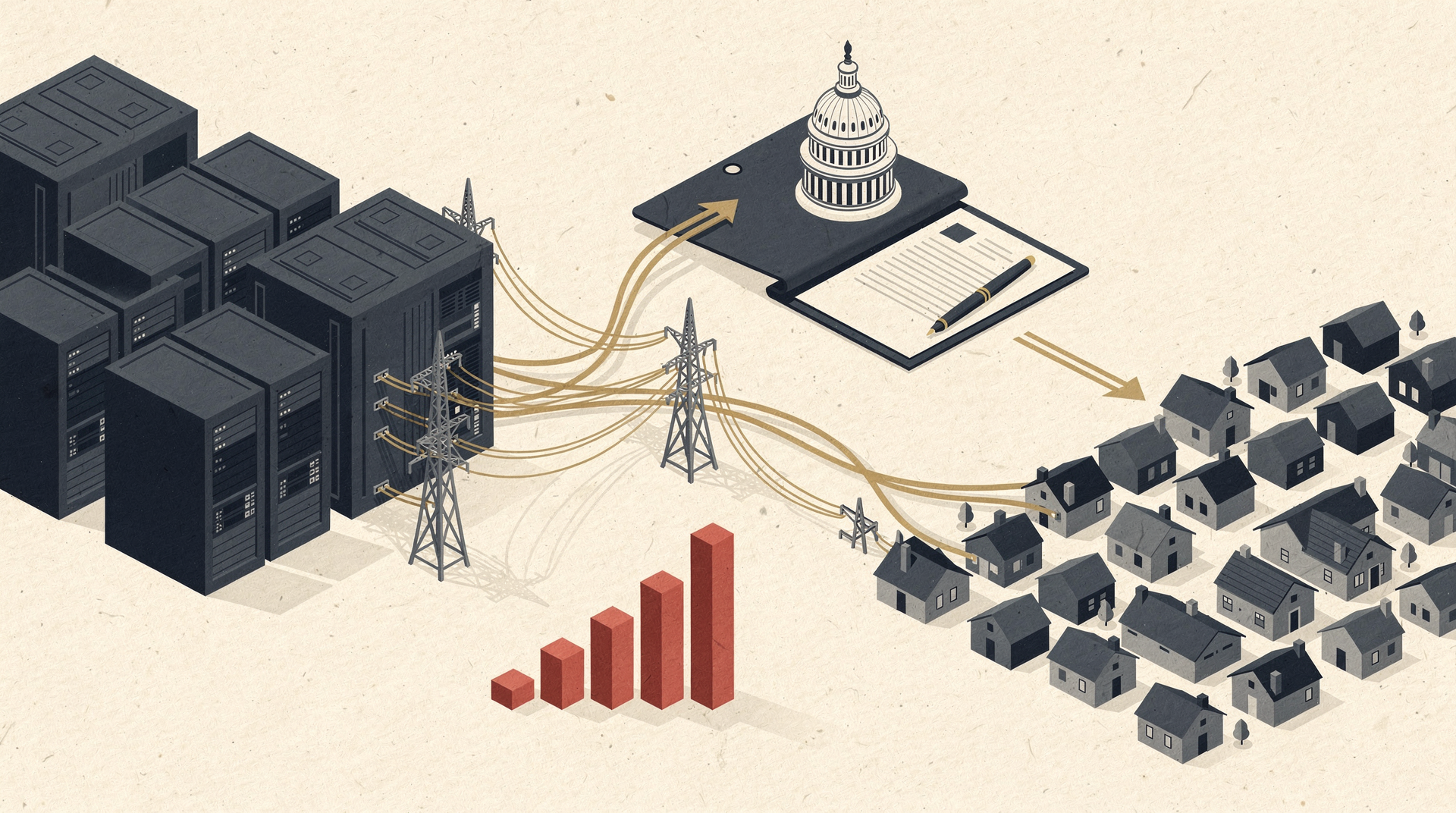
The market volatility is translating directly into household costs. The Bureau of Labor Statistics reported June 10 that the Consumer Price Index rose 4.2 percent year-over-year in May — the highest reading since April 2023 — with energy prices up 23.5 percent from a year earlier. Energy accounted for roughly 60 percent of the monthly gain in consumer prices, according to the BLS.
Core inflation, which strips out food and energy, rose a more moderate 2.9 percent annually, suggesting that the broader economy is so far absorbing the energy shock without widespread second-order effects. Researchers at the Federal Reserve Bank of Boston estimate the current supply disruption could still add roughly 1.5 percentage points to inflation over the coming year.
Americans filling their tanks face an additional hit beginning July 1, when several states raise their per-gallon fuel taxes. California’s gasoline tax climbs from 61.2 cents to 63.4 cents per gallon, with additional fee increases on top. Illinois moves from 48.3 cents to 49.6 cents; Mississippi from 21.4 cents to 24.4 cents; Virginia from 31.7 cents to 32.6 cents; and Washington state from 55.4 cents to 56.5 cents. By contrast, Texas has not adjusted its 20-cent-per-gallon fuel tax since 1991.
A Counterintuitive Finding on U.S. Shale
A close examination of decades of global supply data offers an unexpected nuance to the idea that the U.S. shale boom is the primary reason oil prices have not been worse during the current crisis.
Gulf producers — Saudi Arabia, Iraq, Iran, Kuwait, the United Arab Emirates, Qatar and Bahrain — have accounted for just under 30 percent of global oil supply for decades, even as the market grew from roughly 65 million barrels per day in 1993 to approximately 105 million barrels per day today. In absolute terms, Gulf output expanded from about 18 million to 30 million barrels per day over that period. Their share of the global market, however, barely moved.
What changed is which countries fill the remaining 70 percent. Before the U.S. shale revolution gained momentum around 2013, surging non-OPEC production from Russia, Kazakhstan, the North Sea, Mexico, Brazil and Canada collectively held roughly 60 percent of global supply. The American shale boom largely replaced those producers proportionally, rather than creating an entirely new supply cushion. In other words, had the Hormuz crisis occurred before U.S. shale, other producers were positioned to play a backstop role of comparable scale.
The difference between producers today shows up starkly in revenues. Because Saudi Arabia has export routes that bypass the Strait of Hormuz, its monthly oil revenue is running approximately 20 percent above pre-war 2025 levels despite lower overall production volumes. Kuwait, which has virtually no alternative export routes, has seen revenue collapse by roughly 60 percent. Iraq, with limited alternate paths, is down approximately 40 percent. The lesson seems to be that geography can determine financial fortune.
The $150 Threat and a Shrinking Safety Net
The Strategic Petroleum Reserve, which has been releasing barrels to cushion the supply shock, is now less than 50 percent full at 349 million barrels out of a total capacity of 714 million. At the current pace of withdrawals, the reserve is projected to reach its statutory floor of approximately 35 percent by late August or early September — a development that would significantly reduce the government’s ability to respond to further disruptions.
Energy intelligence firm Rystad Energy warned this week that if the ceasefire collapses and hostilities escalate, Brent crude could surge to $150 per barrel. Neil Chapman, ExxonMobil’s senior vice president, offered a similarly sobering assessment at the Bernstein Annual Strategic Decisions Conference in May.
“We’re approaching unheard of inventory levels,” Chapman said. “I think dated Brent, most people with a model would say dated Brent will shoot up once you get to that really low inventory level, up to $150, $160 — the models would tell you that.”
Some oil is moving through the Strait via workarounds, including ship-to-ship transfers and tankers operating in “dark mode” with transponders switched off, but volumes remain a fraction of pre-war levels.
Peace talks between Washington and Tehran have produced reports of a potential memorandum of understanding with a 60-day timeline to negotiate a final agreement. But separate accounts indicate the two sides remain far apart on core issues, and direct military clashes continued into this week: Iran downed a U.S. Apache helicopter June 8 and fired missiles at American bases in Jordan, Kuwait and Bahrain on June 9 and June 10. U.S. Central Command responded with strikes on air defense and radar sites in southern Iran and near Tehran on the same days.
Whether the MOU materializes — and whether it holds — may well determine whether Americans are paying $4 or $6 per gallon by Labor Day.
SOURCES:
- U.S. Military Helping Move 7 Million Bpd Out of Persian Gulf, Wright Says — OilPrice.com, June 12, 2026
- Energy Prices Drive U.S. Inflation To Three-Year High — OilPrice.com / Bureau of Labor Statistics, June 10, 2026
- Oil Could Hit $150 If U.S.-Iran Ceasefire Collapses — OilPrice.com / Rystad Energy, June 11, 2026
- Oil Prices Tumble 4% on Iran Peace Optimism — OilPrice.com, June 12, 2026
- Brent Climbs to $94 as Houthis Target Israeli Vessels in Red Sea — OilPrice.com, June 10, 2026
- Current oil price data — OilPrice.com (live quotes, June 12, 2026)