The Trump administration acknowledged in a federal court filing last week that it canceled $7.6 billion in clean energy grants to hundreds of projects across 16 states “based solely on the political identity of the grant recipient’s state” — an extraordinary sworn admission that contradicts months of official claims and raises fundamental questions about executive authority over congressionally appropriated funds.
The admission, contained in a July 15 filing in the class action lawsuit Thakur v. Trump, represents a direct collision between the administration’s public messaging and its sworn legal positions — the kind of gap that triggers oversight consequences on Capitol Hill, where both the House and Senate Appropriations committees hold authority over the disbursement of federal funds.
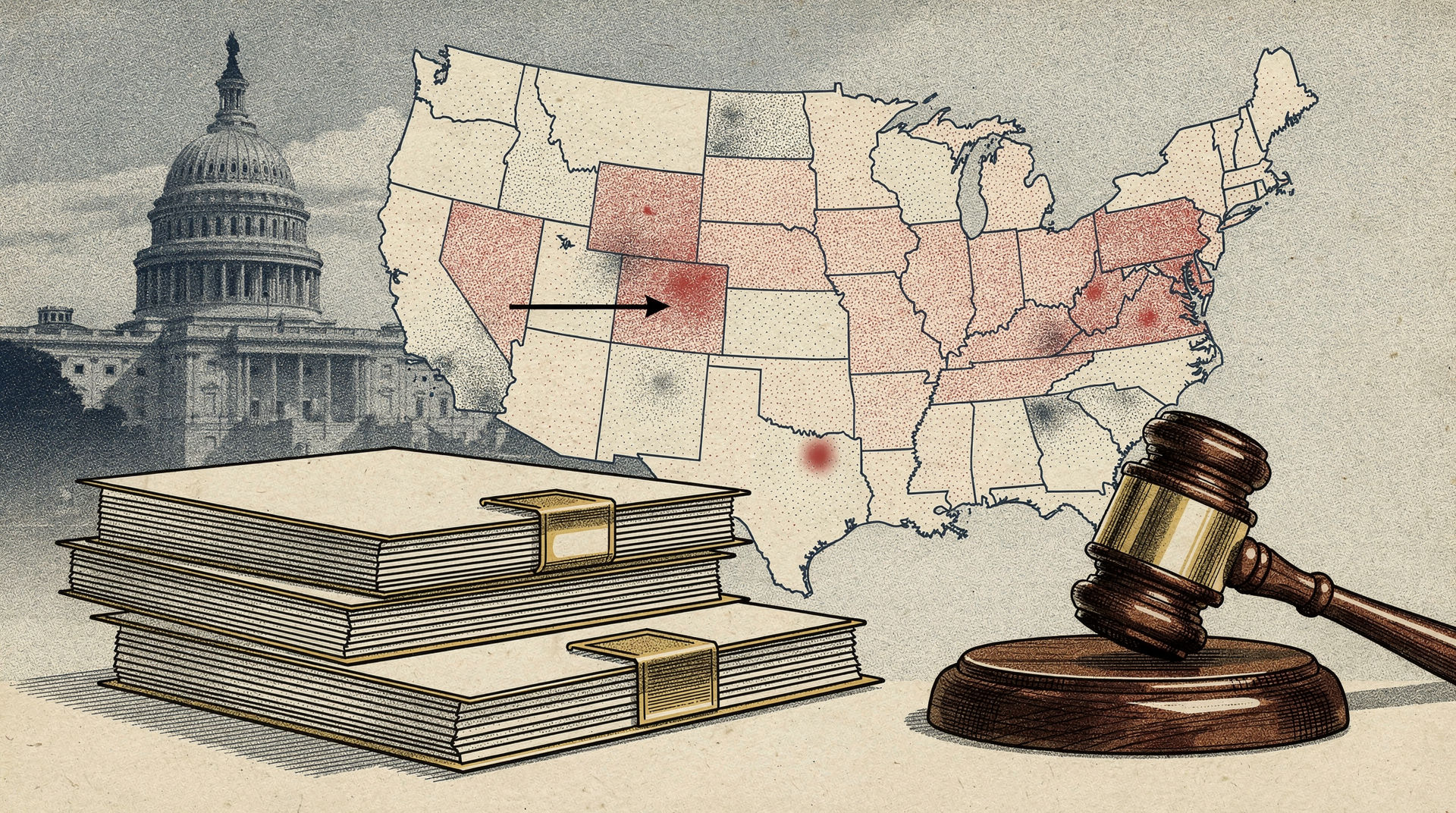
The Associated Press reported via WTOP on Friday that the targeted projects were located exclusively in states that voted for Democrat Kamala Harris in the 2024 presidential election: California, Colorado, Connecticut, Delaware, Hawaii, Illinois, Maryland, Massachusetts, Minnesota, New Hampshire, New Jersey, New Mexico, New York, Oregon, Vermont, and Washington state. The Energy Department announced the termination of 321 funding awards across 223 projects in October 2025, characterizing the cuts at the time as merit-based.
Energy Secretary Chris Wright had repeatedly described the cancellations as “business decisions” based on whether projects were a good use of taxpayer money. Wright said in an October statement that the review sought to “identify waste” and “safeguard taxpayer dollars.” The court filing directly contradicts that account. Government lawyers wrote that the department “accepts that the inclusion of grants … was based solely on the political identity of the grant recipient’s state, i.e., whether the recipient’s location and/or place of performance was in a Blue State or a non-Blue State.”
Senior appropriators seized on the admission. Rep. Marcy Kaptur (D-OH), a ranking member on House Appropriations, and Sen. Patty Murray (D-WA), a senior member of Senate Appropriations, issued a joint statement calling the action “outright un-American” and accusing the administration of “weaponizing the federal government.” They called on congressional Republicans to join in holding the administration accountable.
CNN reported that the Energy Department sent the Office of Management and Budget a list of more than 600 grants it recommended be canceled from recipients in states where Harris won and where both senators caucus with Democrats. OMB ultimately terminated 284 grants. The roughly 340 grants that survived the process were located in states that awarded their electoral votes to Trump or had at least one Republican senator, according to court filings reviewed by USA Today.
The slashed projects included battery plants, hydrogen technology development, electric grid upgrades, and carbon capture facilities. Government lawyers also acknowledged using keywords related to diversity, gender, vaccine hesitancy, and COVID-19 to screen for projects that conflicted with the administration’s broader priorities.
Holly Bender, chief program officer for the Sierra Club, said the filing shows “the Trump administration is brazenly admitting to a vindictive approach to cancelling much-needed energy infrastructure.” White House budget director Russell Vought highlighted the cutbacks on social media, writing that money “to fuel the Left’s climate agenda is being cancelled.”
More than two dozen Democratic members of Congress have requested a formal investigation by the Energy Department’s acting inspector general, who launched a probe in December. The case now tests whether the admitted political targeting violates the Impoundment Control Act or other federal statutes governing the distribution of congressionally authorized funds. The Energy Department did not respond to a request for comment.